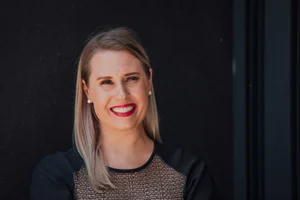
Your space has a direct impact on your voice!
So, if your throat is feeling blocked and you're struggling to express yourself freely and easily, it might be time to redecorate!
In this fascinating episode I speak with Interior Designer Jane Ledger about:
🛋️ How our space directly affects our nervous system.
🛋️ The common mistake event organisers make when setting up the stage and room.
🛋️ How to choose colours to enable free expression.
🛋️ How to arrange your home office furniture to boost energy.
🛋️ What to do in small spaces where you feel you have no options.
TRANSCRIPT
Hello, welcome back to That Voice Podcast. Welcome. If you are here for the very first time, question, where in your home do you feel most creative? Where can you express yourself freely and effortlessly? Now, as I'm posing these questions, my mind has literally gone straight to the toilet. Is it just me? Maybe it's because I used to be a spokesperson for a sewage company, or maybe it's because Patrick and I are embarking on a bathroom renovation at the moment, and you'll know if you've renovated. It's a lot of excitement and a little stress. Anyway, if you follow my socials, I'll keep you posted. We're doing a green feature tile Rainforesty vibes. Today I'm speaking to one of Australia's top interior designers about how you can create a space that supports your best voice, that supports your creativity, that supports your flow state. Her name is Jane Ledger.
She's an absolute powerhouse businesswoman, a fellow podcaster, and a former member of my exclusive Soul Speaker's Advanced Container. If your business is established and you are wanting a speaking strategy and very personalized attention, then get in touch and let's chat. And now I'm fortunate enough to call Jane one of my friends. In this episode, I also mentioned my Speak Up For Your Business intimate workshops. If you want to articulate who you are and what you do with confidence and grace and authenticity, which let's face it, you know, you need to, then get around the table. I'm in Sydney- March 27, Brisbane- May 23rd, and I'm always adding dates and locations. Oh my gosh, I had so many questions for Jane, so let's get into it.
Sally:
Jane Ledger, it is such a pleasure to welcome you to That Voice Podcast. How are you?
Jane:
Oh, I'm great, Sal. And I'm actually thrilled that we get to chat today.
Sally:
I have so many questions, so many more questions than I normally have for a guest because this area is so fascinating to start with. You know, your work is all about creating beautiful spaces. How did you first become interested in interior design?
Jane:
It was actually an experiment. Can you believe? So I had been working for years in very corporate kind of environments. So I had been doing this for, oh, probably 15, 20 years in very corporate legal, structured kind of environments. And after a while I sort of thought to myself, Hmm, I wonder if I can turn my very left-trained brain into doing something creative. Would this actually be possible to really lean into that right hand side of my brain? So I just enrolled myself in an interior design course just to see what would happen. And before I knew it, I was just completely immersed in this new world of design. And so that's what led me to start my business as an interior designer.
Sally:
Oh, it's such a great story and we're so glad that you've gone on this path. Tell us, Jane, what role do you think our environment plays in how we feel and express ourselves? Why does it even matter what our interior design looks like?
Jane:
I just feel the way your environment feels has such a big impact on your own energy, your mood. It actually has a direct impact on your nervous system as well. And I think, how can I explain this? Let's imagine that we're walking into our favorite day spa. So you open the door, you walk in, and immediately your blood pressure lowers. And that's because when you walk into that day spa, the mood is soft. There might be quiet music playing in the background, the lights are dimmed, and then your experience actually starts with someone speaking to you and they're using their voice and that voice is usually soft and calm. So you are immediately wrapped in an environment that actually feels like a hug. Then you get wrapped in a luxury robe and off you go to a beautiful treatment room. Now compare that to, well, a recent experience I had the other day where I had to go to a clinic to have a blood test.
Jane:
Oh my goodness. So I walk into that room and what am I confronted with? Four white walls in a very small box. There's glaring down lights above me, and immediately my body goes on bit of an edge. I sit in the chair and then I look down and I'm looking at these glass vials that are about to be filled with my blood. And I'm gonna be honest, my palms actually start to sweat. So I think we can, I know that's a really basic example, but I think it just proves the impact of our environment on how it actually does have a direct impact on our body and also on our voice.
Sally:
I love that you shared that example, because I hear this example more often than not, you might've seen Jane. I have stress ball lips and countless people tell me they take it into the clinic when they give blood 'cause it gives them, it gives them comfort.
Jane:
Well, there you go.
Sally:
When they're in that horrible environment,
Jane:
Oh, that's such a beautiful example of using an actual sort of prop to help you through a challenging physical environment. I love it.
Sally:
Yeah. When I first put these out, I was not thinking of giving blood. I was more thinking of feeling stressed before a speaking engagement. So let's go to that area. Can the way a room is designed affect the way that we use our voice?
Jane:
I love that you're referred to a public speaking engagement because immediately, all of us can imagine being in that environment. So whether you are a speaker or you might be in the audience, all of us have within our minds now a visual of what that feels like. And Sal, this was brought home to me recently when I had to give a talk and I thought, I'm going to get there a bit early and walk into the space and see what it's like. And of course, when you are in a public speaking environment, generally there is this immediate feeling of separation. So there might be a stage then there's almost a line that is drawn between that stage and the audience. So when I walked into this space, yes, it had a similar feeling, bright down lights. Well, I couldn't do much about those, although I did try and dim them.
Jane:
Then I walked onto the platform and immediately I removed the lectern because that felt like a barrier to me. Then I walked to the back of the room and I started stacking up the chairs and I thought, okay, I know there's going to be about 50 people here. I want them close to me. So I start stacking up the back chairs to encourage people to sit close to me. What I did love about this environment was there was actually a little aisle in between the seating. So when I started speaking, I'd removed the lectern, people were sitting close to me, and then I was able to actually step forward and be with them because that's ultimately what we want to do When we speak, whether it's in a public arena or in our home, we want to connect with people, we want to be physically close to them.
Jane:
And so I love how when we are in these environments, there are little things we can do to tweak them so that our energy and our mindset and actually our, our body and our physical presence can interact with our audience. You also mentioned conversations there. It, it reminds me of what I like to do when I'm designing. For example, someone's living room. Same thing, although I have more control over what I can do here. So when I'm designing a living room for a family, I'm drawing on all the things that I can do, whether it's by way of the layout of the furniture, the lighting, the fabrication, the colors. So often I walk into a living room and I'm confronted with the back of a sofa that tells me, don't go there. So with living rooms where people wish to connect, I'm creating openness and flow so that people naturally know where to sit and those beautiful connections and conversations can happen.
Sally:
So Interesting. And what are the kind of colors that work against these conversations? <laugh>?
Jane:
Yeah. Well, again, look, to be honest, color is a very personal thing. And you might also be aware that we actually absorb and see color differently. So I could rattle off the colors that are calming for me, but they're going to be different for somebody else. Generally when people want to feel calm, we like colors that are soft rather than being vivid and vibrant. So imagine the environment when you walk into a busy bustling restaurant that's going to be a higher energy, bolder colors, perhaps even more monochrome colors, bright blues, bright reds, greens. In our own home environment, we actually wanna feel more cocooned, so those colors are going to be washed out, desaturated, perhaps even more neutral.
Sally:
It's interesting. So if you were an event organizer putting on some kind of, you know, public speaking event, would you suggest that they get rid of the lectern, have the chairs closer, avoid downlights, where at all possible, what other tips would you have for them to create that environment publicly that I guess feels a bit more like the cocoon of the home?
Jane:
Mm, indeed. So often it's a, so if you think about, let's just look at the chairs for example. So often the chairs that people are sitting in are quite hard. Now I mentioned before that I stacked up a lot of chairs. Now stackable chairs frequently aren't that comfortable. So really think about what are people actually going to be sitting in that they can really sort of nestle into and feel comfortable. Because the truth is you don't need as many chairs as you think so they can be comfortable. It also reminds me of a time when I was speaking in front of an audience and I actually asked the organizer, they sort of sent me this pack and yes, this and that is gonna happen. And I said to them, look, you've mentioned stools. I just, do you mind if I just let you know that I'm five foot one? I find stools really hard to get onto and get off from, and they can actually, particularly for women. 'cause I love to wear dresses, right? Yes. So it can actually be quite disconcerting as a female in particular to be on and off a stool. So I, in that case, I said, look, do you mind, instead of a stool, could we have chairs and can I place them at the same level as my audience? I wanna be down with them.
Sally:
Makes such a difference. And that's one of the main reasons I run my Speak Up For Your BNusiness workshops that are about 10 people. Because everybody can have a very comfortable chair, and we can be sitting around a table that's, that feels much more collective than that theaterette style of presentation.
Jane:
Yes, absolutely.
Sally:
So we've spoken about publicly how the setup can be in a room. What about if you are a speaker at home? I know you are a podcaster, Jane, I'm a podcaster. Lots of business owners are creating content in their homes, in their offices, are all rehearsing as well for the speaking engagements. They're going to. What can we do in our offices, in our homes to help, uh, encourage creativity and an environment that supports using our voice in the way we do?
Jane:
I love this because I think it goes without saying that so many more people these days are working from home. And of course, that word work, it's actually creating, isn't it? I think whatever business we are in, we're actually creating in some form. And when I go into people's homes and consider, you know, what they might do for work and what they're actually trying to achieve in their space, I often find that the space for, for starters is shunted to the back of the house. And it's usually quite small and dark. So my number one tip is, where can I get best access to natural light? So natural light is another way of connecting because even if you can only see the glimpse of a tree or just some movement outside, to me, natural light is one of the most important considerations you can have in boosting your energy and again, regulating your nervous system.
Jane:
So take your space out of that dark cluttered room at the back of the home and bring it to a space that's more forward where you have access to natural light. My second tip is about the orientation in your space. So just as you said, Sal, a lot of us are not just sort of tap tapping away at a computer, we're actually preparing for, it might be a sales call, it could be a coaching session, it might be something you are preparing for in public. We need space to move. So think about the orientation of where you are actually sitting. So again, a lot of the things that I see in people's homes are a desk that is directly in front of a blank wall. Now, immediately I'm feeling a blockage there. I'm not feeling creative, uh, stuck at a desk that is facing a wall.
Jane:
Now I realize that the constraints of people's homes can, you know, can limit what, what people can do. But I would say change the orientation of your workspace. Can you face it another way? Face it outwards. Now for me, when I'm preparing content, or even just when I'm feeling creative, I wanna get up. I wanna get up and move around because I'm visualizing myself in different spaces how I might be connecting with people with my clients or with other external, uh, people. So lighting, orientation, space to move. And my third tip, and this is really my, I guess my secret weapon in design when it comes to creating a space that supports you and supports your self expression. This, this might come as a little surprising, but my secret weapon is joinery.
Sally:
I was not expecting you to say that.
Jane:
No, but that's why I say it's this little secret weapon that I think is underestimated. So joinery means cabinetry and by that I mean built in cabinetry. So your listeners might be familiar with, for example, the cabinetry that's in there kitchen. We want to create that in workspaces as well. And the reason for this is as business owners and creators we're often doing multiple different things, right? So we want a place for everything, everything in its place so that when we come to a certain portion of our work, we know where everything is and we're creating a seamless environment for different activities to happen. So for example, I know that my podcast equipment, when I'm in the mode, when I'm in the flow of doing my podcast, I know exactly where that is. I know where all my client design files are, they're in another space. My samples, they're in another space again. Now my samples room is a treasure trove of different bits and pieces, but I don't want to look at it when I'm being creative. I want it out of sight. So decluttering your workspace, implementing, built in customized joinery where you can, it might sound counterintuitive putting everything away, but trust me though, this sort of organization and seamlessness actually supports being creative. So creating order creates the environment where then creativity can flow. Would do you agree with that?
Sally:
Ah, a hundred percent, yes. I'm looking around my office now. Tick, tick, tick, you'll be happy. So I'm looking out at a window. The other advantage of looking at a window is it ensures you have good light for video calls.
Jane:
True.
Sally:
Yes. So I'm talking about lighting with calls, which is great. I've got quite a small apartment and there's a little entranceway when you walk in the door, which real estate agents sell as you know, a third bedroom. Someone said, I'm like, I don't think so.
Jane:
Oh my goodness.
Sally:
They say, you know, a study nook and office nook. And we've been quite challenged because I have the spare room for my office and then Patrick has been essentially working in the living area and you know, I don't love having an office in the middle of the living area, you know, so my family was like, Well just stick him up in the entranceway in the study nook. And I said, Well, there's no natural light. I wouldn't wish that upon anybody. There's no natural light. The orientation would have him either facing the stairs or a wall.
Sally:
Both not good orientation, I suppose we could have put some cabinetry in so we could have made it on the third point. But absolutely it's so important to be able to have those things. So we've redesigned downstairs and we've got him a new desk and I've done a few different things to just create a space where he's still able to work in an environment where he's has that natural light. And has the building blocks for creativity. You know, I talk about opening up the crown chakra. We need to have access to sky and to light and to space. So really, really good tips there. So Jane, what about you with your podcast? I see you've got a beautiful window with a sheer curtain beside you. You've let us know that you tell us where you keep your equipment. Are there any other things that you do in your space to get you record ready?
Jane:
To me, a lot of what I'm doing when I'm preparing say for a podcast record or something that where I really do need to be fully present with myself, it's actually about rituals. You might be the same. So I have my workspace set up in, I mean I'm, you're going to laugh at this, you're talking about Patrick being in an entryway. I am actually in sort of the guts of my whole open living and dining space because you're quite right. There's a beautiful curtain next to me and my whole apartment faces north, which is actually why I bought the place I walked in and straight away I knew this is where I'm going to be. But because of all of that sort of joinery and what have you, everything's hidden away. And so with this access to natural light, I'm oriented, facing out, I have my joinery all sorted, and then it becomes a case of what rituals can I do that are going to support my creativity. So for me, that's burning incense or burning a beautiful botanical oil. And again, it's having that free space to walk around an absolute clutter-free desk. And it's in those moments that I can actually start writing. So I journal quite a bit and I also, thanks to you Sal, I have some wonderful breathing exercises I can do to really get myself into that space.
Sally:
Yeah, beautiful. And I think what we've touched on as well is that the old office being a separate space is changing and we're integrating our workspace into our living spaces rather than being, you know, shoved in a corner or recovered.
Jane:
Yes. And in the homes that I visit too, that starts young. So kids are no longer locked away in their bedroom, cramped over a small little desk. They're actually on the kitchen table or working from the kitchen bench. And there's a number of other reasons for that too, that parents wanna have slightly more supervision over what's going on, but it's also making it just a natural part of family life.
Sally:
So if somebody's listening to this, they're doing the plans of their house in their mind going, oh my gosh, how, how am I going to reorient this desk? Or I've often looked at a room and thought I'd love to change things up, but I honestly don't know how else the bed could go or how else the furniture could go. What are some tips for people to get started that might not involve a complete furniture rearrangement?
Jane:
Look, I understand it can be really hard when you are, you feel as though you have kind of perhaps no options. But I would just try experimenting, changing things up. You'd be surprised. So as soon as I walk into somebody's home, I'm already changing the orientation of their furniture. So try it. But also you could consider what means something to me. And this is where I find that sometimes people get lost. They get lost in the what should I have, what do I need to get? What stuff should I buy? I would encourage people to come back to who am I? Who am I, what do I love doing? What are the things that I love to look at? So you could, for example, consider paint. Paint is one of the easiest ways where we can change literally the temperature of a room. Think about your lighting.
Jane:
Yes, you may be stuck with the downlights that you have. Either get them on dimmers, turn them off completely and introduce more what we call ambient lighting, which is lamps, floor lamps, desk lamps, that kind of thing. And try and get away from this, this feeling that you have to sort of get certain stuff. Just remember who you are put up. Uh, not too much. So we don't want clutter, but for example, behind me I have a beautiful painting, which is a water scene. And it's actually, which is why you're not seeing it on the screen today, Sal, it's actually of two sort of basically nude people swimming.
Sally:
Oh, well Jane, you've known about my nude swimming background. It wouldn't put me off.
Jane:
But you know, but you know, the reason I've done that is because I love swimming and I love the colors in this painting. Just one simple piece that can take you to something you really love. And for me that's water. It's blues and greens and it's swimming. Just one thing,
Sally:
You might be able to see a glimpse of it in the background of my video and in lots of my social videos you'll see it as well. So it's my throat chakra queen. And I met this amazing woman in one of the coaching courses that I did and I commissioned it and it means so much to me because it's my first piece of art that I commissioned. I sort of never thought that I'd be fancy enough to get a commissioned artwork, but you know, these things are more accessible than you think. And I talked her through that. I wanted it to be blue for the throat chakra. I wanted her to be empowered, I wanted her to be free, I wanted her to be smiling. And she based it off a photo of a friend of hers who's Latina. Very different look to me. However, when people walk into the room and they see it, they go, Oh Sally, it's a self portrait. It looks like you!
Jane:
I love that.
Sally:
Very funny. I like, I look, I might have good self-confidence, but I don't have, you know, self portraits just laid in on the walls. But what I think people pick up on is how much of an energetic match it's.
Jane:
Yes.
Sally:
The energy of the painting is me.
Jane:
Yes, exactly.
Sally:
And it brings me joy and courage and confidence and pride. So I love you shared using artwork as a way to evoke those feelings.
Jane:
Oh, that's a beautiful story, Sal. I love it.
Sally:
Also got lost in customs. There was a bit of drama around that as well. So <laugh>,
Jane:
Oh, I'm glad you got it back.
Sally:
It's amazing that it got here. Yes. Well it turns out sometimes when you get those texts from UPS, it's not a scam. You actually do have to pay.
Jane:
We're so glad you did.
Sally:
Oh, Jane. Amazing. Was there anything else you'd like to add?
Jane:
Look, I would just say when, when people are designing any space, trust your instincts. Trust your gut. It will tell you what you need. Whether you are walking onto a stage about to start a piece of creative work, trust your gut. If something doesn't feel right, change it. Change something small and you'll be amazed at the difference it can make.
Sally:
Oh, such fantastic advice. And Jane, where can people find you?
Jane:
Thank you, Sal. So I'm on Instagram @JaneLedgerInteriors. That's my handle, which will also take people to my website. I also have my own podcast, it's called Inside Design. And I created this podcast because I wanted to share with people what it is that interior design can do, what interior designers can help people with and support the way they live.
Sally:
And if you listen to the season opener for season three, you might hear a familiar voice.
Jane:
Oh yes, I love it. Sal. Yes. A little sneak peek. Sal is interviewing me for the opener. I'm so grateful that we got to do that and I'm so grateful that we got to talk about voice and design today.
Sally:
Me too. Jane, thank you so much for coming on That Voice Podcast.
Jane:
It's been a pleasure. Thank you Sal.