Showing your real life online can help your message land stronger.
Vlogging isn’t just for influencers or YouTubers—it’s for anyone who wants to build trust, create connection, and make their voice heard in an authentic way. Whether it’s a Day in My Life (DIML) or a Get Ready With Me (GRWM), these behind-the-scenes moments matter.
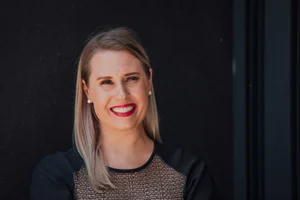
In this episode with vlogger Lauren Reddiex, we explore:
🎥 What vlogging really is—and why it’s more than just “content”
🎤 How sharing your voice in everyday moments builds deeper audience trust
💡 Tips to start vlogging your way (without feeling cringe or staged)
You’ll walk away ready to press record with purpose—and to share your life and your voice with confidence.
🎧 Let’s vlog it out.
Transcript
Hello. Hello. Welcome back to That Voice Podcast where we are all about your audibility as well as your visibility. We're all about authentic, real communication here, and this is why I'm doing an episode today on vlogging. So vlogging is where you share insights, experiences day in my live get ready with me style content online. And you might've seen me posting about our bathroom renovation behind the scenes of my new book, Voice Print, getting fitted for my brand new pink tailored blazer. You know, this is the stuff people comment on when they see me. It is a brilliant way for your audience to get to know you because it's a behind-the-scenes style video and they also get to hear you, hear your voice.
If your audience can't hear you, this might be some tough love here. If your audience can't hear you in at least five different online touch-points right now and you want more clients, there's your issue. You go to any of my social media channels right now, my website, other people's podcasts, of course, this podcast, and you can hear my voice. And this is what drives people to work with you. Get your voice out there. Now, what I love about today's guest is one of the main reasons she vlogs is purely for the creative outlet. So this isn't something to do just for sales. Do it for your soul. Do it for that beautiful cathartic release you get from expressing yourself. My guest today is Lauren Reddiex. I first met Lauren many years ago when she was one of my broadcast journalism clients. So I help young journals with career advice and targeted voice coaching, having been a journalist myself.
And if you are a journo listening, just send me a message because there is a way to work with me that is not advertised anywhere. So Lauren went on to work for Channel Seven as a journalist, then to public relations, and now she's a gun lawyer, making some pretty cool vlogs on TikTok. No gatekeeping in this episode, Lauren takes us through how to decide what to post her production process, how long it takes, the opportunities that have come her way, and how to get started. Even if you think, gosh, how are people possibly interested in my life? Believe me, they are. The more ordinary the content, the more relatable, the more memorable, the stronger the connections. Get ready for a vlogging good time.
Sally:
Lauren Reddiex, it is my absolute joy to have you on That Voice Podcast, your very first podcast.
Lauren:
I know it's so exciting and it feels like a real full circle moment too, Sal, sort of going back to to where it started with you.
Sally:
Yeah. So we first met many years ago when you were on the path to be a TV reporter and we were working on, you know, voice for broadcast. Take us through what's happened since we met, and then where you are now.
Lauren:
Yeah, absolutely. It's been a little bit of an evolution over the past few years. Yeah. Started in journalism. So I was at university double degree in law and journalism when I came to you to do broadcast journalism voice lessons as part of, I was getting towards the tail end of my degree and was looking at internships and going, you know, how can I stand out and put my best foot forward? And then I ended up getting a job with Channel Seven, and that was an amazing experience. Absolutely loved it. But as you know, like TV journalism isn't what it used to be and, and it's a really tough and challenging industry now. So that really became apparent when I was working in it for a couple of years. As I was in it, I was starting to think about, Okay, what do I want long term? What's gonna be sustainable for me as a career? Where can I see progression? I was finishing my law degree at the time, so I was also tossing up whether that's something that I wanted to think about, but I ended up stepping into public relations. You know, it's the classic sort of move that a lot of journalists do.
Sally:
Yes, I've been there, done that.
Lauren:
Absolutely, yeah, you've been there, done that. So, you know, tried my hand at that for a bit and that was sort of a really interesting experience for me because I was all of a sudden doing videos and producing videos and voicing videos for our clients. And then when I left that job to ultimately start a position in the law, I was like, Oh, if I could do that in that job and these big corporate clients were happy to have me voice their videos and all that sort of stuff, maybe I might be able to do this freelance. Yeah, I started, you know, my graduate job in, in law and I've now been, this is my fourth year doing that, but along the way I decided to start this freelance voiceover side gig, if you will. It's been really interesting to kind of learn that side of the industry. It's very different to journalism, but it's been so nice to keep that sort of creative connection and connection to the media.
Sally:
Yeah, love it. Kind of similar to me. We did the same degree and we've done a bit of journalism, bit of PR, and then I didn't go into the law as much as you are of course, but we did both pop-up on TikTok and that's where I have been so impressed and enjoyed seeing your content. You do these incredible day in my life and vlog kind of videos. What was the inspiration to start that kind of content?
Lauren:
I think it was a couple of things. First of all, it sort of coincided with me starting the freelance voiceover side hustle. And I was trying to think about, Okay, how can I market myself and use social media to help that business? And I was like, Well, maybe I could just sort of narrate my own life, almost. And also show a bit of a behind the scenes of, hey, this is what it's like doing voiceover work. I mean, I think it's one of those things where we always hear ads and voices, but very few people actually think about what goes into it. So I thought I'd also use it as a chance to be like, here's a bit of a behind the scenes of a recording session, or how I balance my full-time job as a lawyer with this side hustle. And then I've always sort of loved videos.
Lauren:
I used to do like little trip videos back in like 2017 when I was on, on my university exchange, and I just wanted to document that experience. And I think for me it was a little bit of looking at social media and going, Okay, what sort of content do I wanna follow? And I think at that time I felt like there was a bit of a gap there in the sense of I wanted to follow young women who were intelligent, well-spoken, loved, you know, the feminine things like fashion and beauty, that fusion of those different elements of, of that person. And so I guess it was a mixture of, yeah, wanting to create this identity on social media to help the business but also fill a gap that I didn't feel like was being catered for. You know, I wanted to be what I couldn't see.
Sally:
So well explained. So if somebody is wanting to start this kind of content and they're thinking, oh my life's pretty boring, or like, how do I structure this? Or they listen to your videos and it's so well crafted, where would you suggest they start?
Lauren:
I think a lot of it is just starting Sal like, like anything you learn on the job, it's never gonna be perfect when you start. And I look back at my first videos and they would definitely a bit more, you know, rough than what I can do now after I've had the time to practice and perfect things. And so I think just starting is a big part of it, but in terms of going, Okay, you know, how do I wanna approach this? What sort of content do I wanna post it? A lot of the time comes down to looking at what is makes up who I am and what are the things that I'm interested in, whether that be fashion or business or corporate life or all that kind of stuff. So for me it's been a real fusion of the different things that are my interests and that make up me and sharing my daily life.
Sally:
Hmm. Now from when you are watching, it seems so seamless and easy, but take us through a little bit of the video construction. Like as you're going through your day, you're setting up your camera, you're getting certain angles. What sort of goes through your mind? Do you just sort of go, Oh, I'll just film this, I'll film that, and then you worry about it in the editing process? Or do you have a clear idea of what you want in the video that day?
Lauren:
Yeah, absolutely. So for the day in my life ones it's probably more just trying to get a bunch of shots as I go throughout the day. I don't really start with a really, you know, well-formed idea of what it's gonna look like. So I'll just try and yeah, get some shots as I go, make sure it's enough to show an evolution of the day. But then really the rest of it is all putting it together in edit. One of the biggest things that I learned from journalism that I, I guess helps me in all of this is writing to pictures. I'll sit down and look at all the shots that I got throughout the day and go, Okay, how can I piece this together? What do I have? If I am doing a voiceover video, I will script based on what you can see in frame.
Sally:
Yeah, the journalism background definitely helps because I'll notice you'll have a certain script where the words don't necessarily have to match what is happening. You could have been doing anything, but then all of a sudden, boom, it'll hit a word and it'll be exactly matched to that shot. How long does it take you to edit?
Lauren:
It is a fairly time intensive thing. Like it probably takes me for a really involved video that might be say a minute and a half. That's probably two hours of editing, sometimes
Sally:
Two hours?
Lauren:
Yeah. Yeah. And I think a part of that has just been me experimenting and learning and and the like, but you think about, you know, the process that you go through. And it is very similar to when we used to write stories in journalism. You sit down, you go through all your footage, you go, okay, yep, I've got that. Then I will sit and script my voiceover and then I will record the voiceover. I edit the voiceover. Like I would, even if I'm doing a professional job, I'm slightly less fussy about the video quality when it's just for TikTok, but I will sit and edit it and then drag that into the video software you're putting in all your pictures on the timeline to match. So there's actually a lot that goes into it, but it's so creative and there's such a feeling of reward that comes out at the end once it feels like polished and, and it's all come together.
Sally:
Absolutely. And if you go and look at Lauren's videos, you might be surprised to hear that they are fully scripted because your craftmanship of the words sounds scripted, but your delivery doesn't. And that's because of your history of voice work and your experience as a journalist. And so it's really come in handy for things like this, hasn't it?
Lauren:
Yeah, absolutely. And obviously you will adapt that depending on the context, like the sort of voice that you use in TV stories a lot more, I guess authoritative and, and the like, which is the sort of voice that I'll adopt for these sorts of videos. I want it to be more relatable and authentic and like I'm just having a chat. Scripting them first just means that I can express myself a bit better, a bit better. It's less editing I have to do.
Sally:
Yeah, definitely. When I'm doing solo episodes of the podcast, I will often script them as well because it's so time saving if you can get it out in one cut.
Lauren:
Absolutely. And then you just have some time to think about how you're going to articulate a point.
Sally:
So if a client says to you, or just like you mentioned with TikTok, it's more conversational, it's a bit more casual. What are you actually changing in your voice to match those different styles?
Lauren:
I feel like it's taken me a while to work this out for myself, and it took me a while to shake the news voice. That was my biggest challenge.
Sally:
Yeah, I hear you.
New Speaker:
Yeah. In starting the freelance voiceover gig, I think your, your tone is a little bit higher. When we were, you know, voicing news stories, you would know, you always sort of go with a downward inflection unless you are purposefully asking a question, you know, you state it like it's fact, it's authoritative. So that inflection is different. The sort of words you put your emphasis on is different. I naturally come up and speak a little bit higher in this sort of register when I am doing these sorts of more conversational videos.
Sally:
Yeah. And you are also changing the shape of your mouth as well, so you've got more of a smile because that also changes the tone of the voice. I love you've mentioned inflections and intonation and pitch and a whole lot of things that we cover in all the work that I do actually. And in my book that's coming out, we talk a lot about that as well. As Lauren and I know very well your voice can do a lot of different things and once you learn how to control all those different elements, it can really open doors. And that's my next question. So since you've started doing this type of content on TikTok, have you had any opportunities come in?
Lauren:
Not from voiceover work, but I have had, you know, a couple of brands reach out to me that have wanted to do just sort of, you know, that user generated style content. The most beautiful thing to come out of it has been connecting with a lot of people that are either, you know, in a similar field of work or a lot of people that sort of are like me in their twenties and trying to find their way, particularly in the professional world. Like you come out of university and it's this pressure to find, you know, your dream job and find something that you're passionate about. And I think we hear a lot of rhetoric around following your dreams and finding that dream job, but very few people talk about how hard that is and the fact that it doesn't happen overnight. And so I think that's been something that I have shared on TikTok. I've got a lot of beautiful messages from people who have felt the same and said that the watching the videos have really made them feel a lot better about the fact that they're going through the same sort of thing. So that's probably been, for me, the most rewarding thing to come out of it.
Sally:
Oh, that's so nice. And again, having experience in media and even in in courtrooms as well, you are pretty confident to share your voice on social media, to do a piece to camera to say, Hey, I've got this, this is what I'm wearing to work today. But for a lot of people who I work with, it's can be difficult to even have the courage to put yourself out there. They think, oh, what do I sound like and what do I look like and who would care about my life? And what would be your advice to someone who is really shy to even put their voice onto a vlog?
Lauren:
You just have to do it, watch it back, you know, be content with the fact that it's going to be an evolution essentially. For me, when I started, I hated listening to my voice back. I hated watching, you know, my, my first news stories back and look and cringe. We had to do it all the time for work. And so you get more and more used to hearing yourself and looking at yourself and going, Okay, mm, I didn't quite like how I did that, or My voice sounded a bit off on that part. And you then naturally self-correct. If you are wanting to show up on social media more, it might just be a case of even shutting yourself in your room for a while and practicing speaking to a camera, look at it, how can I change what I'm doing and adjust.
Sally:
And have you had any criticism from people who saying like, oh, well what are you doing this for and who wants to see what's happening in your day? And, and any sort of negative comments?
Lauren:
Surprisingly, very few. I think I've only had one negative comment, and that was in one of my, you know, day in my life videos. I was talking about just the challenges of balancing a full-time job with, you know, wanting to exercise and wanting to, you know, pursue your interests and all that sort of stuff. And I had one comment along the lines of like, you know, well you could just be like a stay at home mom or something like that. And I was like, Hmm, odd. But that was the only thing that I've really had that wasn't supportive and really positive. And in that instance, there's no point in giving it any airtime. I just ignore it.
Sally:
Yeah, and what's the, the goal with this? Are you just gonna keep doing it as long as you enjoy it? Are you wanting to, you know, grow your business, do more brand deals or what's the long-term vlogging vision?
Lauren:
I think for now I'm just doing it because I enjoy it. And I think if that's the root of a lot of these things, the other things flow and can be a really great byproduct and you just kind of roll with the punches a little bit. So I don't have any well-formed intentions, I guess about it now, but really interested to sort of see where it takes me, see how it all unfolds. But it has been a really fun element, I guess, to be able to express my creativity. 'cause That is something I felt maybe was lacking in the last few years. I mean, as much as I enjoy my job, you are spending a lot of time at a desk in an office doing a lot of reading, and I did really crave that bit of creativity, all that sort of stuff that I used to get in, in the media industry. So this has been a really great way to inject that back into, into my life and find that balance again.
Sally:
And you've got a great video diary of all your amazing workout fits.
Lauren:
Oh yeah, exactly. It makes it really easy actually now that when I am stuck for things to wear, I'm like, oh, let's go back to my TikTok. What have I worn before?
Sally:
Yeah, I'm so glad that you shared that because I think a lot of people go, oh, well, I can't go out there on social media until I'm 100% clear on my why and my message and the purpose of what I'm doing when actually we discover our message through expressing and the reason can reveal itself through the doing. So I really like that approach, and it's a sign that if you feel like you haven't got all the answers, that's not a reason to put off creating, because through the creating, you'll get your answers.
Lauren:
Yeah, absolutely. And I always come back to I don't know whether you've ever read it, but one of my favorite books is Big Magic by Elizabeth Gilbert.
Sally:
Elizabeth Gilbert, yeah.
Lauren:
Yeah. And she talks about just the nature of creativity and how you should create and put your creations out into the world with no expectation. No expectation of it, making you an income initially at least, and just create for the sake of creating. And I just loved that. And I guess that's sort of the philosophy that I've adopted now.
Sally:
What a beautiful way to end. So Lauren, people listening, thinking, where can I see these vlogs? Where can they find you?
Lauren:
I'm on TikTok, it's just my username is my name, Lauren Reddiex. And yeah, so that's where I sort of share more of the vlog stuff. I'm not quite fully on Instagram yet. I haven't taken that plunge, but I feel like there's something about TikTok where you can just post anything and it's less polished. There's something weird about it where I feel like I can show up on TikTok in my pajamas and absolutely no makeup on, and I don't care. But Instagram feels like it's more curated and polished. And so I haven't quite started cross-posting yet.
Sally:
See how you go. I would definitely just repurpose some of your vlogs straight across to reels. Just give it a go. The reason I say that is because sometimes a video will go well on TikTok and not on Instagram, and other times vice versa. And on Instagram, a lot of people will message there where they will won't on TikTok. So for community building, I would say yes, go for it. Start cross-posting.
Lauren:
Yes, I need to. I need to. It's been on the list, so, and now they have that great trial reels function too.
Sally:
Yes. Well, you're not the first person to be hesitant to go across from TikTok or to Instagram. If the person I'm thinking of is listening, this is directed at you, this is your sign to take the Instagram plunge. Oh, Lauren, it's been so nice to chat to you here and reconnect. Was there anything else you wanted to add?
Lauren:
No, no. Sal, it's been so lovely to chat. I've been following along what you've been up to and I'm excited to read the book. Congratulations on that. Congratulations. That's amazing.
Sally:
Thank you. Yes, it's very exciting. And I'll put all those links to Lauren's vlogs in the show notes. Thank you so much for coming on That Voice Podcast.
Lauren:
No worries, Sal. Thanks for having me.