288. Physically losing your voice
Most of us take our voice for granted.
But what if your voice physically changed forever?
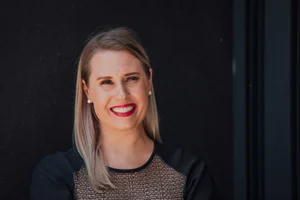
In this episode, Sally Pymer shares the incredible story of losing her uvula after surgery and having to relearn how to speak from scratch.
You'll learn:
What the uvula is and its role in speech
The emotional impact of losing vocal ability
Relearning how to speak through self-practice
The social reactions (and humour) along the way
The importance of getting out and using your voice - even when it’s hard
Transcript
Hello. Welcome to That Voice Podcast. So many people take their voice for granted, and it's a big mission of this podcast to help you understand the value of your voice, to take care of your voice, and to use your beautiful voice. Because what if you lost the ability to speak and your voice changed forever? That's what our guest today, Sally Pymer, was faced with a failed operation in an attempts to fix a breathing issue, left her with no uvula.
You'll learn what that is and the important role it plays in how you speak. I know it sounds like something else. Sally openly shares the challenges, how she taught herself to speak again, how she can't blow into a breathalyzer, and how that's particularly funny because when she's tired, she can sound drunk. I just think that's so hilarious. And Sal also reminds us of the power of a simple smile.
Sally Prosser:
Sally Pymer, it's such a joy to have you on That Voice Podcast. How are you?
Sally Pymer (guest):
I'm okay. I'm going well, Sally. How are you?
Sally Prosser:
I'm feeling good. We've got some construction happening right across the road at the moment, and I think they're putting in the pile, driving for the car park. And so every few minutes, the whole building I'm in starts to shutter. So, Sal, take us through what happened to change the sound of your voice.
Sally Pymer (guest):
So I was diagnosed with chronic lung disease when I was 19. It worked out that all these treatment options that we were trying weren't working. So it was discovered that I had quite large tonsils and a large uvula. So the last option really was, let's take out your tonsils, let's take out your uvula, let's reshape your throat and see what happens. See if it makes a difference to my breathing.
Sally Prosser:
Wow. Jump in here to just let people know what the uvula is, because it does sound a bit like another part of the female body, doesn't it? So the, the uvula, it's the, it's the end part of the back of your tongue. So when you see cartoon scream and you see that little thing shaking in the back, that's the uvula. So if you open your mouth up in a, in a mirror and you see that thing dangling at the back of your mouth, that's the uvula. That's what we're talking about.
Sally Pymer (guest):
Very good. To clarify that definitely you could be thinking somewhere else. So I got it removed, and so I was the age of not quite 40, then quite significant to have your tonsils out. But what happened was when I woke up, I couldn't speak properly. I found a bit like Daffy Duck. Yeah. And I couldn't say like the group word. A lot of people couldn't actually understand what I was saying, and I just thought, Oh, look, I'll have this out. I'll be fine. Back to normal, not having any idea about the consequences.
Sally Prosser:
And did the doctors explain to you like what the implications of having your uvula taken out would be for your speech?
Sally Pymer (guest):
Well, about the main thing that happened was the doctor said what might happen is, you know, when you get drunk and you vomit and sometimes a little bit comes out your nose. Well, that might be about the worst thing that happened. And I thought nothing of it. I went, Oh, yeah. But I didn't actually realize that that is actually what would happen. So I, I'm at risk of choking. Like I can't blow on a blow on a breathalyzer anymore. I can't blow up a balloon. Like I had no idea that that's what, what would happen.
Sally Prosser:
Yeah. Just on that, I know you mentioned to me before about the, the situation with the breathalyzer. You were pulled over once and the cop's like, Oh, can you blow into this? You're like, Well, no, I actually can't.
Sally Pymer (guest):
Yeah. And you think it would be an excuse, like, I'm like, No, I physically can't. So there I am holding my nose trying to blow into it so I could try and get some reading, but in the end, they just let me go like, you'll be right.
Sally Prosser:
So the uvula, which we don't think about very much, is used to create quite a few sounds. So it, it closes down and allows the air to move into the nasal passage for our three nasal sounds and also like anything ending in an Ng. And then it also comes together with the back of the tongue for K. And so not having a uvula would've affected the way that you could enunciate all of those sounds?
Sally Pymer (guest):
It did, definitely. And it was a number of weeks until I could actually get those sounds back. And during that time I was quite scared. I thought, you know, am I ever going to get my voice back? Am I ever going to be the same? Because I just didn't know. I didn't know. And it was quite disheartening thinking, this is the rest of my life. People not gonna be able to understand me. And at that time, I didn't have a job. I was going for a job interview. I thought, who's gonna wanna employ me?
Sally Prosser:
Yeah, Sal, that would've been so, so tough. So take us through, how did you rebuild the strength, or learn to speak again, essentially?
Sally Pymer (guest):
Basically I just practiced. It came back with time, but I just had to really concentrate. So even now, I have to mentally concentrate quite hard to get those sounds out. It isn't something that comes quite naturally. Also when I get tired, the voices will, the words will go. So I actually have to protect it quite a bit too. And though, Hey, I am getting a little bit tired. Let's just talk when I need to and have a break. And when I run as well, I come back from a run and my husband will say, talk probably. I'm like, I'm talking properly. So it can be a little bit hard to understand sometimes when I get tired. It was suggested maybe I should see a speech therapist, but I never, I never did. I just worked it out myself.
Sally Prosser:
Right. Yeah. So that, that's quite extraordinary. And also, you know, our organs of speech, our jaw and our lips and our tongue, our softened soft palate, which includes the ular, they're all muscles. And so it makes sense that, you know, you are really working overtime. Did you, when you say you practiced, did you give yourself a particular set of exercises or a particular routine?
Sally Pymer (guest):
There was no specific routine. I just practiced the gr and, and those sounds and just, I've got an uncle called Graham. So it was like I'm saying Graham, Graham, Graham, because I saw him quite a bit. It was like Uncle Graham Graham. So there wasn't anything specific I did. And because I had no guidance on it either, I was pretty much left on my own. This is the way it is, it'll probably come back with time. Just work on it yourself. And also, it wasn't hiding, like it was very risky to hide and not go out in public and, you know, not wanting to talk to people. But I purposely didn't do that because I just needed to get out there and, and practice as well. And my husband's a farmer. I spent a lot of time by myself, so it actually reinforced my speaking in public.
Sally Prosser:
Yeah, that's so great because it would've been so easy just to, to isolate yourself and think, oh, this is too hard because of, you know, what people might say or think. Did you have any experiences where people, what sort of reactions were people sharing with you when they were hearing you speak? I know you mentioned to me once that you were like, someone thought, oh gosh, she had a too many wines.
Sally Pymer (guest):
Different people reacted differently. So the funniest thing probably was a lady that I'd seen, heard me speak afterwards, and I sounded like someone who had like hearing loss. You know, they often talk a little bit different. And she said, you haven't, you haven't like lost your hearing, have you? I'm like, No, it's, it's my voice. Which was, which was quite funny. I did get a few laughs. You sound like Duffy Duck. And, and they, and they actually were quite a lot of laughs and, you know, it did hit deep sometimes because I thought, you know, I don't know if I'm gonna be like this for the rest of my life. But there were people who were quite empathetic as well. And when I went for a job interview, they, they were really kind and accepting and have a drink of water. We've got plenty of time. Yeah. Different, different responses. And I think some just didn't know how to react either. Like, what do we, what do we say, say to Sally, we can't understand her. And in the end, I think they just said, Oh, yeah, yeah, yeah, yeah. Whatever. Just to prevent that awkwardness of not really understanding what I had to say.
Sally Prosser:
And that's a challenge as well, isn't it, to kind of feel like, you know, people have just given up on trying to understand. Did you feel a sense of grief in a way, like grief for your old voice?
Sally Pymer (guest):
Oh, totally. Oh, I did because I was a fitness instructor before that as well, so I could project my voice quite well. And I was used to being at the front of the stage conducting classes, acro aerobics. And then after that, I, I had left my job, but I can't project my voice as well as what I used to. So there's that loss of that. And you know, sometimes trying to project my voice, I can, it can get a little bit muffled. So there was, there was the loss with that, but also, you know, the uvula, I have to concentrate when I eat now, so I don't choke and it didn't fix my chronic lung disease. So there we go.
Sally Prosser:
That was my next question. Did it improve things at all for you?
Sally Pymer (guest):
No, no. So there's still this unknown. So I have that chronic lung disease there, I can breathe a little bit better, but my lung capacity has not increased at all. So there's, there's that in my head too. Like if I didn't have this operation, I probably would've been better off. And I believe that they don't actually do that operation anymore. I think they've decided that they don't. So, but anyway, you've gotta focus on what you can do and I can't do anything about it now. So now I can just add that to my story and, and keep doing what I do.
Sally Prosser:
And Sal, that's one of the things I love about you, you're so positive and your movement is all about bringing joy to people through the power of a smile. When did that come about? When did you decide to, to start sharing that message?
Sally Pymer (guest):
Yeah, so I was doing a speaking course last year and I was developing my keynote and I wanted to talk about the comparisons between addiction, I mean exercise addiction and drug addiction. And all the stories I came up with, it all came back to a smile. A smile was the connector. It was the thing that broke down barriers. It broke down stigma. It encouraged people to connect and to open up and to tell their stories. And having worked in alcohol and drug and disability services and a range of other community organizations, I've just seen that power of a smile on mental health and physical health and so many, so many different, different things. And you know, there's so many benefits to a smile with them making you feel good and being universal and you know, they cost nothing and they're contagious. So it just has this real benefit of changing the world, I think. And you know, often we think we are powerless to, to change the world, but you know, a smile is one of those simple things that anybody can do that can really have, have a huge impact. And yeah, that message, I just, yeah, like to get across to, you know, you can make someone else's day no matter who you are.
Sally Prosser:
Oh, so good. And you mentioned there that it is universal. So when we are in those situations where there might be a little bit of a language barrier or a hearing barrier or there's just a lot going on around and it can be difficult to connect.
Sally Pymer (guest):
Yeah, it's really quite powerful. And I think it's globally understood as a signal of safety walls and acceptance. So, you know, you're traveling somewhere where people don't speak the same language, it breaks down those barriers and you feel safe straight away. And you feel seen, you feel worthy and that you matter if someone smiles at you. You know, people can feel quite invisible surrounded by people. So you can pass many people in the street each day and non acknowledge you. But a smile is that simple message that takes only a couple of seconds to really show that you are not invisible. You are actually seen and you deserve to be here.
Sally Prosser:
Oh, so great. And we wanna be using the Duchenne smile, is that right? So it's the Duchenne smile is the one that activates the eyes. And so it's that genuine smile. And I think the other one, they call it the PanAm smile, like the flight attendant smile, although mom's a flight attendant and she always smiles very genuinely. But the other smile is if you see someone smiling without moving their eyes, like a fake smile.
Sally Pymer (guest):
You can fake a smile and still release the feel good hormones. But yeah, the ones that crinkle your eyes, they're the ones that you can't fake and they're really, really quite powerful. And you know, and I don't think people understand. They reduce your blood pressure, they improve your immunity, they make you live longer. They can make you appear younger.
Sally Prosser:
So what has this whole experience taught you about the role of your voice and the power of your voice in your life?
Sally Pymer (guest):
Look, I think, you know, everybody's got a voice. They've got so much to share. And you know, when I come back to the smile and the stigma and connection, there's so many people there with so much to say, but they're scared. They're scared of getting outta comfort zone. They're scared of sharing their voice and saying who they truly are. But I think once you actually use your voice, you say who you are, what you believe in, and what matters to you, you actually find a lot of other people will suddenly appear and go, me too. I feel the same. And it, it actually empowers other people to use their voice as well. And you know, all of us have got something that we are dealing with. Like, I have no uvula. I have to concentrate when I talk. So it's a matter of focusing on what you can do rather than what you can't do.
Sally Prosser:
Yeah, absolutely. And that's the reason that we're doing this episode today. So Sal, thank you so much for coming on that voice podcast. Was there anything else you'd like to add?
Sally Pymer (guest):
All I wanna say is thank you yourself. And you know, use your voice, say what's important to you, and smile at people. You never know what the response could be.
Sally Prosser:
What a beautiful way to end. Sally Pymer, thank you so much for joining us on that voice podcast.
Sally Pymer (guest):
Thanks Sal.