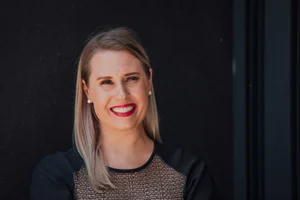
Do your ever feel the pull of self-silencing?
In this thought-provoking episode, I sit down with counselling psychologist Dr. Simone Grey to explore why so many people edit themselves before they even speak.
We unpack the connection between voice, the body, trauma, identity and the social structures that shape who feels safe to be heard.
You'll discover:
Why self-silencing happens long before words leave your mouth.
The subtle signs you're holding yourself back (from apologising to the "swallowed sentence").
Why voice isn't just about the mind or the body - but the whole self.
How history and social systems continue to influence whose voices are valued.
Practical ways to begin speaking up through small, low-stakes acts of courage.
Transcript
Hello. Welcome to That Voice Podcast, Episode 299. Can you believe you are in for an absolute treat today? You know when you're scrolling and you come across someone online who speaks to your heart, who makes you feel smarter, who goes deeper, and you ask yourself, "How on earth have I just discovered this person?" It also reminds you of the incredible positive power of social media. That's how I met today's guest. Dr. Simone Gray is a counseling psychologist, a decolonial anti-patriarchy psychologist, a wise sage who has only been posting videos for a couple of months. I am so glad she accepted the invite to join me on That Voice Podcast before she gets inundated with requests.
Our conversation today is about Self-silencing. And Dr. Simone shares what it looks like and what you can do to stop self-silencing as an individual within the structures that work against that. Settle in. This conversation is deep, healing, and might be just the motivation you need to use your voice.
Sally:
Dr. Simone Grey, it is such a pleasure to welcome you to That Voice Podcast. How are you?
Dr. Simone:
Hi Sally. Thank you so much for having me. I'm very well and I'm very thrilled that you've invited me to talk about my work today. So thank you.
Sally:
It was a non-hesitation scenario. I saw a video of yours on TikTok. I was absolutely hooked. I have to get her on the podcast <laugh> and here you are. Share with us what kind of work do you do and what drives you to do it?
Dr. Simone:
So I am a counseling psychologist and I'm also a nutritionist. So I did a master's in nutrition and behavior and I did a doctorate in counseling psychology. But that doesn't really articulate the very winding road. , The 25 year road really that I had to get to this point, which is that I graduated from my first, , psychology degree and then became a sports therapist. And then I became interested in working with the body more subtly. So then I became a British Wheel of Yoga teacher. British Wheel of Yoga is a very stuffy kind of organization, but they do a really robust training in yoga teaching. And then I became a PT. So I had this kind of 20 year history of working with the body, working with exercise physiology, working with breath and meditation. This all sort of became formalized in my master's and my doctorate because I have always really enjoyed working with people relationally and trying to make sense of the world, I suppose in complicated ways.
Dr. Simone:
And I've always been interested in, in the structures and the frameworks that we live in. So I, I now work as a counseling psychologist. My specialism really is complex trauma relationships and eating disorders, but I also really enjoy writing. So my thesis is really what has driven me to create a social media community. And I'm a parent and when I did my doctorate, I was, you know, touching 40. And I still haven't published from my thesis, but I got to the point where I was like, you know, I really wanna talk about the stuff that's important to me. I think it's important to other people very timely because it's about power and it's about gender and it's about politics and distress and mental health. So I kind of though, Well, I wanna go back to the oral tradition. I will, , tell stories. I will speak my truth, if you like.
Sally:
And we love it. There is so much mess on the internet. So when you find a corner with someone like yourself, it really does create that community and that sense of feeling heard. I would imagine all of this background working with the body and then now working I guess more with the mind, you'd be able to see how there is an inextricable relationship between the two. And is the work you do with clients, somatic? Like can you see in the body the manifestations of what's going on psychologically?
Dr. Simone:
Oh, that's an interesting question. And I suppose true to form, I'm going to deconstruct it because even the language that you use to describe selfhood, the mind and the body, that has its linguistic roots in Descartes. I think therefore I am. And to say I think or I am or really what he meant was I am a thinking thing is to create a kind of split between the mind and the body, which actually we see anthropologically, we see historically, we see in religious history. There is a split between the mind, which is rational, it has logic and reason and the body which is very unruly. It's chaotic. And the mind is often coded masculine. The body is often coded feminine, right? So there's a privileging of mind over body. Now I actually refuse that split. So I don't work with body mind. I work with the self.
Dr. Simone:
I work with people on an integrative level. So we're two bodies or maybe three or four bodies in a room and we have nervous systems and we have histories and we have stories. And so firstly, I refuse that split. When I talk to people, talking is somatic, right? Thinking is somatic. There is no differentiation between mind and body. We are mind, we are body, right?
Sally:
I so accept that and I hear that. And it rings true with the way that I teach voice. I often say I'm working to help people get their voice out of their head and into the body, but what I'm really doing that you so beautifully articulated is showing that there is no split.
Dr. Simone:
Yes, exactly that. Because we've come to believe as a kind of truth, but truths become truths through repetition, through unchallenged repetition. Now, if we think about the Southern hemisphere and indigenous practices of selfhood, often there is no split. Selfhood embodiment, , even in Maori culture, in indigenous American cultures, selfhood is very much more integrative. It's whole. The whole self is a knowing self. So to be able to meet people in a way that is inviting them to be more embodied is to challenge the very apparatus that perpetuates a split. The apparatus, the language of the clinic, for example. The language of psychology upholds and reinforces the split. Why? What's the function? What's the purpose?
Sally:
And so speaking of the self, you talk about self-silencing. What is that?
Dr. Simone:
I don't see it as behavioral. There is a behavior there, but I think it's more than that. I like to anchor it relationally, right? So I think it's a kind of ongoing editing of the self before the self breaches the waterline, breaches the surface. So there's a kind of internal often unconscious process that stops the expression of selfhood. So the silencing happens upstream of speech, but it's grounded in a kind of, because it's not shyness. It's like an adaptation to not being recognized.
Sally:
Yeah. So how might that show up in someone's life? So how might they recognize that they are self-silencing?
Dr. Simone:
Oh, I think this is where the work is, right? It shows up in the swallowed sentence. It shows up in the meeting where you don't say what you really mean, but you go and you scream in your car afterwards. It shows up in chronic apologizing when you don't really mean it. It shows up in the tight throat. It shows up in the tension in the shoulders, in the held breath, the way that we breathe much more thoracically, upper thoracically. It will show in the constant self monitoring, the self-policing. Am I too much? Have I said something wrong? The kind of post vulnerability hangover where you're overthinking what you said or didn't say. It's managing other people's emotions so that they perceive you to be good or accommodating. The way that it shows up is, is profound and across multiple domains.
Sally:
So what can people do to stop it?
Dr. Simone:
We need to kind of do a bit of a bridge between what is someone's individual responsibility and what is structural, right? Because we live in a society, we live in a time where women are not invited to speak out, right? So there is something happening which is much more systemic. But on an individual basis, I think like low stakes acts of saying the truth in relationships first is a good place to start if it's safe to. But I think it's in like noticing where in the body the block happens. So it's like taking a minute to be curious, like I really wanna say something. What's that feeling? What's that sensation? Where is it located? Does it happen in the gut? Is it happening in my throat? Is there something in my head that says screaming at you, shush, do not say the thing. But ultimately I think for me on a kind of more schematic psychological basis, there's something happening at the level of fear, right?
Dr. Simone:
There's a fear that saying the thing will cause some level of retaliation, criticism, pushback,, rejection, right? So I think it's that practice of noticing where does perhaps that reticence, that fear show up on an embodied level and then at that level kind of giving yourself permission to just breathe into it and then practice the small, low stakes saying of something, anything to begin. Just begin.
Sally:
Yeah. Such great advice. You spoke about the, the systems and I love that video that you shared about the scold's bridle and I might share a snippet of that.
Dr. Simone:
So I want you to picture something. It's iron and it fits over a woman's head like a cage. And inside there's a metal plate that presses down on her tongue. And if she tries to talk, it hurts. And it's called a scold's bridle. And for over two centuries in Britain, it was a very normal legal punishment, not for stealing,, or for violence, but for talking. And it was for a woman who argued or gossiped or answered back. So they'd lock her into it and they'd walk her through the town on a chain. And there was even, , a name for it. It was called the common scold. And it applied only to women. This wasn't one cruel husband. It was structural. It was part of civic life. And it wasn't the only thing because the same centuries gave us the witch trials and the people that, were burned and drowned were overwhelmingly women.
Dr. Simone:
And women who healed and who knew things or who lived without a man or who spoke against one. , Sylvia Federici's point is that this wasn't just superstition getting out of hand. It was actually a way of disciplining women, women's bodies, their knowledge right when the modern world needed women controlled. So the witch is the woman who wouldn't be contained. And that word contained is the word I keep coming back to, because women get handed the interior, the private, the domestic, our internal life. So we're meant to hold all the feeling, but we're not meant to say it out loud. And the bridle's mostly gone now, but the silencing, it didn't stop. It just kind of gets cleverer. It's like a whack-a-mole game. And this is where Focault makes a point that power doesn't actually need force. It doesn't need a cage or a chain.
Dr. Simone:
It actually works through what gets to count as a credible thing to say and who gets to say it. So you don't need the iron anymore because you've got discourse, you've got words and text instead. You know, women get called hysterical, shrill, mental, crazy, dramatic, too much, over emotional. And every one of those does the job of a bridle because it takes what a woman says and it sort of files it under noise.
Sally:
So how can women find that courage to speak up when they are in this soup of the structures of the system?
Dr. Simone:
The historical counter to silencing has always been in a kind of collective consciousness raising. I really love the work of Angela Davis, the American scholar. You know, she says, We need hope. We need to go to the community in messy ways. We need to come together. We need to work together to kind of create small acts of resistance. To be embodied, to speak from the body, is a kind of act of political resistance. So I actually think it's finding communities. It's finding places and spaces where you can imperfectly practice sharing something of yourself. And I think this is really important now because there's so much political divisiveness and, you know, one person's misstep linguistically can invite so much pushback in terms of identity politics, in terms of being called, you know, woke or far right. Ultimately, we need to be able to feel free to make mistakes and to redress mistakes.
Sally:
Yeah. And I often share with my clients who are out there speaking confidently that they're voice pioneers and through sharing their voice, they are helping other women share their voice as well.
Dr. Simone:
Yes, I agree with that, but I'm going to caveat that as well because, you know, you and I here talking on this, you know, that we've got wonderful technology that means we can talk to one another from different sides of the world. You know, we're both white. We're both, I mean, I assume cisgender, relatively able-bodied, I assume. I'm making these assumptions about your identity, so correct me if I'm wrong. I actually think that as women with these identities, what we do have is a responsibility not just to speak our truth, but to better open doors to allow women who are less privileged, who are more oppressed to speak their truth. Because if we're not raising the stakes for all women, black women, transwomen, women in countries where, for example, in Afghan, in Afghanistan, sorry, where the Taliban have eradicated even women's access to education.
Dr. Simone:
I mean, if we are not raising the consciousness of all women, then we're not doing a service to any women.
Sally:
So powerful. Thank you for sharing that. Would you say that that is the thing that you wish more women knew about their voices? The power that it holds for the collective?
Dr. Simone:
Yes, I do. It's through the practice of radical honesty and self-reflection that we can become more aware of some of the privileges that we hold as women because the system is very one up, one down organized. You know, there's a hierarchy. You know, I'm thinking about intersectionality now. I'm thinking about the privileges that we hold as women. Nowhere near the privileges that men hold. But as women with these identities, we, we have access to platforms. We already have access to material ideas, histories that other women will not. That practice of self-reflection to be curious about, well, what privileges do I hold that others do not? We need to be able to be honest about that even whilst we feel oppressed. Even whilst we acknowledge that the system has disadvantaged us. There is still someone else even more disadvantaged who has access to even less.
Dr. Simone:
I work with transpeople. My thesis, it was an analysis of the ways that trans and non-binary people construct their eating disorder distress. I feel very strongly that womanhood should be expansive. It should welcome all types and masculinity. Gender should be an expansive practice. It should allow for people to express their identity in expansive, complicated ways because once we start to narrow down these ideas about womanhood, women have become something which is policed. And if you do not perform womanhood in a particular way, in the right quote unquote way, you are punished, you are disciplined, get back in line, perform womanhood in the ways that's acceptable. So for me personally, politically, I welcome anyone that wants to identify as a woman because any expansion of that category of femininity makes it safer for all women to express their selfhood.
Sally:
Hmm. I have a video sitting in my drafts about what a feminine voice is because I had a client say, "Oh, I'm just afraid that my voice is not going to be feminine enough." And isn't it interesting that a high pitched voice that's not supported by breath, that's miles away from our vocal power is what's been set up as being feminine?
Dr. Simone:
Have you seen those wonderful throat singers where they use their voice in such a rich way to produce these growls? I mean, this idea that womanhood should be akin to a, a kind of childlike quality is pedophilic, right? This idea that women should be small and should be compliant and should be in that higher register performing a particular function because it's much more easy to be controlled if you are childlike. So yeah, give me that rich guttural war cry of femininity over the shrill cry of a toddler any day. Thank you very much.
Sally:
Yes. Love it. Oh, Dr. Simone, was there anything else you'd like to add?
Dr. Simone:
No, I don't think so. Is there anything that you would like to add, Sally? Because, it feels very... I'm normally the one on the other side, right, because I'm a therapist. So is there anything that you would like to say?
Sally:
There are many things I'd like to add. And after we finish recording, I will be asking you those questions. But for now, where can people find you? How can they get in touch with you and follow your amazing work?
Dr. Simone:
Oh, thank you. So I'm just Dr. Simone Grey, Grey with an E across various social media platforms which sounds still very bizarre for me to say because I've literally just been posting for about 10 weeks. So people can find me in, on TikTok, Instagram, YouTube, and Facebook.
Sally:
And we'll put all those links in the show notes. Dr. Simone Grey, thank you so much for joining us on That Voice Podcast.
Dr. Simone:
Thank you so much, Sally. Have a great day.