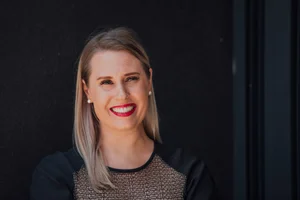
What does it mean to be work famous? And why should you want to be?
I'm joined by my fabulous friend, consultant, facilitator and author Leanne Hughes for her third appearance on That Voice Podcast, this time to chat about her brilliant new book, Work Fame.
We unpack why work fame isn't about shameless self-promotion or chasing the spotlight. It's about contribution, connection and making sure the right people know what you bring to the table.
We explore the power of putting your hand up, making yourself visible AND audible, starting conversations, sharing your ideas and creating opportunities rather than waiting for them to come knocking.
Leanne also shares her three Cs of Work Fame: Contribution, Conversations and Coverage, along with some practical ways to build your reputation and become known for what you want to be known for.
Transcript
Welcome back to That Voice Podcast. My amazing friend Leanne Hughes is joining us on the podcast for the third time because she has released her amazing second book, Work Fame. And this should honestly be compulsory reading, along with my book Voice Print. It makes the case for why work fame matters. And it's not about the rah-rah paparazzi, I wanna be famous. It's not the shameless self-promotion kind of vibes. It's about having people pay attention to your ideas. It's about getting cool opportunities. It's about having fun, which is why feeling confident to use your voice and getting clear on what you want to be known for is so important.
Reach out. Let's have a chat about Soul Speakers so you have the voice to get out there and reap the rewards of being work famous. Leanne Hughes is the coolest consultant I know. Let's get into it.
Sally:
Leanne Hughes, it is my absolute pleasure to have you back on the That Voice Podcast again with your brand new book, Work Fame. Tell us, what is work fame?
Leanne:
People have this interesting reaction to the word fame and I think that's why I wanted to write about it because, I mean, we're not, what we're not talking about, Sally, we're not talking about celebrity fame or internet fame. And I would say you're internet famous as well as work famous. But what, what work fame is, is having a reputation where opportunities come to you and the door, the right doors open for you at the right moment. And it's really about, , you know, just on the fame thing, it's not about the paparazzi, or trolls or anything like that, but I think we all want what fame delivers. Even if we're afraid to say, "I wanna be work famous." We want cool projects. We want cool people reaching out to us. And so it's really a book around how do you, how do you attract those opportunities?
Leanne:
And the foundational part is that it's actually about service and contribution. It's not all about self-promotion. Yes.
Sally:
That is so important because one of the biggest blocks I come across in my work, and I'm sure you do as well, hence the book, is people that go, "I don't like to self-promote. It feels icky. I don't wanna make it at all about me, me, me." And I feel like the, your approach has really busted that myth and changed that thinking. So in the book, you share a fair few stories. Is there one that really stands out for somebody who may have had that mindset in the beginning of, "I don't wanna be in the spotlight," but started putting themselves out there with service at the forefront and had results?
Leanne:
Yeah. I mean, there's so many, every great example in the book. It was really hard to figure out which parts belong to which sections. But, and one of my favorite is a guy called Andrew Thomas. He's now the vice president and head of GSK Australia, which is a big pharmaceutical. And I think it really comes back to like the Australian culture of not wanting to stand out. And even as a bloke, like, we think it's just women that have these sort of the self-dialogue, but it does apply to, to all humans because we wanna have the sense of belonging and not putting our, our neck out. And so the advice early on in his career, because he was, , being enthusiastic in raising his hand, and his mate said to him, "Hey, don't do that. You're drawing attention to yourself." They actually said that to him and he thought about it for a while and he said, "No, no, I do wanna contribute." And so he kept sort of putting his hand up volunteering.
Leanne:
He would reach out to people around the organization that didn't know him and said, "Hey, I'm keen to work overseas. Are there any opportunities?". And as a result of just reaching out to someone in another region, he then was offered a role within a month, moved to the States and, and where he noticed the different perspective of working over there where people actually celebrated, you know, you getting involved. He was promoted four times within like five years without applying for any of those jobs. And then came back to Australia where he did become the general manager. And I think, what's interesting, Sal, this is a really good conversation to have. Andrew now coaches emerging leaders within that business and he'll say to them, like this is the executive general manager saying to them, "In the next town hall, I want you to ask a question." It's almost a direction from him.
Leanne:
And he said out of 15 people he'll tell that to, only two will actually do it. Fascinating. You know, it's kind of like a direct order from a senior leader and still people find it very hard to put their hand up and contribute.
Sally:
Yeah. We do have that culture of speaking under the radar, not ruffling the feathers. And it reminds me as well when I go to events and I say to a large group of people, if you'd like to catch up for a coffee or get some advice, depends how my calendar is at the moment, but I did this a lot in the early days, send me a DM on In - on LinkedIn. And I remember somebody said to me, oh my gosh, how could you just say to a whole room full of people, send me a DM, you'll be, you know, there'll be an influx. There never was. Nobody ever does it. So the one or two people that do end up getting the opportunity. I like that story because you also share that WorkFame doesn't need to be, "Hey, I'm an influencer. Look at me, look at me." It can be as simple as putting your hand up in that town hall to have your voice heard.
Leanne:
Yeah. And I think, probably the association is like, "Oh, I've got to do all this extra stuff on top of what I'm already doing". But I think if you're already contributing really well, and I think the, the myth of the modern workplace is that it's a meritocracy. It's a complete garbage. It's not a meritocracy. There's a, a research, that paper that I referenced and I know that you've called it out before, Sal. Dina Camel over in the UK researched, the meritocracy myth. And the fact that because... And it's not because we're bad leaders or managers, but there's so much information in our lives. And so we have to think about who is that person we can put into a project or promote. The, there's things like the availability bias. We'll go to, Oh, that's right. Brody, she asked a question in the last town hall and we remember the people that actually do stand out. And so when we are thinking of those people, you're front of mind as a result.
Leanne:
But these opportunities, like there already exists. And Sal, you do a lot of webinars with organizations. And I'll be on, like, I ran one for a big bank over in Europe, and out of 50 people on the webinar, like, maybe 10 had their cameras on. So one simple thing is just turning your camera on, you know, during a call. You're already at the meeting, just switch the camera on. And I think it's these little things where you can increase that level of visibility. And I know that you talk about, is it voiceability? What's your phrase for it? Audibility.
Sally:
Oh, audibility, yes. Not just the visibility. It's the audibility.
Leanne:
Yeah, that's right.
Sally:
That people will remember your voice. And I like that phrase, in the back of your mind, think about how you can be top of mind. You know, I work with a lot of journalists and they're interested in how do I get that great voice for broadcast? And that is part of it. But what's more important is that you are in front of the decision makers. So when they do need someone to fill in, you're the first person that comes to mind. People are not going through who is the best at the job.
Leanne:
No, it's like, who do I think of first? 'Cause Like all that pressure, I need someone at speed. It's like, yeah, that... So just think about these are human dynamics at play. This is like neuroscience. Once you know all these things and you understand the importance of contributing and, and making that visible within your organization or business. This is not about if I do X, then Y will happen. What tends to happen is if you are contributing really well, if you're putting your hand up, if you're getting involved, what you discover is that you actually become a more interesting person. You feel, I think it's fun to contribute and not live life in third gear. And the book is almost like an anti-quiet quitting thing, because I think you can actually create the opportunities. There's great stuff on the other side.
Leanne:
You just become a better person to be around. And as a result, like, as a sort of side effect of doing all this, then you find that you attract the opportunities. So -
Sally:
It's the, it's the energy. I love that phrase. You don't live life in third gear. It reminds me of an article I wrote in Praise of the Try Hard. Like let's not be afraid to be seen trying.
Leanne:
I don't know if you see on TikTok. I mean, you're, you're on TikTok more than I am, but I see all... And maybe now my algorithm, because I was looking at this sort of stuff around quiet quitting, but yeah, people just, you know, obviously finding ways to do work without actually being present at work. You know, like there's tools now that will move your cursor so it seems like you're active on teams even when you're not. It's like if you use that level of innovation to actually do your job, your life would be so much better.
Sally:
I totally agree. And I think that there's this false sense that if you're just quiet quitting and not trying too hard, you somehow have an easier, softer, better life. Whereas in my experience, and I think you and I are a bit case in point with this, is the people that seem to have the most, you know, interesting holidays and relaxing adventures and all of that are people that, that try in all areas of their life.
Leanne:
Yeah. I'd love to read that article. I, I agree with you. It is in service. I, I was actually e- expecting, like, you know, one day there's getting to be some backlash around, is this just another mature age millennial? You know, but there's so much research about it in terms of Gallup. Like if you enjoy your work, you have a better life. You have better relationships.
Sally:
Now, what I also love about the book is if you are a bit, you're already sharing at work and you might even be posting content on social media and you're getting to that stage where you're on panels at events and that level, I love at the end how you share some really practical tips for how people can do that better. Like you say, I do a lot of content, I do this kind of work, and I really liked the end part with your practical tips around how to introduce people, how to, , be on a panel. I loved your little hack with the Apple smartwatch, because often when I'm emceeing, you're sort of keeping an eye on the time, but, like, how do you keep an eye on the time without -
Leanne:
Looking at your watch.
Sally:
Look at the watch. And it's like you don't always have a clock and you were just like, "I've just set my Apple Watch to just buzz at five minutes." I'm like, "That's a great use of a smart tech."
Leanne:
Yeah, thanks for... Yeah, thanks, Sal.
Sally:
Well, as I mentioned, I'm getting into the running, so I've been looking at the smartwatches. I'm thinking of getting the Garmin, you know? So that's what I wanna point out as well. So with our conversation, don't be thinking that it's too basic. I think it really reaches anybody at any level who wants to experience the effects of being famous.
Leanne:
Yeah, but so what you pulled out there was the, the section on panels, which is part of conversations, and just the role of hosting, I think, is completely underrated in terms of building your profile and career, because when you host something, it automatically puts you as a peer of people that are pretty amazing. Like, I've been on host with former socceroos, Olympians, executive leadership team members of the organization that I was at. So people then automatically associate you on the same level as them, which creates its own sort of work fame. But yeah, I did write a panel, bit about panels because I was... I'm a bit disgruntled with them. A lot of the time, it just seems very stagnant. It's like I'm gonna ask the same question to panelists one, two, and three. And so just some ideas on there in terms of how do you create some more dynamic energy, in those sessions as the panelist host, but also when you're a panelist as well.
Sally:
Yeah, love it. I'm hosting one in a couple of weeks with some very accomplished women in tech, so I've been taking notes. I really love that. I think we should also point out though your three Cs, which is the framework of the book.
Leanne:
Yes.
Sally:
So what are the three Cs?
Leanne:
Yeah, so Contribution is the first one. So, I mean, it has to be about what you actually contribute to your job, but then how do you make that... How do you get people to sort of understand what that is? The second part is Conversations. This is probably the biggest, the meatiest part, and because it's all about other people, like, you know, our relationships with people. So there's two parts to this, one-to-one conversations and reaching out and building a network, but also one-to-many and that role of host. And then the third is Coverage. And this is, this is the part that made me work famous within my organization when I was at a global mining company. It was actually starting a podcast which had nothing to do with my day job, but that actually made me more famo- famous within the organization, which was fascinating. So you get to a point in your career where maybe you're asked to speak at industry events, and it just goes through that, and also how to share what you're doing and capture your ideas, publicly, like on Substack, LinkedIn, et cetera.
Sally:
Yeah, so true. Come to think of it. I was doing a little bit of voice coaching while I was working in my corporate PR job, and that got back to the organization. Like as it does, it's not a secret. And then I was asked to, to interview people in front of the leadership team. Yeah. And that led to me being asked to MC the largest water conference in the Southern Hemisphere, which is what led to me having a conversation directly with the CEO who said, "Sal, you should do that full-time," which actually led to the business I have today. Oh. I've just made that connection. That, that's really how it happened.
Leanne:
It's like that wasn't, that's not an internal opportunity. You've created your own. Exactly. Yeah.
Sally:
Yeah, because I became known. I think I was even just putting some presentation tips on LinkedIn or something. I just became known as someone who had this extra skillset and that was brought into the organization. I love your story, you've got so many like this, but were you at a sporting match in Japan and like chatting to someone next to you? And then that's led to an opportunity.
Leanne:
This is... Yeah. I, I was joking about how in my 2027 marketing plan, I'm just going to get drunk in foreign pubs. I was... But yeah, I went, I was in Osaka for work recently, and obviously the Brisbane Lions went in the AFL grand final. I wanted... I could either watch it at, in my hotel on my iPad and get a VPN, which was tempting because it was raining and I didn't, didn't know anyone. Or I was like, "No, Leanne, go to an Aussie pub and come on, this is your local team. And if, if it sucks, you can just leave it at full time." It ended up being the best afternoon in Osaka. I made so many friends. I was hanging out with one of the tallest pitchers to ever play Major League Baseball. And funnily enough, he played for the San Francisco Giants.
Leanne:
This guy was a giant. Anyway, you just talk to people. And a couple of weeks later, I get an email saying, "Hey, we met at the Osaka, , grand final. I'm running some, putting together a leadership program for next year. I'd love to get you involved. Can you send me what you do?" And a lot of my work has just been through these organic conversations. One of my biggest clients I met through the dog park. This back to this whole sort of personal brand and being work famous. We're always famous for something, but I think it's about being intentional around what that is.
Sally:
Mm. I love that. I'm off to Osaka over Easter because I'm walking the Kimanu Kodo, which is the Japanese camino. So you have to get all your Osaka tips.
Leanne:
That pub is really fun.
Sally:
Yeah. Love it. And what I really like about this story as well is it shows that people don't have to make this a big thing every single day. Every conversation you have, every place you go is an opportunity to show people who you are and what you do. You don't go to the pub and go, "Hello, by the way, I run leadership programs." You know, it's not how you do it. No. But it's also showing that these organic, real conversations that we're having can be more valuable than the curated LinkedIn video.
Leanne:
Completely. Completely. I think it's also an element of also knowing where you wanna go. So one of the first ever... When I quit my job in 2019, the week before that, I had to hand over in Sydney and I was talking to the chief people officer and she said to me, "Leanne, like, what are your goals, like, with your business?" And I said, "I don't really know what my goals are for my business, but eventually, Chris and I would love to live in Asia at some point." I just dropped that into conversation, and she goes, "Oh, would you like to run all the leadership training out of Asia?" I was like, "Yes, I would love that." And so that was my first sort of... That's how I got the gig in India, Hong Kong, and Singapore. 'Cause It would've, would've been very easy for me not to say that.
Leanne:
But when you have an idea of... Or even just a vague vision of what you want in life, and you start seeding that in conversation, I had no expectation or idea that was a possibility. This is what I mean, like, these conversations can really just turn things.
Sally:
Yeah, love it. And if you're listening to this going, "Oh, okay. It sounds all good, but what do I actually do?" Well, in Workfame, at the end, there is literally a checklist with open boxes telling you what to do. Start a work receipts folder and add your first three entries. That's a great one.
Leanne:
Yeah.
Sally:
List 15 contacts. Like, it's actually a, a step by step, and I love this in the book. So where can people get their hands on Work Fame?
Leanne:
Yeah. Well, head on over to getworkfame.com. There's a quick two-minute video from me about what the concept is all about, and then links to buy it from Amazon or your local retailer, as well.
Sally:
It is so sought after. The first time I ordered this from Amazon, it was outside my building, nicked, gone, taken. Somebody else wanted it. The second time I said, right, I'm gonna get this again. Delivered to the wrong building. Went there, wasn't there. I don't know, magically turned up in my office finally. But this is very, very wanted. It is a wanted book, so make sure that when you order it, you are down there in a flash to pick it up.
Leanne:
Yeah. I love that, Sal. It was so funny following those chronicles of where the book was. So, yeah. Thanks for sharing.
Sally:
Yeah. And just as a final tip, which that story shows, is the power of story. Share what's going on. Share the experiences you're having, because I do share, this is a great communication tip, but I guarantee more people talk to me about, "Oh, did you finally get work fame? Oh, how was the camino? Oh, how's your renovation?" So really sharing what's going on in your life is what people will always connect with.
Leanne:
I agree. It makes you... Yeah, anytime I was to catch up with you, there's always something that you're doing or sharing and it's like, "Oh, tell me more." And so it's just a great way to build that connection with you as well.
Sally:
Oh, well, I look forward to our next walk. We're overdue for one.
Leanne:
We'll have to lock that in between now and the end of the year, Sal.
Sally:
Sounds great. Leanne Hughes, thank you so much for rejoining us on That Voice Podcast.
Leanne:
Aw, thank you again. I always love these chats, Sal. And, yeah, cheers to your work fame.
Sally:
Aw, thank you.