The Uncanny Valley of Voice
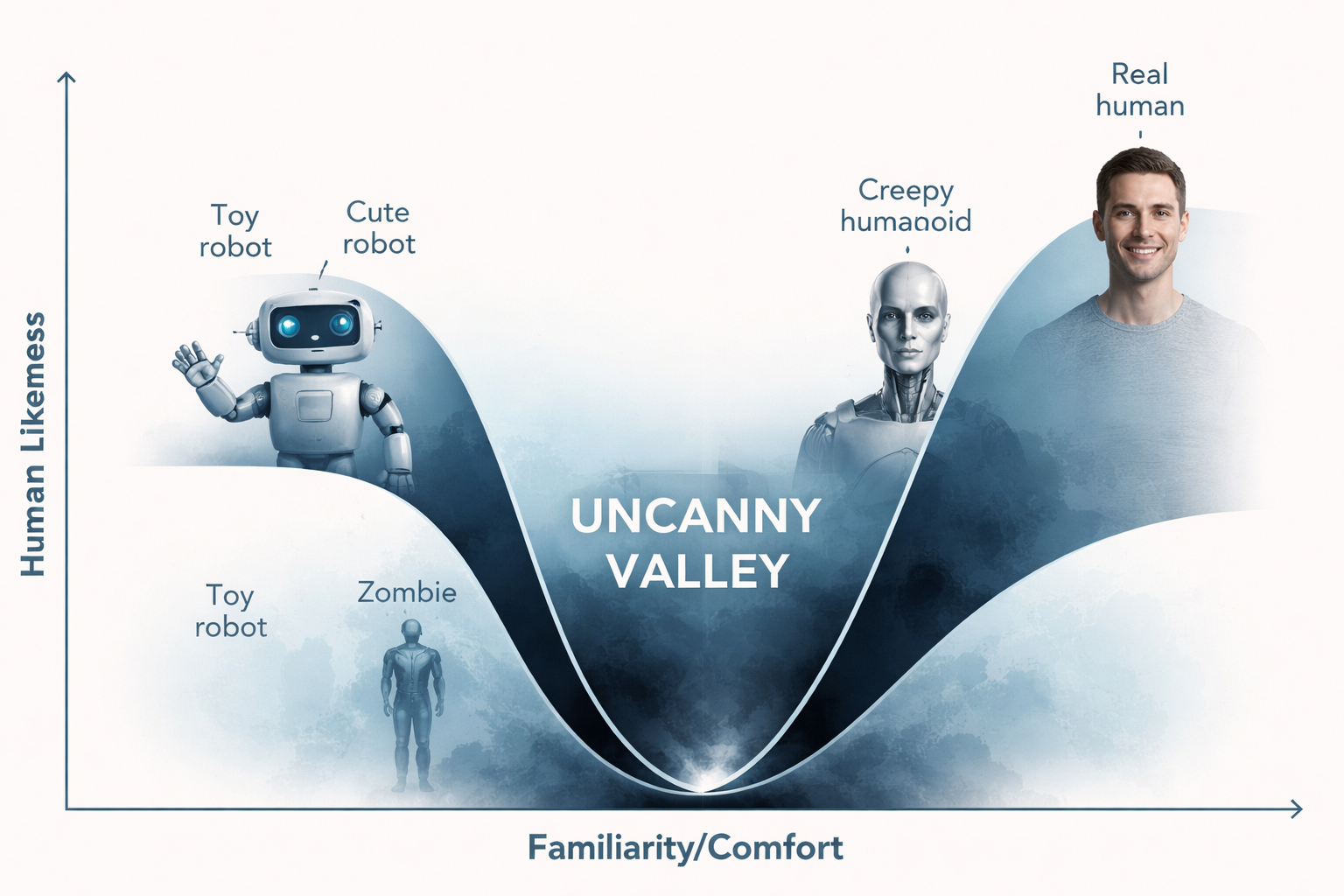
Have you heard of the uncanny valley effect?
It’s that eerie, unsettling feeling we get when something is almost human - but not quite.
We tend to feel positively toward technology when it clearly looks like technology. Robots that look like robots? Cute. Even something that’s somewhat human is fine.
But once we hit that tipping point - when something is so close to human, yet we know in our bones it’s not - we plummet into the uncanny valley. And with it comes an instinctive urge to pull away.
A number of theories have been put forward to explain this phenomenon. One of the most compelling is that it threatens the very thing that makes us human: our unique identity.
And that includes our voice.
Our VOICEPRINT is the mark we leave when we speak. It’s shaped by belief, body and breath, it rises to the emotion of the moment. It’s not just sound — it’s our auditory signature.
Which got me thinking…
Will we feel this same unease when we hear something that is almost human?
Apps like ElevenLabs are inviting people to clone their voice, and voice-AI platforms like Bland AI, Retell AI and Vapi are deploying generated voices in real conversations.
At the moment, you can usually tell by the slightly off tone, the robotic phrasing and the intonation that’s not quite right...
But that line is blurring fast.
Companies are already using AI voices in customer service, and I don’t know about you, but I prefer it when I can clearly tell it’s automated.
As that distinction fades, what happens?
In my book Voiceprint, I have a chapter called The VP Black Market. It’s about how voice scammers are becoming increasingly sophisticated - and experts agree a convincing voice clone can be created with less than a minute of audio.
I write:
“Hearing a voice, especially a familiar one, activates the limbic system — the emotional control centre of the brain. When the voice belongs to someone you love, it bypasses logic altogether.”
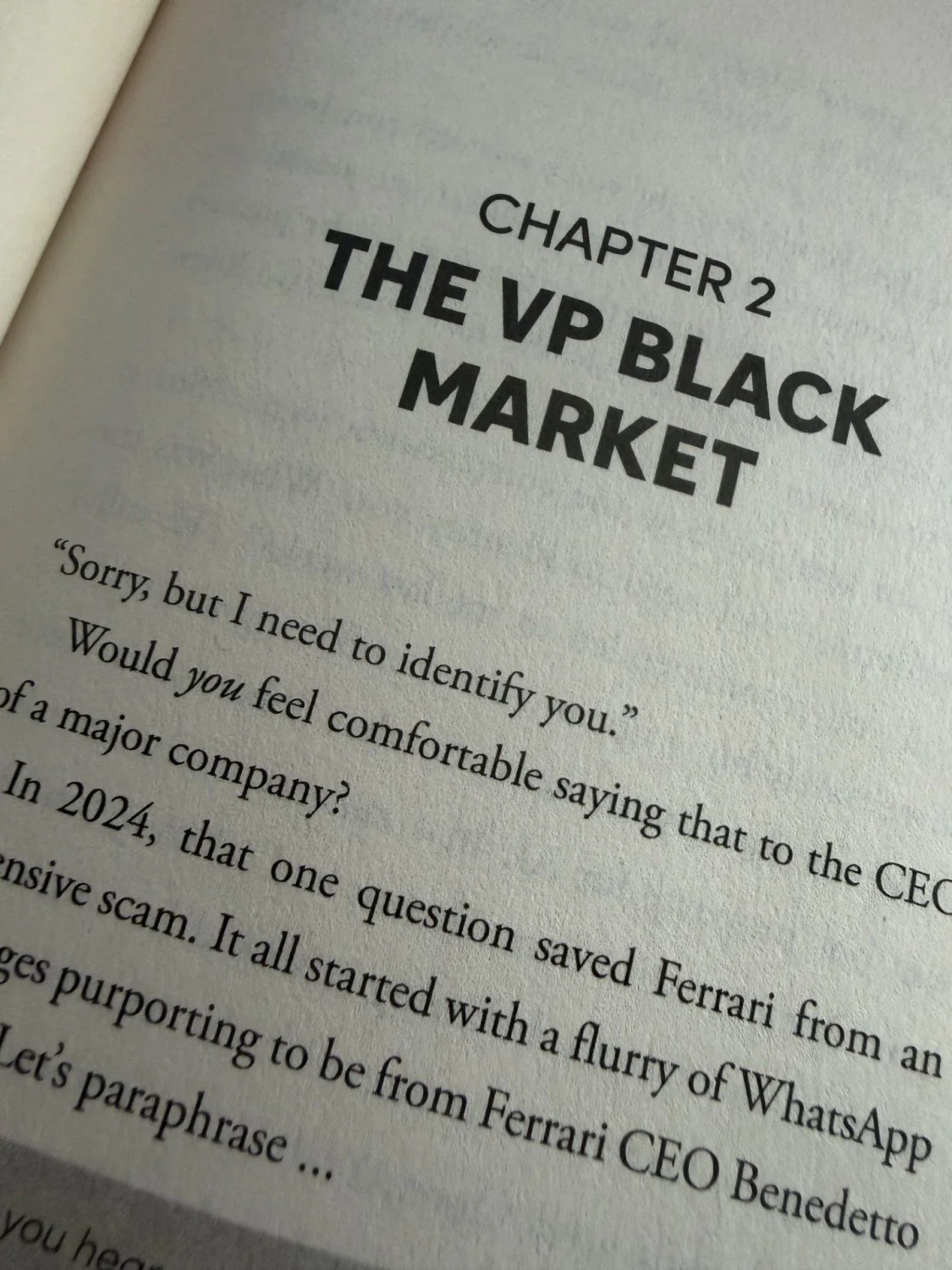
Voiceprint by Sally Prosser
Right now, we’re running to catch up with technology that can copy the human voice — with and without consent.
And I’m hoping we fall down that uncanny valley.
I’m hoping that as voices become eerily close to human, something in us recoils.
Because if we stop recognising the difference between a voice that sounds human and one that is human - we won’t just be fooled.
We’ll have crossed the valley without even realising it.
And as a human who cares deeply about human voices, that’s terrifying.
Sally Prosser is a voice and public speaking coach, consultant, and author of the best-selling book Voiceprint.