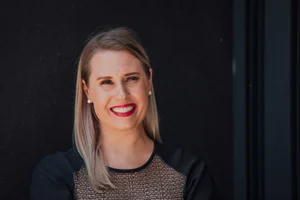
In this milestone ep, I’m joined by the brilliant Belinda Morgan, author of Solving the Part-Time Puzzle. Bel is a flexible work expert helping individuals and organisations adapt to the future of work — one that’s not bound by the old-school 9–5 office model.
Whether you’re:
An employee dreaming of a more flexible schedule,
Or an employer wondering how to make flexibility work for your team...
This episode is packed with insights, scripts, and strategies you’ll want to save and share.
🎧 In this episode:
Why flexibility is not just a "nice to have"
How to ask for part-time or remote work (without guilt)
Employer tips for keeping productivity high without burning people out
How to future-proof your career or team through adaptable work practices
The mindset shifts we all need to thrive in a post-9-to-5 world
Transcript
Welcome to Episode 250 of That Voice Podcast. Oh my gosh, 250. That is a lot of yapping. Thank you for choosing this podcast. If you're a longtime listener or a first timer, please drop me a message on Instagram @thatvoicepodcast. I love hearing from you. This episode is all about how to negotiate flexible working. If you are an employee or an employer, this needs to go in your favorites. I'm chatting with the amazing Belinda Morgan. So Bel specializes in flexible work. She's written an amazing book, Solving the Part-time Puzzle, great title. Hey. And now she helps individuals and organizations adjust to the future of work because let's face it, the rigid nine to five in the office for everyone is as I like to say, DEAD, dead.
Sally:
Bell was also part of my Soul Speakers advanced program. That's my 12-month program. We wrote her keynote, I helped her prepare for radio interviews and LinkedIn videos, all the ways to be audible. So if you are a serious operator and you wanna get your voice out there with full assistance on the strategy, the content, the delivery, the obstacles along the way, then let's jump on a call. This program is application only. I'll pop the details in the show notes. In this episode, you will learn, are you ready? How to change your mindset around flexible work.
Sally:
I share my baby bird metaphor. I think you like that one.How to prepare for the conversation with your manager can be scary, right? And what to do if you get rejected. And no, it wasn't my suggestion of going to the bathroom and having a cry. Surely everyone's done that. Has everyone had a cry in the work bathroom? I was in media so it was like not a very rare occurrence. Anyway, there'll be no crying in this episode, as I say in the intro, let's hit it.
Sally:
Bel Morgan, welcome to That Voice Podcast. Great to have you here.
Bel:
Thanks for having me, Sal.
Sally:
So you're the queen of flexible work, which really is the future of work. How did you get into this?
Bel:
Interesting, actually, if I think right back, even to my first grad role out of uni, I've always been really interested in why we work the way we do and how we can make it better. I was working as an auditor in a big four firm in this, you know, beautiful office. Lots of other young grads and it was really fun. But the hours were just relentless. And even if we didn't have that much to do, we were expected to be seen back in the office late at night. And you know, I even remember this time where there was a partner in the firm and I sat next to his PA and it was seven o'clock at night and his wife called and he was just like waving out of his office like, No, no, no, I don't wanna talk to her.
Bel:
And you know, he wasn't doing anything wrong, he was just working hard in this role that he'd committed to. And I just remember kind of sitting there thinking, This isn't where I want my work life to go or what I want my life to look like in 10 or 15 years. And so I actually even ended up leaving that role a year in for that very reason. And you know, thinking back now, I didn't realize it at the time, but this was the path that really led me to where I am now, where I've always been questioning these rigid work structures and thinking about how I can work in more flexible ways that work for me and now how I can help everyone do that.
Sally:
Yeah, fantastic. So can you remember the first time you had to negotiate flexible working and how did you work up the courage to have that conversation and how did you plan what to say?
Bel:
So the first time I negotiated a properly flexible role was about 10 years ago when I was returning from my first parental leave. And I was working in a consulting firm in a leadership role and I really wanted to come back three and a half days a week rather than full-time. Yeah, it was quite nerve wracking thinking about, you know, are they gonna, what are they gonna think of this? Are they gonna suggest I go to a smaller role, which I didn't want to do. And so what I did at the time was that I was lucky there were some other people working in relatively senior roles part-time in this organization. So I went and spoke to them and their experience and how they negotiated and I thought about my role and what, you know, where I was the best in my role and how I could focus on those bits and what would happen to the rest of the work.
Bel:
And I really put a lot of prep into it and went into the conversation still, you know, quite nervous but feeling prepared and my manager was just, Sure, no worries Bel, do what you like. You can work three and a half days a week. I fully support you. I was really lucky. And you know, thinking back the prep work was important. It wasn't necessary in the end. But what was really interesting was I thought, great, the hard part's done negotiated the role. I now work part-time. And what of course I didn't realize was that the hard part was definitely not done. It was actually making the role work. Three and a half days a week was where the where the tough fix started.
Sally:
Yeah. It shows the the power of just asking sometimes.
Bel:
Just asking. Absolutely. Yeah.
Sally:
And when we think about flexible working, we often think of new parents who don't wanna go back full time. They want, as you say, like you wanted three and a half days. It is flexible working more than work from home or days off for new moms.
Bel:
Great question because lots of us, when we hear the term flexible working these days, just think about working from home. And that's a flex of us have experienced the benefits of being able to work in different locations over the last few years. And when we think about part-time work, which is another form of flexibility, how many hours you work. So part-time is a good example of that or job sharing or even the four-day week that some organizations are experimenting with. But often when we think about part-time work, we think about new moms being the primary candidates for that. And what's really interesting and important to understand around flexible work is yes, being a parent is a great reason to request flexible working or to need it, but there's so many other people who want or need to work flexibly. Whether that's people with disabilities that preclude them from coming into an office all the time or working full-time hours, people have side hustles and wanna combine that with a great role. People studying people on visas that don't allow them to work full-time for on visas. So flexible work is lots of things and there's lots and lots of different reasons why people might wanna access it.
Sally:
Yeah. Or one that comes to mind is, you know, training for a sporting event as somebody who was, you know, really in serious training for a, a triathlon and needed some time off to be able to go and do that.
Bel:
Yeah. Semi-Professional athletes. I hear quite a bit about how that's a really important reason because it doesn't pay very much often being a semi-professional athlete. So needing some work alongside that other career.
Sally:
Yeah. Yeah. So when people hear the term part-time or flexible work, it often has a negative connotation as it's some sort of thing that you've just gotta make work and it's not the ideal scenario. So how do we start shifting this mindset around flexible work being a positive thing for, for the workplace and the employee?
Bel:
So if you're thinking about negotiating a flexible role yourself and thinking about mindset, I'll often say to people, don't be grateful for your flexible role or for the flexible request that you're putting in. And I know this sounds a bit counterintuitive 'cause gratitude is absolutely a wonderful thing in general and something that we should all practice. But when you go into negotiating flexible work from a physician of feeling like you're asking for a big favor for which you need to be hugely grateful, it can actually sabotage your success. So you wanna go in knowing how and why flexible working can be a win-win for the organization and for you. So it can help, for example, organizations attract and retain better talent. There's lots of evidence to show that people who work part-time are more productive and there's lots of evidence to show that people who work from home are equally productive as people working in the office, gender pay gaps. So making senior roles more flexible has a positive impact on the gender pay gap. So there's lots of reasons that organizations should be thinking of it as a smart strategy rather than a perk or a favor. And when you're going into negotiate, that's really helpful for you to know too.
Sally:
Yeah, I love that reframe on gratitude. It reminds me of a metaphor I sometimes use around being the mama bird instead of the baby bird. So the baby bird is just like, I'll take whatever you give me, thank you very much. And we can go into that kind of grateful, desperate mode rather than the mama bird being like, we're coming in with a worm, we're coming here to offer you value. It's not just being grateful to get what we're given. So that's such a good point. So how can somebody articulate the value when asking for flexible work? Are there particular phrases they can use or even the way that they use their voice? What would you suggest?
Bel:
What we just talked about is really important. So coming in with the right mindset and knowing that it's not just a favor is absolutely the starting point. And then I think that you will project confidence and use your voice well if you feel really well prepared. So when it comes to articulating your value, I'd always recommend thinking about where do you deliver amazing value in the work you do? What are you best at? What are your strengths and how does that impact how you deliver your role? And then step two though is think about how do I deliver this amazing impact when I'm working flexibly? What are the concerns that might be on the hiring manager or my manager's mind and how might I address those? So you know, a recent example, I was talking to someone who was about to go into one of these conversations and she said, look, I think my manager is gonna be concerned about what my clients are going to think. You know, if I only work four days, don't my clients expect me to be there 24 7? And so, you know, we talked through how she might address that and how she would work with her clients and bring those ideas to the table.
Sally:
And so do you recommend in the preparation phase to have certain things scripted?
Bel:
At least have a think about, as I said, what are the potential objections that might come up? Write out some bullet points of how you're going to address those. Also, just in terms of the words in the scripting, make sure you're really focused on what are the benefits to the organization and talk about things like productivity, my customers, my stakeholders. Don't just make it all about why I need this and the benefits to me and my family or my, whatever else is going on for you.
Sally:
Oh that is such a great tip. So you do all that so you're prepared, you've got the right mindset, you're managing your nerves because you've done my Magnetic Voice Formula course, so you know how to, how to breathe in all of that. And you've got some idea of what to say. What happens if they just stonewall you and are like, No. They just don't even entertain it. How do you respond to that rejection?
Bel:
Well, I've got two tips. The first one, if you haven't already done this, would be to understand their perspective. Why are they so welling it? You know, what, what are your objections? What are your concerns? And see if there's an opportunity to talk them through and bring your ideas to the table for addressing those. If you've already done that or they're just not interested in having that conversation. My second tip is always request a trial period. I interviewed a really senior guy in finance when I wrote my book on succeeding in part-time roles a couple of years ago. And he was going for a new role in a new firm and wanted to do it part-time, unheard of in that type of role and in that industry. And they said to him, look, we'll consider it. Why don't you come and work here for six months and if everything's going well then we'll consider moving you to four days a week. And he actually flipped it and he said, actually, I've got a counter proposal. Why don't I work four days a week for six months and we'll see how that goes and then if it's not working, I'll move to full-time. And of course he did the role amazingly well four days a week. And as he tells the story, they never even raised the conversation at the six month P-point. Everything just kept going. So a trial is always a good thing to suggest.
Sally:
Yeah. And it's being ready and expecting the little bit of pushback and not just going, Oh gosh, I better go cry in the bathroom now. But actually being able to have that that counter argument and and bring them around to the benefits.
Bel:
Yeah, I love that. Don't, don't assume it's gonna be easy. It might be as per my experience with my first part-time work request, but it might be hard and it might need a few conversations.
Sally:
Yes. So we've done a fair bit of work together over the past year or so in a conversation we were having just prior to this recording was around how flexible work really is the future. There's this hybrid work from home, come back to the office, it's a hot topic in the media, but there isn't the roles to oversee this kind of thing in the workplace. You would think there would be, you know, head of flexible work. What are your thoughts on this and do you think that companies need to get on board with having somebody to oversee this part of the business?
Bel:
Absolutely. It's really interesting because in some companies like Atlassian and Cisco, big organizations that are fairly focused on the future of work and coming up with innovative ideas for working, we are starting to see these roles but they're very few and far between. Most organizations have no role that's accountable for flexible working or innovations in the way we work. And even things like what AI is going to do to the design of roles I think would come under this. And so I, yeah, I really, really think we will start seeing these roles soon and I really hope organizations do start considering putting these head of flexible working or head of the future of work or innovative work design, whatever you wanna call it, roles in place that start cutting across the people side of things, the tech side of things, the property, you know, impacts of course how we use our work workspaces and how they're designed. Really interesting. I think we're gonna start heading in that direction, but I think it's yeah, a shame we're not starting to see more of those roles pop up already.
Sally:
Yeah. And you're such a strong voice in this field. So you do keynote speaking, you go into organizations and give workshops about how they can make flexible work work for them. You've got fantastic content that you put out on LinkedIn. So all of these things have been one of the reasons we've been working together. Do you think that there are more voices that need to be heard in this space?
Bel:
What I'd love to see and hear is people who are working flexibly at senior, really senior levels 'cause there are people out there doing it. So whether that's part-time or job share or hybrid working you know, which many, many, many senior people are doing now. Really advocating more for that and sharing their stories. Because in my experience a lot of what holds us back is not believing that it's possible to keep progressing our career or to apply these types of flexibility in the most senior roles. And so the more we shift that mindset around anything is possible, in any role at any level, the more the whole landscape's going to change. So if you're listening and you are one of those people working in senior level roles, really encourage you to share your story, whether that's internally in your organization, in your networks or even further afield.
Sally:
Yeah. What is the highest level role that you've heard an example of job sharing?
Bel:
So there's a number of CEO roles around at jobshare. So some people will be doing co-CEO roles and that's, you know, fairly common in startup.
Sally:
But you know, if the CEO can jobshare anyone can jobshare.
Bel:
Exactly. Exactly. And that's, you know, when I wrote my book a couple of years ago, I really focused on people in part-time, very senior level roles for the reason I just mentioned that if we can all see more stories around this and also I focused on men and women working part-time, so I had half stories of men working in senior level part-time roles. 'cause There are a lot of men out there who want to do it. And the more we can see that it's possible for anyone the better too.
Sally:
Yeah. So if someone's listening to this thinking, Oh gosh, some sort of flexible work arrangement, whether it be part-time or work from home or some kind of tweak would be so helpful because here's the other thing, it's one of the main reasons people are leaving jobs. Like if they could make them just work for them a bit more, then companies get to retain more talent. So if someone's in this pool and they're going, okay, I wanna step forward but I just don't have the courage or I dunno where to start, what would you suggest?
Bel:
So two things. First thing would be just do a little bit of research around other people, either in your organization or externally who are working in the type of arrangement you want to work in. And ideally even in a similar type of role to build that belief and confidence that we, we talked about that it is possible. So if you can see other people doing it, you know it's possible and you can also share those stories with your boss when you go and make the request. So first thing would be just a bit of research if you don't already have stories around it. The second thing would be as we talked about right up front, you never know unless you ask. So once you feel like you're ready enough, even if you're not perfectly ready, just go and make the ask and be ready to have a conversation about it. Even if it's not a straight up yes straight away.
Sally:
Ah, such good advice. Where can people find you?
Bel:
So LinkedIn, you can find me my website belindamorgan.com. And if you're interested, if you are already working flexibly and part-time or looking to do so and you're thinking about how do you set and protect your boundaries, you can access a free download on my website around that called Protecting Your Boundaries.
Sally:
Oh, so great Bel Morgan, thank you so much for joining That Voice Podcast.
Bel:
Thanks for having me, Sal. It's a pleasure.