Ever wondered how TV reporters keep their cool when the camera is rolling live and there’s no second take?
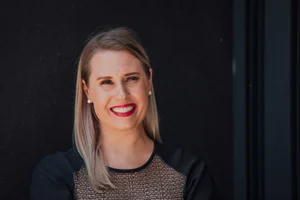
In this episode, I’m joined by Ashleigh Paholek – confidence coach, Channel 10 Melbourne news reporter, and founder of Tier Society.
Ashley shares:
🎥 The nerve-wracking story of her very first live cross – and how she stopped her voice from shaking.
💪 Her top strategies for recovering when things go wrong mid-presentation.
🙌 The surprising confidence lessons from approaching strangers for vox pops (and why rejection isn’t personal).
🍺 The most Aussie news story she’s ever covered – yes, it involves a kangaroo and a beer.
🎤 Why she believes confidence is a decision, not a personality trait.
We also swap our own live-TV war stories, laugh over on-air bloopers (Lod Raver, anyone?), and talk about the real preparation that makes confidence look effortless.
If you’re an aspiring or emerging journalist, a public speaker, or just someone who wants to care less about what people think and show up with more presence – this episode is packed with practical tips you can use straight away.
TRANSCRIPT
Hello, welcome back to That Voice Podcast. Are you ready for some top tier tips from TV news reporter, Ashleigh Paholek. I say top-tier because TIERSociety is the name of her business, which stands for TIER. There is enough room. How good is that? Ashleigh is a confidence coach and a TV reporter for Channel 10 in Melbourne. And many years ago I was a TV news reporter for Channel 10 in Brisbane and also the ABC and also Channel 7 in Rockhampton. So if you are new to my world and wondering why I sort of sound like a news reporter, well you know, old habits die hard.
It's what I used to do, and it is a fantastic training ground for developing confidence. In this episode, Ashleigh shares some really great behind the scenes stories about her first live cross and how she managed the terrifying nerves of that, how she has the confidence to approach people on the street with a microphone, her biggest blooper. And she also shares her favorite story she's done, which is the most Australian thing I've ever heard. Yes, it involves a kangaroo and a beer. If you wanna start showing up with more confidence, shrug off the shackles of what people think of you and maybe you're an aspiring or emerging journal wanting some behind the scenes inspiration. If that is you, then get in touch. If you would like career mentoring and or voice coaching, I have special offers just for young journos. They're not on the website, the link's not in the show notes, so just reach out and I will send you that secret link.
Now a link which is very much not secret, is the one to pre-order my book Voice Print and I share in the book a few stories about my time as a news reporter, if you pre-order and send me your receipt, I'll send you a bonus voice note of me reading the first chapter and you'll also get the link to tickets for the big Brisbane launch party on December 7th. And as a listener of the podcast, I would really love to see you there. The book is called Voice Print. How to Leave a Lasting Impression Every Time You Speak. You have to Get it right after this entertaining episode.
Sally:
Ashleigh Paholek, welcome to That Voice Podcast. It is such a joy to have you here. How are you?
Ashleigh:
I'm fabulous. Thank you for having me.
Sally:
So we have a little bit of a similar background. Many, many more years since I've been on TV. You are currently on TV. What drew you to TV reporting?
Ashleigh:
It's funny that I as a kid wanted to actually be a fashion designer and so I went, I actually applied for that at university and I didn't get in. And so then I was like, Oh, okay, like what else could I do? And so then I just studied a bachelor of arts and when I was studying I was like, what's the easiest subject that I'm taking? What am I enjoying the most? What do I wanna do more of because that's gonna make up your major. And I found journalism just the easiest thing to do and so I just kept going. And so I didn't really like growing up care to be a reporter I guess, but it sort of came about through university because it was just the easiest thing. But looking back now, I produced and was on a travel show as a teenager, so like 16, 17. And so I think that I've always really enjoyed that presenting and the connecting and the talking with people and also the visual medium.
Sally:
Right. So when you were doing one of your first shifts and you're doing your first piece to camera, it wasn't the first time you were on TV 'cause you'd had that presenting background.
Ashleigh:
Yes, yes I had, but it was different. And I guess like I do remember the first time that I was being recorded to be on TV because you know, you do practice runs and you make fake stories and through university you do pieces to camera. But I remember the first time that I was actually gonna go to air and it took me so long, it took me like I'm not gonna like 30 takes to get it right. It was really, really hard because I just kept, I couldn't get the intonation. I just, my thing is that I look confused behind my eyes and I think that I can tell when I know what I'm saying or when I'm remembering something is when my eyes look a little bit blank. But I do also remember the first time I did a live cross, which is a lot scarier you'd know than having something prerecorded because prerecorded you can watch it back when it's a live cross, you don't get a second chance.
Ashleigh:
And so I did a live cross, it was like half an hour until the bulletin and I got a call from my boss and he said, Ashleigh, there's been a body found you have to go out to this property, to this address. So I went to this home and I got there and there's police and there's ambulance, there's fire trucks. They've taped off half the street, like there's a lot going on there are neighbors out having a look because they're all having a sticky beak, you know, they wanna see what's going on. And then at about 15 until the bulletin, my calls me again and he goes, Ashleigh, it being deemed suspicious so it means that it's newsworthy, it is breaking news, that means we're gonna get you to do a live cross on top of the bulletin. I, my heart started racing like my stomach turned, my stomach dropped, I was so scared and when I get nervous my brain kind of goes foggy as well.
Ashleigh:
Like I can't think clearly. And so I remember, you know, writing down the key points of information that I needed for the cross. I was getting set up, I had lights, a diffuser, like there's all this stuff going on that the cameraman is setting up while I'm trying to remember what I'm talking about, I've got a little earpiece that connects me to the newsroom and I can hear them, okay Ashleigh, you're on in 30 seconds, you're on in 25 seconds. And I remember at 20 seconds before I was live on air, I had the worst thought. I was like, Ashleigh, whatever you say right now goes to air, you don't get a second chance. That was when I realized that like it clicked that this was actually live. And so I really started freaking out because I was like, oh my god, you don't get a second chance, you're gonna stuff it up.
Ashleigh:
You know, you hear in the earpiece you've got 10 seconds until you're live. You don't have long to get yourself ready to actually do it properly. So they're counting down 5, 4, 3 and then you hear the start of the news bullet play, they throw to me, they go, Ashleigh Paholek joins us live now. Ashleigh, you've got some breaking news. What's happened? Thankfully I did speak, I got the live cross out and it was short, sharp and to the point, which is probably the best kind of live cross. And I remember that the person on the other side of the TV watching me would've had no idea that it was my first time doing live cross. And that was because I a few different techniques in a stance. So having my feet really strong and planted using my hand gesture, keeping eye contact with the camera, which is, you know, they feel like it's eye contact with them and with your voice really slowing it down and having like getting rid of the shakiness in your voice because that's gonna really give away nervous. And those were the things that made sure that the other person had no idea that I was actually freaking out. They couldn't see the fact that my knees were shaking. That was the first time I did a live cross and thankfully it's only gone up from there.
Sally:
Ash, thank you so much for sharing. I can relate to that, which a lot of people would be freaking out doing a live cross. It is quite terrifying isn't it? I was in Rockhampton crossing down to Brisbane with floods and our house I was staying in was flooding as well, so I had like thongs on the bottom, my blazer at the top, like it was just all sorts of craziness. But I love that you now teach confidence because I think a lot of people just think, oh she's got it and there's something wrong with me for feeling all these things. But as you so openly shared, you feel it all as well. And it's just these techniques you mentioned get rid of the shakiness in the voice. Now as a voice coach, this is something I work a lot with as well, but how do you do that? What do you actually do to get rid of that shakiness?
Ashleigh:
I do a lot of breath work and I think that's really important because when we are nervous, when we're in that fight or flight mode, we are breathing really tight in the, at the top of our chest and it, we sort of sound like we are squeaking. And so for me it's really deepening the breath into the stomach that really calms me down, that gets rid of the, the mist or the fog in my head as well. And so that means that I can deepen my voice and I can slow down and you'd be, you'd be the one that would know all of this. That's just how I
Sally:
Yes Ash, I fully endorse this message. Fantastic. Okay, so first live cross off the top of a bulletin, the stakes are pretty high, right? Metro bulletin live cross off the top and sounds like you nailed it. No one would've known anything had gone wrong. Has there been a time when something has gone wrong on air?
Ashleigh:
For sure. It's not like things have gone drastically wrong, but there's been definitely times that I've stuffed up or that, you know, you sort of forget what you're saying and you have to think really quickly about where you're up to. Main thing that that's really taught me is about the fact that I'm speaking words. Because so many times when you are presenting or when you're nervous, how often you must hear this a lot that people are so nervous that they get off stage and they go, Oh my god, I don't even remember what I said.
Sally:
Yes, all the time.
Ashleigh:
And it's because you know, we're in that fierce, we just talk, we just, you know, whereas it made me remember that I'm saying words and I, it does mean something. And so it sort of gets me out of that presentation mode and more thinking about the words I'm saying and what they mean. And I think it sounds stupid, but that just reminded me that I'm saying words and if I miss a word that you know, I might have scripted or that I felt like was gonna be perfect, you just keep going. No one knows that you've stuffed up unless you make them realize that you've stuffed up and you're saying words and you can keep going back, you can keep, you can get it back.
Sally:
Yes. I love that. So you are reporting, you also teach confidence and communication tips when you can be confident before the big moment, that's one thing. But as you're sharing when something goes wrong and then you need to recover, that's an even more challenging thing to do. What's a tip that you would share for someone who is halfway through a presentation or something and like something has gone wrong, how can they recover
Ashleigh:
That is real confidence is being able to recover from the mistakes and not make that the biggest story about the preparation that's gone into it. You know, I wouldn't really go, it might look like I'm going in and winging it, but there's actually a lot of preparation and strategy that goes into an interview like this. A conversation like this when I meet some someone on the street and I talk to them and try and get them to go on camera when I'm doing a live cross, there is actually a lot of preparation and strategy that goes into that to make it look effortless and seamless. So if you are in the middle of a presentation or a meeting or speaking or whatever it is and your mind goes blank, I think that you should use that intentional silence to take a breath. Think about what you can get to next, what is the easiest way to get your audience, the other person speaking, to give you time to think. So sometimes that can be, you know, ask your audience to reflect on something that you've spoken about. It can be fully asking them a question to change the conversation. You know, if I need more time to recover rather than just getting onto the next topic, I really throw it back onto the other person to get them talking so that I have more time to gather my thoughts.
Sally:
Yeah, such a good tip. You mentioned briefly there, one of the things that every journalist I've ever met does not like is a thing called like voxes. And that is when you are approaching people in the street to try to get them to chat about what's going on. And I feel when people ask me, Sal, how do you not care what other people think or how do you have the courage to, you know, talk to strangers? I really think that voxes prepared me for that because that's the ultimate, you have to just not care what people think. You have to just have that courage and get a lot of rejection, right?
Ashleigh:
Mm-Hmm.
Sally:
So what, what would you say is a tip that we all can learn from having to do vox pops and approach people on the street?
Ashleigh:
It's interesting because I do vox pops in as a journo, you know, but then also my social media for my business TIERSociety. I do a lot of on the street interviews with women about what they do in their job day-to-day. And so that's how I've gained a bit of a following that is sort of what I'm known for, which is the on the street conversation. You know, I'm not gonna lie, sometimes it is really hard and there are areas of the that I know that people are just mean and I don't go back because it's hard work. People, you know, put their hand in your face, people look at you with disgust. And so I think that it's knowing that it's not always, you don't always get yeses and people aren't always nice and friendly, but that doesn't have a reflection on you.
Ashleigh:
A lot of the time people are actually really happy to chat and to talk if you are friendly and approachable. And so that's using your body language to try and show them that they can feel comfortable around you. It's like having open body language, having an open face. If I have my arms crossed, I look protected, I don't look really approachable. Whereas if I have my arms down and an open chest, that is a really vulnerable body language position. And so going into conversations like that means that the other person is more willing to listen. And I think that a lot of the time people are willing to listen and willing to chat and we just build up this narrative that people aren't.
Sally:
I'm so with you, I think openness is one of the most underrated techniques. I've dedicated the whole chapter of my book to openness, open stance, open jaw, open heart, and if we have that openness, which can be scary, right? Because we're putting ourselves out there, but that changes the way people react to us.
Ashleigh:
Yes. And I think it feels less vulnerable when you know what it means and why you are doing it. It's nearly like knowing the strategy behind it makes it easier because you aren't vulnerable. You are just making the other person feel like you don't have anything to hide. And I think there's power in that.
Sally:
Yeah, absolutely. Do you do a voice warmup before you go in the booth?
Ashleigh:
Oh, it's, I should, I don't, I don't have a voice warmup, but I do have, like, if I'm nervous about something, I do have like a bit of a pump up routine. Like I listen to good music or I do breath work or like, I do a lot of visualizations of times that I've been successful in the past. But no, I don't have any vocal warmups, which I probably should. So Sorry
Sally:
Ash, we'll have to get you sorted on that. Although, although breath work is a voice warmup. Perfect. Okay, so it's probably just a bit of a humming that you wanna bring in. I'm keeping in mind the time of day of course as well. If you're doing most of your crosses and your piece to cameras later in the day, you've already naturally warmed up your voice. Whereas if you were, you know, going for breakfast radio or something, you probably need to do a little bit more of that work.
Ashleigh:
Yeah. Or I'm all in the afternoon, so yay. Okay. I do have a warm voice.
Sally:
Yeah. Although with some, like in winter when it's really, really cold as well, it can be hard to, to get everything flowing. Ash, what's the best piece of career advice you've ever been given?
Ashleigh:
I wish I had something more profound for you, but I feel like a lot of the time, different words of wisdom resonate at different points in my career, in my life, but right now I feel like what I'm feeling is that everything is content. And I mean in terms of, you know, if you do post online, if you do, you know, do public speaking, that kind of thing, like everything is content, but also just experiences in life. The content going to tell your friends about something and experience, you know, if it's good, bad or ugly, I, you know, it's something worth sharing.
Sally:
I'm on board with that. Everything is content. Love it. What's been your best on-air moment?
Ashleigh:
Probably this a viral story that I did about a man having a fight with a kangaroo. I went traveling and people overseas had seen it and I think the funniest part of it was that the guy was knocked over by the kangaroo, but he kept his beer upright and didn't spill a drop. So I think that was the best on-air moment.
Sally:
Oh my goodness. That is the world's most Australian story. That is so good. How funny, have you had a blooper?
Ashleigh:
At the start of the year? I did a breaking live cross to multiple bulletins at the Aus Open and I was so frantic that in the moment I said, Lord Raver instead of Rod Laver.
Sally:
Rod Laver!
Ashleigh:
Yes, I heard it come out and I was like, I wanna fix it in the moment. Like I said, Lord Raver, I mean Rod Laver, but I still am like, Oh!
Sally:
Oh my goodness, that happened to me on radio. I said it was a sign and mostly funny day instead of a fight and mostly sunny day. So I think that's pretty common. Oh, Ash, what is your number one confidence tip?
Ashleigh:
Confide is actually a decision and it's something that anyone can have. It's not something that you're born with, it's something that you can learn, practice, and master. And once you realize that there is strategy behind it, you can take it into any interaction to level up.
Sally:
Confidence is a decision. I love that. Where can people find you if they want? Learn your confidence tips and follow you and get in touch.
Ashleigh:
I am on Instagram as TIERSociety, TIER, which stands for There Is Enough Room, otherwise Personally, AshPaholek on Instagram and on TikTok, and of course you can always tune in to watch me on TV at Channel 10.
Sally:
Amazing. Ashleigh Paholek, thank you so much for coming on That Voice Podcast.
Ashleigh:
Thank you so much for having me.