Ever thought about doing voiceover work?
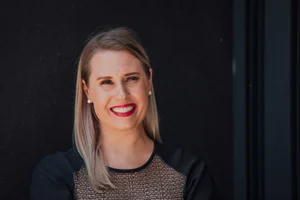
In this episode I’m joined by voiceover artist Jackie Bowker, who spills all the secrets about getting started in the voiceover industry. And trust me, she does not gatekeep. Jackie shares her journey from musical theatre student to professional voiceover artist, and gives you practical, step-by-step advice on:
How to book your first jobs and which websites to use
What equipment and training you really need to get started
Techniques for bringing a script alive with tone, pitch, and emotion
How to stand out in an industry where AI is on the rise
Why awareness of your voice matters in every area of life
And if you think voiceover isn’t for you—stick around. The end of this conversation is powerful. Jackie talks about how her voice has saved her in difficult personal conversations, and why your voice is so much more than a tool for work—it’s a channel for empathy, healing, and connection.
You’ll also hear the hilarious story of my first-ever voiceover job… for Australian bananas. 🍌
transcript
Hello, welcome to That Voice Podcast, a huge welcome. If you are tuning in for the first time, you may not have heard I've written a book. It is called Voice Print. It is out for pre-order now Voice Print, How to Leave a Lasting Impression Every time You Speak. And when you send me proof of your purchase, I'll send you a little bonus of me reading the first chapter and a link to secure tickets to the big launch party in Brisbane on December 7th. Come and party with me and a huge thank you to all of That Voice Podcast listeners who have already reached out to me and booked their tickets for the party Cannot wait!
So maybe you are a longtime listener, maybe you are curious to start voiceover work. And you see my guest today is the woman who can help you do that. I'm talking about the gorgeous, amazing Jackie Bowker. And Jackie does not gate keep here. She shares how she got into the voiceover industry, how you can get started, how you can book jobs, honestly. She tells you what websites to get on, how to manipulate your voice. And the end of this conversation is so meaningful because Jackie shares a beautiful perspective on how your voice is worth so much more to you than just a tool for doing voiceover work. So even if you have no interest in doing voiceover work, you will love this conversation. You'll also hear the hilarious first voiceover job I did about Australian bananas.
Sally:
Jackie Bowker, welcome to That Voice Podcast. Great to have you here.
Jackie:
Thanks so much, Sal. It's great to be here with you.
Sally:
So how did you first get into voiceover work?
Jackie:
Yeah, that's, that's a good question and one that I get asked all the time because it is such a niche. So for me, I found voiceover work through a uni degree. So I was studying a bachelor of music where I majored in musical theater and we had one unit on voiceovers. And I remember we gathered our scripts, we were working with a, an acting coach and we got into the studio, it was my turn to be in front of the mic and I delivered this script. It was a bit of a French twist on it and I had to say the word "Je me séqua". And when I said it, I was like, I'm gonna do it a bit, you know, I'm gonna give it a little bit. And so I lent into the mic and I said, "Je me séqua". And I remember looking through to the, where all my peers were sitting and they had a, you know, a reaction to it.
Jackie:
And it was in that moment that I was like, This is cool. Like I love this. The idea of being able to manipulate your voice and watch people have a reaction to that. So that's how I first discovered the world of voiceover. And then naturally, as you are when you're younger, you know, voiceovers were shouting at me in my face to be like, follow this journey, follow this path, and I didn't listen. And so instead I had a very amazing and successful dance career for about eight years. And then I came back to voiceovers and I'm very well cemented in the industry now. So yeah, full circle for me.
Sally:
Yeah, amazing. So what was the first paid job you got? Can you still remember what the script was?
Jackie:
Very clearly. It was one of those annoying YouTube videos that was like Top 10 most richest people in the world or something like that!
Sally:
So good.
Jackie:
And I went through like Elon Musk and, and all of those guys. Um, so I got that job on Upwork and I was stoked to be, to be booked for that. I was over the moon, and the job paid me 25 US dollars. And I kid you not Sal, it probably took me like five hours to record and edit.
Sally:
With the increase of AI and with, you know, you and I are on the same team, the organic human voice, you know, nothing, nothing can replace that. But how is that affecting your ability to get paid for your work? You know, because as a first job, I can understand, but it's not really sustainable to be preparing five hours for a $25 job. Is it?
Jackie:
Definitely not. No way. And it's funny you say that because I've noticed that the AI world is definitely creeping in and taking those sorts of jobs. So those really cheap jobs, that was my training ground. So that's kind of hard for those people that are coming into the industry now because that training ground has gone, it's all AI unless you're going to compete with AI for price, which is next to impossible. So regarding the, the rest of the industry, though, we're still ahead of it because I'm sure you'd understand AI yet. I don't know if it's gonna be like this in the future, but AI is unable to have an organic emotional reaction in the moment to the script. And that is usually what brings a script alive. That's what brings alive, you know, someone's public speaking performance or anything like that. It's that human connection, whether that's to script, whether that's to other people in the audience. It's that human connection that AI cannot do, cannot replicate.
Sally:
Yeah. And that's why it's so important to use your voice because it does carry the emotion of the moment and that cannot be replicated. Okay. So then how can people who want to get into the industry, how can they start without that training ground? Do you feel like it, the industry's kind of closed off now or is it possible to still get a start?
Jackie:
Yeah, it's definitely possible. You just have to go about it a different way and every voiceover artist will say something different because we've all come from very different journeys and pathways to enter the industry. But from my perspective, I would say you should definitely start with training. So you don't really have that training ground anymore. So instead you need to enter the industry at a bit of a higher place skill wise and equipment-wise. So you need someone to guide you through, you know, what you need to buy, how to start manipulating your voice, how to approach script analysis, all of those things that you would've otherwise probably learned through those $25 YouTube videos. And then what you can do once you have a solid foundation with that, you would then create a voiceover reel and then start approaching some of the voiceover casting websites. So there's, there's a ton out there and you would submit your voiceover reel and then you can start getting jobs like that. I will say it is a tough industry and you're competing up against hundreds of people, but that is by no means no reason to not enter the industry. But yeah, it's not just you against five, it's you against 500 voices for one job.
Sally:
Yeah. And we were just chatting before about how much you've got on your plate. You know, you're doing lots of presenting jobs, it's not just voiceover, you're on camera, which is amazing because you do have the most spectacular head of hair and face you, you're born to be presenting, Jackie.
Jackie:
Thanks, Sal!
Sally:
So you're doing all these things, however, are you still doing some coaching for voiceover? I did notice that you at some stage were doing like master classes. So could people reach out to you and is there a course or is there a class or something that they could take to get started?
Jackie:
Yeah, absolutely. So a year ago I was really into the voiceover coaching and then naturally I just got too busy with my own voiceover work. So I kind of just had to put it to the side, which I guess is a good sign as a coach. You know, they're actively working and actively in the industry, but I am taking on clients for one-on-one, uh, coaching. And then the course that I have, I'm rebranding it and I'll be releasing it again later this year.
Sally:
So I'd imagine in the course, one of the things that you do work on is how you do put that emotion of the moment into the script. How do you take words on a page and bring them alive?
Jackie:
Yeah, so there's a few different ways that you can go about it. A lot of voiceover artists really focus on script analysis and you can never skip that step. But what I mean by that is some people will go through the script and underline the words that must be emphasized. And yes, I can see why that is so helpful and great to start with. But what I like to do is more review the script. Where's the subtext? What, like what are they truly trying to say without trying to say it? And that is where the vocal tone should be sitting. Otherwise you are just reading a script that's going to sound red out. We're also usually given a brief that will be like, okay, we want this to be warm and friendly but not too bubbly, or it might be really grounded and credible and this is gonna be be a very professional read, something like that.
Jackie:
So they are always cues that you can take, too. As for actually applying it to your performance, there's lots of different things that you can do. For me, um, if I'm doing a real professional read, I will lower my vocal tone, definitely, um, you know, hit all the hard T's. So instead of saying water, I'd say water that instantly elevates the sound and makes it more professional. If I wanted something upbeat and friendly, smile like instantly smile on my face throughout the reading of the entire script, one of the most commonly asked for delivery styles is conversational and, uh, casual. And that's actually one of the hardest to do to be able to pull off. So to do that I'll actually rip off my headphones because there's nothing worse than having your voice so close into your ear holes that you are hearing every little floor in your voice when you actually want those floors for the conversational delivery style. So yeah, I'll pull off my headphones and I'll actually change my head placement. So instead of looking down at my laptop, I'll look up. So my eye line is a similar eye line as to when if I were to just have a conversation with someone who's right in front of me. And that feels like it definitely loosens up some of the, the tension in my neck.
Sally:
Oh Jackie, it's totally up my alley. I love this. And if you're listening to this going, Oh, I don't wanna be a voiceover artist, Jackie's mentioned articulation, a change in head placement, a change in pitch and tone, all these different ways that you can manipulate your voice to be able to rise to the moment. And that can be used in many different scenarios, not just for voiceover work. So really great examples. So once upon a time, I did a little bit of voiceover work back in Wollongong where I'm from.
Jackie:
Mm-hmm.
New Speaker:
and it was need a quick snack, get a banana in ya! So can you imagine all the people that were like, Need a quick snack, get a banana in ya? Like it was just hilarious!
Jackie:
That copy is amazing!
Sally:
What I found though, because I was, I was a radio news reporter and then a television news reporter, I did struggle to not make everything sound like a news report. And I remember that was some of the feedback I was, it was about holidays in Tasmania about phrase nay National Park or something. And that was the feedback. It was like look you got a clear voice but we don't want this sound to sound like it's come off the six o'clock news!
Jackie:
Yeah, yeah!
Sally:
Um, so that's why, I mean, and of course now I've gone more into coaching, I do the odd voiceover, you know, job I guess if someone needs a bit of a favor actually if you go to Epic Hair around Queensland, I am the voice of all the Epic Hair ads, 'cause I did that for a friend of mine.
Jackie:
How good, Sal!
Sally:
It's a little bit, a little bit of trivia, but it's a real skill to be able to manipulate your voice to meet the brief and not go into what your default is. So you know, I think I'm default news reporter. Are you default in a particular area? Is there a particular style that you feel most comfortable in?
Jackie:
Yeah, definitely. It's the warm and friendly. Oh, I'm so bad. It's good because usually I'll pick myself up on it when I'm recording an audition and so I'll record a take and then I'll look back on the delivery style and I'm like, Jackie, that is not it at all. Delete that and actually let's be a voiceover artist, and manipulate our voice rather than just go default. So yes, even with the experience and the years under my belt, I still do that as well. But it's about catching yourself in the moment.
Sally:
Yeah. So really listening. And do you record, do you have a recording studio at home or are most of your jobs in a proper studio?
Jackie:
So I have a home set up and I kid you not, I've probably stepped into a studio about six times in my entire voiceover career. So all of my work is from home.
Sally:
And that's probably the expectation now as well that you are able to have that, that equipment.
Jackie:
Definitely, since COVID that was the turning point, everyone had to learn how to record from home because studios were closed and I was very lucky 'cause that's when I came into that into the industry just before COVID. So I was with the pros like learning how to record from home, learning what equipment you need. So I was very lucky in that regard and that has definitely stayed with, you know, so many clients being a lot more open to home studios now because we have such good equipment at home. Obviously nothing will trump a studio, but yeah, the home setups are amazing.
Sally:
Yeah, especially with the cost of studios. So I've written a book, Voice Print.
Jackie:
Congratulations!
Sally:
Sarah, you've gotta pre-order it.
Jackie:
I do!
Sally:
Come to the launch party on the 7th of December and I am recording the audio book version in my own setup and it's gonna be good enough. I hear with people starting podcasts as well, you don't need to go straight into the studio. You absolutely can use your own gear. And of course the stakes aren't as high. The expectations of the quality aren't as high as what it would be for you. You need to make sure of course that the audio is absolute primo. Uh, so a question I had was like, sometimes people don't know what they want. Ha have people said, Oh the brief is warm and friendly and you give them warm and friendly and then they go, No, I want it to be like professional in this. You're like, hang on, what do you want?
Jackie:
Yes, that happened to me last year with my clients. I can really understand and empathize that this is so niche and I don't expect clients to come to me and have directed a voiceover artist before. I, in fact, expect the opposite that I'm the first voiceover artist they've ever worked with. So I'm more than happy to help the client help me and if they need help with deciphering what exactly they want for the brief, because you might say, oh I want this warm, when in fact you actually want it happy.
Sally:
Wow. So what's the difference between warm and happy?
Jackie:
I would say that happy is a lot bouncier, and warm would just be a nice smile and just something soft on the face. Yeah. And but they're two different delivery styles, so that's just one example. Um, and so that can sometimes be an issue when you are given a delivery style and you're like, Well I've delivered this but the client isn't happy. And then there's the subjectivity that comes over that as well. You know, like just that's the nature of the beast. Everyone's gonna have an opinion on what is and isn't hitting the brief. Usually what happens is you do a full circle. So I would give my first take and they'd say, Oh no, we kind of want it this way. And so they'll give a completely different delivery style for direction and I'll deliver it that second way. And then they're like, no, actually we want it this way. And it's that third time that we've finally got the right descriptor. And that third take is usually very similar to the first take.
Sally:
As a professional, that's part of, um, our role to guide. It's similar when people will come to me and they'll say, It's my breathing, I just don't have any breath. And I'll listen to their voice and I'll say, oh no, it's more about your placement. Or it's, or they're saying, I'm not breathing in. I'm like, actually you're not breathing out. But that's up to us as the experts to be able to work with people to help them understand. Because a lot of people don't even think about the nuances in their voice. They're like, that's my voice. That's just how it's, so even the concept of there being different delivery styles is quite new. So where are you finding these jobs? So do you have an agent?
Jackie:
No, I don't. I'm 100% freelance. Getting an agent here in Australia is actually really difficult and that's because the agents here have the people on their books and as soon as you have a similar voice to someone else on their books, they're not really interested in you. So I completely get why they're not bringing on new people, but that is why it's so hard to get representation in Australia. With saying that though I am a very proud freelancer and I think, uh, I'm proof that you can have quite a successful voiceover career just by being pedaled by yourself.
Sally:
So how are people finding you? So I know you are very active on social media. Is that the main place?
Jackie:
I would say it's maybe a third of the place that I'd get my voiceover work from. I do get a bit through Instagram and word of mouth, you know, someone saying like, Oh I know this chick, she does voiceovers. And it happens that way. Another way is through voiceover casting sites. So these are called Pay to Play or P to P. They've actually got a really bad name in the industry because a lot of the voiceover veterans think that these pay to play websites are ruining the industry. I don't think that's the case. Um, so I'm on these pay to play websites, something like The Voice Realm, Voices.com. There's heaps, there's heaps of them. So the trick with the pay to play websites is finding one or two that you excel at and just doing those two, you don't have to be on all of the websites because you're just gonna run yourself into the ground. Plus they're expensive being, you know, paying the membership fee. So that's the second third of my pie. And then the last one is through website, Google, uh, a few people finding me just through Google searches.
Sally:
Yeah, amazing. And it's also worth noting that voiceover is part of your work. You are also a television presenter and you do a lot of different performance work. So performance, I'd say there'd be very few people that 100% are only voiceover artists.
Jackie:
Yeah, there is one, uh, there, there's a few in Australia, but there's one who's just come to mind. Sarah Kennedy, she's based here in Brisbane.
Sally:
I remember her from TikTok.
Jackie:
Yes, yeah. Yeah. So she's 100% voiceover artist. She's killing it. And she is another great example of a freelancer who is doing very, very well on her own without agency backing. So there's, I'm not saying that this is right, that's wrong, but you can definitely be either agency represented or freelance and still be successful.
Sally:
Yeah, amazing. What's been your favorite project that you've done?
Jackie:
Definitely when I did late last year, it was for Bumble, the dating app, and I found out, I found out I'd booked the job and then I found out that I'd be working with the other voiceover artist on a live directed session. And that's cool because you don't often get that opportunity. So I was very excited to jump on and we were sent the script maybe five minutes beforehand and I read through the script, but I only read my lines, which isn't very good to admit, but that's the truth. And so I jumped onto the live directed session and the person who I'm playing opposite is a female. And all of a sudden I'm like, Oh my gosh, this is so amazing. I am representing a queer woman. So the idea of Bumble being so comfortable with promoting a queer relationship and knowing that we're we're kind of there in society where this can appear on mainstream media and no one's gonna blow their head off, that just made me so happy. And then to be able to step into the world of a woman and play that, not that it really changes vocally, but mentally approaching the script from that perspective, that was amazing. So even though I'm not a woman, I'm a strong ally, I just thought that that was such an amazing opportunity. And the woman Lucy, who I played opposite, she was, she was incredible at her job and it was a great experience all round.
Sally:
Amazing. Where can we hear it?
Jackie:
There's a link on YouTube if you just look up Bumble Australia, there would be one like it listed there.
Sally:
Oh, I love that. How has voiceover work shaped your life outside the booth? Like how do you bring the lessons from voiceover and voice work into the real world? Like does it change the way that you have conversations in relationships or run your regular life?
Jackie:
I've actually never thought of this, of the answer to this until now. And yes, it's just hit me that I absolutely bring the knowledge of my voice. I wouldn't say voiceover work per se because I, I don't want it to sound like I purposely manipulate my voice in situations, but I would more bring my awareness of my natural voice into, you know, hard conversations and making sure that I am fully grounded in what I'm saying in those hard, that hard moment during an honest conversation. And even something like the flip side, if I have to really stand up for myself and speak my truth, knowing that I can ground down into a very powerful and grounded sound through the knowledge of my voice. So yeah, thanks for making me think of that Sal. I've actually never thought of how I apply it outside of the booth.
Sally:
Yeah, it's one of my favorite questions and to reflect back to you, I've met you in person a couple of times and I've seen you on social media. You really do have a voice. This is the power of doing voiceover work or not doing voiceover work, doing voice work, full stop. If you can understand how to breathe, how to ground, how to have a voice, then that is a life skill that can be taken into many, many situations. So this is why I say that voice work is life work.
Jackie:
Absolutely. And if you wanna go like a bit woowoo with it, there's so many things that could be blocking our voice. You know, I know you speak a lot about the throat chakra and the spirituality side of things, so there's that side of of it all as well.
Sally:
Yeah, absolutely. It's this energetic channel that we've got the anatomy, we've got the physiology and the energetic and the technical. It's all of these, these layers and yes, this is, this is what we do here. Sally Prosser Voice.
Jackie:
Love it. I'm so on board.
Sally:
Oh, it's so funny. My friend calls it SPV, what's happening in the SPV world? Alright, so to finish off, was there anything else you wanted to add?
Jackie:
That if anyone's listening to this and they know that their voice isn't where they want it to be, whether that's from an energetic place or even just a, an audible place, you know, you don't like the sound of your own own voice, get into training or not even training, just, just get some better awareness around your voice because that awareness will actually open up the world to you appreciating your voice and won't necessarily change how you sound or how you speak. You just become so much more grateful for your voice when you're so aware of what it can do in a multitude of situations and how it can save you, how it can help you, how it can make you reach your goals. There's, yeah, so if anyone's struggling with that, I would say jump in with Sal.
Sally:
Absolutely. And I need to ask a follow-up question here. Can you think of a time when your voice did save you?
Jackie:
Yes, absolutely. So I won't go too much into detail because it's a very personal story, but twice now I have had to had, I have had to listen to me tripping over my words. See that's how you know that it's a personal story-- first time I've tripped over my words. Um, I've had to have two very hard and honest conversations with some family members or people very close to me. And the voice saved me. I approached the conversation very empathetically and I was not coming in to attack or anything like that. It was a conversation that was going to have an outcome and whatever that outcome is, I know that I stayed empathetic throughout the whole thing. And so knowing that my voice reflected that, that was kind of step one because the voice reflected it, then the body reflected it, then the language reflected it.
Sally:
Oh Jackie, thanks for sharing. And I totally agree. Silence does not make the problem go away. And people can think, Oh, if I don't say anything or I just avoid it and that's gonna be better, I don't wanna hurt anyone. But really having these conversations and getting things out into the light is the only path through to resolution and healing. Even if it comes out messy, which it probably will, even if you sort of say something and think back going, Oh gosh, I should have said it differently. It's always a better outcome then not saying anything at all.
Jackie:
Couldn't agree more. Yep.
Sally:
Jackie, how can people find you?
Jackie:
Okay, so I'm on Instagram, @jackiebowker_, that's J-A-C-K-I-E-B-O-W-K-E-R. And then my website is jackiebowker.net.
Sally:
Amazing. Jackie, thank you so much for joining us on That Voice Podcast.
Jackie:
Thanks so much for having me, Sal. And thank you for all the work you're doing in the voice world. I think you are incredible. So, thank you for this opportunity to come on the podcast!