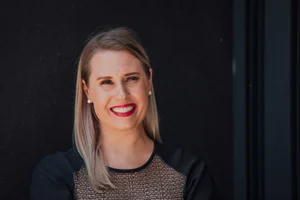
I finally recorded my audiobook version of VOICEPRINT - How to Leave a Lasting Impression Every Time You Speak - and I did the entire read in ONE day.
In this episode I take you behind the scenes of -
🎧 Why I chose to record in a professional studio
🎧 How my voice lasted the distance
🎧 How I recorded it all so quick
🎧 The mistakes I made
If you want to record an audiobook or just improve your vocal endurance, this episode is for you!
transcript
Hello, welcome back to That Voice Print Podcast. Oh my goodness, it is less than a month until my book Voice Print, and the Oracle cards, and the audio book, which we're talking about today, will go out into the world. It's very exciting, a little bit nerve wracking. Make sure you've pre-ordered, make sure you've pre-ordered the book. And if you're in Brisbane or want to travel into Brisbane, I've got people traveling for the party. It's on December 7th.
Oh my goodness. Can you hear that siren in the background? Maybe, maybe not. It's really interesting because this is the very reason why I recorded my audio book in a studio.
So the story is, is I wanted to get it done before I went overseas, record this audio book, get it in the bag. But I was feeling a bit sick. So actually I was feeling okay, my voice was a bit clogged, you know, like it was a bit nasal. And I'm like, well, I can't do the book with my voice not being, you know, in primo condition. Then when I got back, there was so much that had built up as in, you know.
You know what it's like when you get back from holidays, that I just didn't get it done. And I got to a point, I'm like, this is ridiculous. So then I started recording and I've got a pretty good home set up, good microphone, good little noise barrier, kinda like this portable booth thing. Yet I still could not get it to the quality that's required for the audio book submission.
Not helped by the fact that we had construction workers on our roof during that very day. And yeah, the background noise was really bleeding through, they call it the noise floor. I just couldn't get it right. So right now doing this podcast noise floor, terrible enough for a podcast, not good enough for an audio book. And so I said, Alright, got sick of my own excuses.
And I booked the studio, a nearby recording studio, and I got in there and I knew I didn't need somebody to sit with me and go through it all. I just needed someone to set it up at the beginning and leave me go. I didn't expect to do it all in one day, honestly. I thought it'd be a couple of days or like a day and a half at best. But I was getting so close to the end in one day. I thought, Yep, let's just make this happen.
Audio books can be quite exorbitant cost-wise, like some of the quotes that I was getting were in the thousands. I was like, what? And full transparency here, my beautiful Oracle cards, which I'm so happy with how they've come out. It was two and a half thousand dollars-- a bit more I think. Just on delivery, just on delivery! Like that's not even me paying for. For the cards, anyway.
So I'm like, Okay, with an audio book and with my experience, I reckon I can do this DIY. And turns out I can! So after I said I've done an audio book in one day, which by the way, there's a lot of skeptics, you know, there's a lot of people going, how the hell did this happen?
The questions were, How did your voice last the distance? How did you get through it so quickly? Did you make any mistakes?
And so those are the questions I'm going to answer for you today. It's very "meta" because it's the content of the book Voice Print, which meant that I could do all this.
So we'll start off with how did my voice last the distance? Well, the first thing is the strategy. I did a proper voice warm-up. Warming up my body, warming up my breath, warming up my vocal cords, warming up my jaw, my lips, my tongue. You know, a full voice warmup. And I still can't believe how many people go into speaking scenarios like facilitating, like a keynote speech, like any sort of speaking really, without doing a voice warmup.
Honestly, if you've been listening to this podcast for ages, you might be sick of me saying this, but it's honestly like waking outta bed, waking outta bed, jumping outta bed, putting on your runners and just sprinting with no warm-up.
Like you're not gonna go very well, you're gonna pull a muscle. It's fraught with danger. So really, you wanna be doing a voice warm-up, and that's what I did. A full on proper 15-minute voice warm-up.
Then there was the strategy to have a tea. So I use this thing called "voice tea", and that's just the branding of it. I think it's hang on, I've got it here. Alright, I've got it here it is a blend of green rooiboss, R-O-O-I-B-O-S, ginger, and lemons. That's pretty much it. So just a herbal tea and no coffee and plenty of water.
Water, water, water, water. So much hydration the night before, before I got there. And then during I was drinking so much, with voice care. It's one of those things that if you're starting to feel the scratch, if you're starting to feel the croak, you're on the back foot. You need to be keeping the hydration there all the time.
So I had this tea going, I had the water going, I had a really good voice warm-up. The one mistake I made is I took a lunch break and went to have a bit of lunch with Patrick and we had kind of this beautiful lamb and rice thing. Big mistake, I know better! After food, your voice takes a little bit of time to recover and get back to it. And of course, by the afternoon I was a bit on the clock and so that was a bit of a mistake. I should have stuck to the tea and powered through and then ate when I finished cause that did make me lose some time by doing that.
So they're the main strategies. Voice, warm-up, tea and water.
Part two of the reason my voice lasted the distance is the technique, and this is what I go through in Voice Print your neck, your throat really is the bottleneck of your body and there should be no force around that area. So many speakers are just forcing the vocal cords. It's just so much pressure there that of course, it is going to tire quickly.
When you breathe low and deep and engage your diaphragm, you know, I was speaking from the, from the middle of my body, there was very, very little stress on the throat. So being able to know how to breathe, also posture, how to stand. I did the whole thing standing up. My heart was very open, my feet were hip distance apart, quite grounded. There was a little bit of time when my feet got a little bit sore so I stood on my scarf that I brought.
But you know, keeping the body feeling connected and grounded. Imagining a string was pulling my head up to the ceiling. And so I really had that elongation in my spine so I wasn't hunching. So I really kept that channel really open.
If you're pushing from the throat when you speak and also your shoulders are hunched and also your neck sitting a bit forward, which often happens when you spend a lot of time at the computer. If you are doing all of this, you know, with the head forward it's like you're kinking a hose, you know your windpipe is a garden hose, and if it's kinked at all, then the flow is going to be affected.
So having that alignment really helped. Now on top of that, being able to direct the vibrations. And this change, depending on what I was reading in the book of course, is it coming down from the solar plexus? Is it up in the heartspace? Is it in the headspace? Is it in the back of the throat?
Well, it wasn't really in the back of the throat, that was just for a demonstration, but being able to adjust where the vibrations were sitting in the body was also a way to share the vocal load, I suppose. It really was a whole of body experience.
So when voices tire, which is what would've happened to a lot of people who haven't got my background, I suppose reading an audio book, the throat gets really sore because of the pressure put on the throat. And being able to know how not to do that is, you know, big reason I was able to get through it.
Okay, so how do I get through it so quickly? The whole book, once I edited it, came to 3 hours and 47 minutes. So 3 hours and 47 minutes. That includes the opening credits, closing credits, acknowledgements, all the bits and pieces.
And so, it's a short book. That's one thing. You know, if the book had have been twice the length, I wouldn't have done it in one day. So it's a fairly short book. Also, another reason to pick it up, right? It's a handbag size, very easy to read, short chapters. We love short chapters, right? I think the longest chapter that I did went for 20 minutes.
So the other reason I got through it so quickly was because I had no audience. The amazing guy, Ben, he set me up and then left for the day and it was that real freedom of no one watching. If you are recording your audiobook and you have like a person with the headphones on sitting in the booth, just that very reality of being observed quite closely can be a little bit of a block for your freedom of expression.
If you can't back yourself to read accurately, then you probably need someone there following along listening. But that is one of the things that will make you stop and start more. The next thing is the techniques in the book. So I came across a couple of sentences that I couldn't get my tongue around, like sharing her adoption story, sharing her adoption story. And like I kept saying, sharing her adoption story. I get why this has happened. It's a bit of tongue gymnastics to get your tongue around these sounds adoption story. You're going from the 'sh' to the 's', so we've got 'sh' which is the front of the tongue, slightly raised towards the hard palette. It's what we call an alveolar, palatal sound, and then 's' what we call an alveolar sound where the tongue blade is on the teeth ridge. So it's a very close by sound, 'sh' 's' 'sh' 's'.
So when you've got these sounds close together, especially when you've got adoption story, cause 'n' is also in the same position as 's'. Now I can just hear your, your ears or your eyes are glazing over going, What is she talking about? And don't worry, I don't get this technical in the book, but I'm explaining that having this detailed knowledge about the way sounds are produced meant that when I was stumbling, I knew exactly what my tongue needed to do to correct it, and also what exercise I could do to fix it.
Like 'sh' 's' 'sh' 's' 'adoption story', you know, I knew exactly what to do and also I knew where to take the pause. So if the two sounds were a bit tricky together, I just take a quick pause to be able to reset my organs of articulation for that next sound.
I've heard with people who are recording audio books, they're getting stuck and they're getting stuck again, and then they're getting stuck again, and then they get into their head and that's the next part of it getting into your head.
So I really released that perfectionist and just went for it got into the flow of the story, the flow of the read. Also helped by the fact that what are we up to? 266 Episodes of That Voice Podcast also helped by the fact that I've been reading out aloud since like the age of eight.
So I remember in Eisteddfods, I used to go in, there was a section called Sight Reading. Very terrifying for a young perfectionist child like myself. And what you do is it'd all be backstage in this quiet room and then one at a time you'd go out and you would receive what you had to read out aloud to the entire audience as you walked onto the stage. As you walked onto the stage. And so it was not just, could you read it accurately? It was, could you get the sense of the story? Could you put expression into the dialogue? Like, it was really challenging!
And because of this section I practiced a lot. So almost every day I was picking up a book and just opening a page and reading it like I was in the Sight eading section. And that habit continued into my older years. You know, as a journalist, often you're on the clock and you're going in, you're voicing a story, you haven't seen it too much. I mean you have written it, which makes it a bit easier.
So I got into the habit of even books that I was reading and I still do it now. I'll be reading in my head and then I'll just say, I'm just gonna read this paragraph out aloud and I'll read it out aloud. And so that really trains that voice-to-eye connection. And if you are looking to improve your speaking, improve your language, improve your voice, improve your organs of articulation, I'd highly recommend doing this just reading out aloud.
So then, did I make any mistakes? Whoa, so during the editing process, I wrote down, Four things that I would do differently if I went back into the studio. So I took note of these "mistakes", let's just say quote unquote on a line. And if I had like 15, 20 of them, I might have thought, Oh, you know what? I'll go back in the studio and redo these things. When I went through them, there's one section where I left out a line.
There's just one bit where I missed a line. And it's so funny, it was, I stopped convulsively cursing men in the shower! It's like one of my favorite lines in the whole book. "I stopped convulsively cursing men in the shower." Now the thing is, is without that line, the paragraph makes complete sense. So it's just one of those things that if you get the audio book, you're missing out on that line.
Another part, I replaced a word. I said, "Your voice is the organ of who you are, the organ of your soul". It was supposed to be, "Your voice is the soundtrack of who you are, the organ of your soul". Now again, it makes sense either way, the organ of who you are. Yep, we'll go with that. So I left it another one. I said the word "healing", it got a little bit squished like "healing" and that was being really picky. So that was fine. I left that. And you know what, the other one now come to think of it like I can't even remember what it was. So it mustn't have been that important and I let those go to the keeper.
So there you have it. All the techniques in Voice Print that I write about actually work tried and tested by yours truly!
Now you might be listening to this and thinking, well, I'm not in the business of recording an audio book in one day, but you know, you might want to be recording a social media video without doing hundreds of takes. You might want your voice to last the distance if you are facilitating several days in a row.
Actually, one of the techniques that is in the book that I haven't mentioned is humming. So when my voice was tiring, rest and tea, yes, but when you've gotta keep going, humming is fantastic. "Hmmmmmm", for me sort of gets out those vocal creeks. Also, when you hum, it releases nitric oxide, which is antiviral, antifungal and antibacterial.
So that's a bit of a bonus tip there. And it also gives you a bit of an insight into Soul Speakers. That's my online group program. We meet on the second Tuesday of every month at 7:00 PM Brisbane time online.
And when you are building up these voice skills, knowing how to master the instrument that is the organ of your soul, it will improve every conversation you have. And if you are someone doing any kind of presentations or speaking, think of how helpful it would be.
How useful it would be to have the tools, so your voice can go the distance and go the distance. Well, let's just say that because the whole book was recorded, I edited the whole thing and you could not hear my voice tire. I was very proud of that. It would be no good recording in one day. If by the end I was like, Okay, Chapter 17...
Like we didn't want that. We want our voice to last and last well and last well beyond one day and one week. We want it to last well into our older years! You know, voice care is so important.
I hope you enjoyed this episode, bit of an insight into how I recorded my audio book in one day. It's so exciting!
Pre-order the book, come to the Launch Party. It's going to be such a great end of year celebration. A celebration of voice, of your voice, knowing your voice matters, and your voice can do incredible things.
I will talk to you next week!