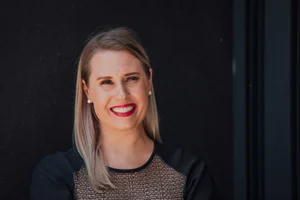
In 2017, Cath Nielsen was a passenger in a police vehicle ambushed by a wanted offender armed with an automatic weapon.
Her colleague and dear friend, Senior Constable Brett Forte, was tragically killed.
Cath survived the attack — but what came next became an even bigger battle: finding the courage to speak up against an enormous organisation when the truth needed a voice.
Cath’s experience lays bare the real cost of staying silent, the fear of challenging the status quo, and the courage required to use your voice when it shakes.
The Key Takeaways from this important conversation:
Speaking up against power can be brutal, lonely and incredibly costly — but also deeply meaningful.
Courage isn't the absence of fear; it’s action in the presence of it.
Being “one little voice” doesn’t mean you're powerless.
Preparing, educating yourself and grounding your message gives you strength when the scrutiny is high.
Challenging the status quo is how systems evolve — even if you never see the full impact yourself.
You don’t have to lose your career or identity when you speak out; with support, rebuilding is possible.
transcript
Hello, welcome back to That Voice Print Podcast. My book Voice Print is out in the world, and I'd love to share all the amazing pieces of feedback coming in, but full transparency, I am recording this episode pre November 25, so I don't actually know. Jump on over to my socials and I'm sure I'm keeping you right up to date.
Now, one of the reasons I entered this podcast in advance is because it is quite heavy. In her first podcast interview ever, Cathy Nielsen is sharing her story.
In 2017, Cathy Nielsen was a passenger in a police car peppered by machine gun bullets. The violent incident killed her partner and friend Brett Forte. Cathy wasn't to know her biggest battle was yet to come as she faced hurdle after hurdle to get her voice heard and real justice for Brett.
In this episode, Cathy shares her traumatic experience and the importance of speaking up even if you are one little voice against an enormous organization. A lot of the details about the case are not shared in this podcast. You can Google it if you'd like more, including the findings from the coronial inquest. I've had the privilege of helping Cath raise her voice even when it waivers, and this episode is a declaration of how far she's come and a supportive voice to anyone who feels compelled yet daunted by speaking up to power.
Sally:
Cath Nielsen. It is such a joy to welcome you to That Voice Podcast.
Cath:
Thank you, Sally, and thank you for having me.
Sally:
You have such an incredible story. Let's dive right in. Take us back to that day in 2017.
Cath:
So Monday, the 29th of May 2017. It started like any other day in our house. We're all up early, make sure kids are organized for school. Finish breakfast, rush out the door. I went off to work at the Toowoomba Police Station. I was working in the tactical crime squad, and on that day I worked with Brett Forte. There was nothing unusual. Brett and I worked together a lot. We were actually really good friends and I was also good friends with his wife, Susie, who was also a police officer, but worked in a different area. So on this day, it was shortly after 1:00 PM and our office received a phone call from a wanted person. We all knew about this wanted person. We knew he was violent. But ironically it was Brett who answered the phone. This wanted person asked to be put through to someone more senior in rank.
And with that, Brett putting through to one of our sergeants, Brett and I, along with every other officer, well from our office and pretty much all of Toowoomba Station, we all hit the road to try and find this wanted man, because we knew that he had been ringing previously from phone boxes. So we were all patrolling around different, different areas with phone boxes in there. It didn't take long. And we heard over the police radio that another crew had located the one person in a phone box. He'd since hung up and had gotten to his vehicle, and there was a slow speed pursuit that was now going on. So Brett and I reacted to this information. We were able to catch up to this pursuit as it was going down the Toowoomba range. So this pursuit went for a number of kilometers along the highway and onto the Gatton Bypass.
During this time, two attempts by other police to deploy stingers to try and, you know, stop the pursuit. They were unsuccessful. So the pursuit continued on to the Gatton Bypass, quite a number of Ks into the bypass. And then all of a sudden the wandered man drove his ute down an embankment off the highway, down his embankment. And because of the car we were driving, we were able to follow down this embankment and it took us onto a road. A bitumen road was in an area that I would call mainly bushland and farm houses, farmland area. Of course, we were on high alert. There was no doubt, you know, we were on high alert. There was a change in how I was feeling, and obviously how he was feeling when the wanted man turned, left down a road called Boys Road.
You know, this is a dirt road. So we continued following this man on this dirt road for, for probably about a K. Now there was heavy bush landing either side with houses sort of along the way. We got to a point that was really narrow and steep. The wanted man stopped his vehicle on the top of the rise without hesitation. He got out of his car, he turned, spun towards us, lifted up a weapon, and started firing automatic weapon bullets at us.
I, yeah, got my gun out. I returned, fired through our windscreen. And Brett reacted instantly, got the car into a reverse and slammed his foot onto the accelerator. Brett was obviously hit by one of his bullets, well, a few actually. This caused Brett's hand to fall from the steering wheel in turn, causing our vehicle to swerve and then flip onto the driver's side.
So I couldn't see the shooter, I just could hear the sounds of his bullets hitting our car. Just the ting sound. I remember bracing myself in his upturn vehicle, just wishing the bullets would stop just hearing the tins of the vehicle. And I remember thinking, Oh God, just stop before one of these bullets hit me, if it hadn't already. I really did.
I feared that he not walk over to our car just to finish me off. So I pulled away shards of glass from broken window above me. So it was my passenger side window, which was now above me. I changed my magazine. So I had a new round of 1515 in my magazine, and I remember being ready and thinking, if you put your head over here to finish me off, I'm just gonna take you with me. Bit by bit. I edged my head up out of the car.
And this was one of the hardest things that I ever had to force myself to do when I did this, though, it was such a relief because his car was gone and he was gone. I could still hear in the distance with sound of bullets the bushland all around me. And as I was lifting myself out of the, out of this window three really brave officers had been able to sneak, sneak through farmland, bushland to come to help us.
We realized that there was no way we could leave Brett out of the vehicle. So I used my baton to smash the front of the windscreen of the police vehicle. It didn't smash like I expected glass to smash. It's obviously treated with something for safety reasons. It took a long time for me to smash a hole big enough for us to be able to then get Brett out.
There was the sound of gunfire still continuing all around us. Look, I knew he was in a bad way. We laid him on the dirt. One of the other officers bravely ran back to get the police car to bring it back because we had no other way of getting bread out of there to first aid. During this time, I took his fist from him and I said to him, Bretty, blink, if you can hear me. And he made a sound with his voice, "Ha". And I took this as right, you know, we need to get him out to what I hoped was an ambulance, first aid. So the other officer brought the car back. We loaded Brett into the car, meant there were three of us left. We ran back out to the out cordon, back down Wallace Road.
So I was just hoping hoping that Brett was still alive. And it actually wasn't until later at the station, it was actually a friend let me know that Brett had passed away. I need to forget where I was when my friend told me that, and I realized that noise he made... that noise, but wasn't what I hoped. It was actually Bretty dying up on that shitty little mound of dirt on Wallace Road. So next week funeral was held for Brett, attended by thousands, and it was really a fitting tribute to a really great man.
Sally:
Oh my gosh, yes. Such an awful, awful day and ordeal. Do you still think about that day, every day?
Cath:
Every day, Sally. Yeah. I dunno if there'll come a time when I want. Yeah, every day. That's all there. Yeah.
Sally:
What was the point when you didn't get the support that you were hoping to get?
Cath:
Okay. When something like this happens, it's investigated a group called Ethical Standards Command. They investigated, and as victims were told, 'Cause you're victims of this incident, you've got the right to ask these questions. Which I did. I realized that maybe saying I was allowed to ask questions and then actually asking the questions were two different things.
I was actually chastised for speaking to ethical standards. So we're all hinged on. We didn't have the information in relation to the shooter and the types of weapons that other people did. I was told I was being a troublemaker. I was told if I continued along this track, there would be a complaint made against me. Process was brutal. It was intense. I had questions, I wanted answers, but rather than open, honest and transparency, I received threats. I had my weapon taken off. Me telling me that my mental health was in disarray, it was just such a brutal time.
I never wanted any drama. You know, I was recovering from this traumatic event where for some reason I was able to walk away unscathed and Brett didn't. Oh, the last thing I ever wanted was drums with the organization I believed so much in. But unfortunately, that is what happened.
We started to ask these questions. It was devastating. It was brutal. And I think that was a catalyst for, so for what then happened in my life. I started you know, and part of recovery too. I went to uni. I'm currently doing a Master's in Anti-corruption Studies. And I wished, I wished I knew back then what I know now about big organizations, about theories on how things actually work.
You know, how people are gonna protect themselves. And it's helped me, you know, I was worried what people would think if I didn't stick to the status quo. If I didn't toe the line, Oh, well, you know, do I look like a troublemaker? And yeah, we were tainted as troublemakers, but I've gotten over that and I've grown as a person. I really do not care if people think I'm a troublemaker. I've had to depend on my voice.
Sally:
And with this study that you're doing, which is so, so great, what's the biggest thing that you've learned that you wish you knew back then?
Cath:
I'll say about organizational cultures and theories like Machiavelli's, and Machiavelli was a political theorist hundreds of years ago. And basically he used to say things like, the end is justify the means. You know, the biggest stronger voice is the one that has to win every time. And it really resonated with me because that's exactly what Susie and I had felt.
We were two little senior conies coming up against you know, because you give evidence where we were told, and Susie was even told by someone, you just need to stick to the brief. Well, no, we're not gonna stick to the brief when we've got the right to.
Sally:
Say how you really feel and ask the questions you wanna ask. Absolutely. So you've got a big organization, the powers that be, you know, saying stick to the status quo, stick to the brief. How do you find the courage to use your voice and speak up under those circumstances with that pressure?
Cath:
I mean, silence is easier, isn't it? If we were silent, our lives would've been much easier. Our recovery from the trauma would've been much easier than what it was.
Sally:
Do you believe it would've been easier?
Cath:
Yeah. in that respect, but then obviously it would keep you up at night. I did not regret speaking out the way I did, asking the questions the way I did, because that's important. And there was a really great book around that time called The Art of Insubordination by a Todd Kashdan. And that book helped me so much because it talks about how it's so important to be a principled dissenter.
No, don't be reckless about what you have to say. You have to know your evidence, be able to back up everything that you were going to say, every question you're going to ask, understand the answers to educate yourself. Don't just go off half-cocked.
Sally:
Because the scrutiny is gonna be very.
Cath:
Right? Yeah. You can't act out of anger. You have to be pretty smart about it. So I learned a lot about standing up to the status quo. We need to do that. Yeah. Especially as females, we need to be able to trust our voices.
Sally:
And if someone's listening and they are having an issue potentially at their workplace or, you know, with a organization much bigger than themselves as the individual, and they are, you know, wanting to speak up, but hearing your message, if it's easy to stay silent, this, you know, if I speak up, I'm just gonna get beat down. What would your advice be?
Cath:
Look, you probably won't be able to live with yourself if you don't do anything. For me, yeah. Because I did have a voice and have an opportunity to challenge the status quo. There may not have been an outcome that I particularly desired.
In a lot of ways it's still rewarding to do that. And we have to start chipping away at whether it be organizations all over the world that hold the narrative because they've got the loudest voice, and of course they do. But we've gotta start somewhere before you and I sell you know, have been activists for that sort of thing. And I really do admire that because it's it's a hard gig and it can be brutal and it kind of be lonely.
Sally:
Oh yeah. As we spoke about in one of our very, very early sessions, it's like the road may not be laid, but we shall pick up a shovel and start digging.
Cath:
Yeah, that's right, Sal. You've gotta start somewhere, haven't you? I don't know. And I would never have understood, you know, or spoken like this if it was not for the experience and the trauma that I went through. The effects of that sort of trauma, you know, of having to come up against a voice so much bigger than yours.
Sally:
And through all this, how do you manage your emotions with it? Like I'm probably thinking like all of us. It's like, well there were probably times when I could've done it a bit better, but in these circumstances, how did you not let all of the anger and the frustration and the grief and all of those emotions just completely overcome your voice?
Cath:
I knew I had some important things where I had to, I had to depend on my voice. And so that's why I came across you, Sal, because I wanted to be able to speak clearly and to get my story across, and I needed to be able to depend on myself.
You know, I need to be able to get, get there and trust myself. And that's why I made contact with you, Sal, so I could learn how that's done in a professional manner. And that was quite a number of years ago. And I have got so much out of, out of that on a lot of different levels. I would say with my university studies and doing a Master's and different things involved in that, I'm able to do better because I trust my voice. I formulate what I need to say, I know where I want to go.
Sally:
Oh, so great. Well, it's been absolute joy working with you, Cath.
Cath:
We have to challenge power. We have to challenge the status quo. It keeps honesty, transparency, openness, and society does have to change. And the more I've studied, the more I've looked into it, some organizations do really well with open communication and some not so well. It needs to be something that we're all, that we're all mindful of. We can't just whinge and about it, you know, to our friends or saying they've done this to me. Well, we kind of have to be a little bit bold sometimes, is what I've got out of this. And even if you burn bridges, so be it. So be it.
Sally:
Because the feeling and the importance of using your voice will always outweigh the negatives with it.
Cath:
Yeah. And it may be a brutal, even cruel road. You know, like retaliation, that's a big thing for whistleblowers and that's real and that's hard and devastating. But it's also rewarding because, you know, that you had the courage to speak out.
Sally:
And now we're, you know, eight years on, you said it's still something that you think about every single day. How are things now and how do you feel having gone through in not just the trauma of the day, but the resistance and the challenges since that time? Where are you now? What kind of place are you in?
Cath:
So I still work as a police officer. I work with some of my colleagues that are the most amazing people. And it's a job I believe in. And, you know, I believe in fighting the good fight. But coming out the other end, I still think about my friend Brett every single day, but also how I have grown as a person. The battles that I've had to face, the internal battles, of course. It's gotta have meaning for me. It's, yeah, I'm not gonna fall in a heap. I need to and want to be a better person, come out the other side being a better person and being a more educated person, more compassionate person. And I think that I owe it to Brett too.
Sally:
Yeah. Oh, he would definitely be so proud. You're such a brilliant person and I'm glad that you said that you're still working as a police officer because so many times in these sorts of situations when somebody does speak up to power and they do blow the whistle, they're just pushed out. Like it's a big challenge and then they're totally pushed out and they can't continue to do what they love.
Cath:
It took a lot of work. Yeah, it did. It took a lot. I had to do a lot of work on me finding who I was, but I was well supported and I think that did help. My journey was well supported by really good people and family.
Sally:
Oh, so great. Cath, was there anything else you'd like to add,
Cath:
Sal, I'm on LinkedIn and I'm always, always eager to speak to people who reach out.
Sally:
Amazing. Cath Nielsen, thank you so much for joining That Voice Podcast.