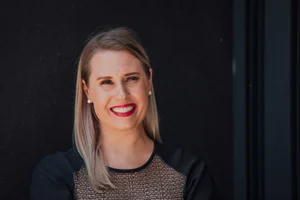
In this episode I’m exploring the power of wishing - not as something whimsical or passive, but as a practice deeply grounded in science, intention, and the human voice.
I’m joined by Brownell Landrum, the creator of the global movement The Cosmic Wish Experiment.
We unpack the difference between a wish, a prayer, and a goal, and why a wish sits beautifully in the middle: part intention, part surrender.
We talk about why wishing for something (rather than against something) matters, how collective wish circles amplify energy, and why so much of what we label “woo-woo” is now being explained by science.
We dive deep into the role of the voice — why speaking a wish out loud helps bring the body, mind, and nervous system into alignment, and how being witnessed can strengthen (or sometimes sabotage) a wish.
If you’ve ever wished to feel more confident speaking, to trust your voice, or to use it in service of something bigger than you, this conversation is for you.
Settle in... and maybe even make a wish of your own.
transcript
Welcome to That Voice Podcast. One day I Wish Upon a Star... And that is all the singing you'll be getting from me today because... Oh, our episode is so whimsical, yet grounded in science. It's all about the power of wishing with a woman named Brownell Landrum, who started this beautiful global movement called The Cosmic Wish Experiment. It's a grassroots effort to elevate our collective consciousness energy through wishing. I was fascinated to ask Brownell about the role our voice plays in wishing. So in my book, voice Print chapter 13, speak Your Blueprint, I talk about manifesting with your voice and I give you the steps for speaking into the world, the things you desire. If you haven't got voice print yet, I'm highly offended. No, it is a really great read. Go and get yourself a copy. So my interest in manifesting with your voice is close to wishing with your voice. This is such a beautiful, interesting conversation and it's my wish that you settle in to enjoy it.
Sally:
Brownell Landrum, welcome to That Voice Podcast. It's so wonderful to have you here. To get started. Tell me about the Cosmic Wish Experiment.
Brownell:
Okay, we're just jumping right into this big thing. Well, basically you know, I'm in the us I know you're in Australia and I don't know really all what's going on in Australia, but you probably know enough about US that there's some issues. And so I'm thinking, what can I do? And I don't know if you're familiar with the David Hawkins research about power versus force, but basically energy has different levels. And we've been so stuck down in this lower level energy of despair, anger, despair, anger. And what we need to do is elevate and get it higher. And so I wrote a book called The Art and Science of Wishing, and that led me to create this thing called the Cosmic Wish Experiment. What I'm trying to do is get people with a very powerful message that they want to elevate and use the science of wishing to help get their message out and help people unite.
Brownell:
Because one of the interesting things I found in the research was that collective risk wishing rituals have been a key driver of success for humanity since the dawn of, you know, time. Yet do we do it anymore? Right? I mean, do we really have these collective wishes? That's really kind of what I wanna bring back. It's kind of you know, an ancient tradition with a modern solution using science. That's what you know, I wanted to talk to you about is this whole idea of your voice and embodying your voice and finding your voice and using your voice for peaceful, positive and purposeful messages to give to the world could be such a lovely wish.
Sally:
It is. And it's so interesting. We were speaking before we started recording about how we could use the message of Voice print and the message of using your voice, how we could turn that into a movement by wishing. So, you explained to me that it's not just as simple as going, Oh, I wish for everybody to find their voice and use it confidently. There's a bit more mechanics around it, isn't there?
Brownell:
There is. You know, and that was what was interesting to me 'cause I wanna make it clear, I'm a storyteller. I am not a scientist. I was writing kind of a magical realism world and I was writing about that in a novel, and I kind of envisioned this world where wishes are gathered and sorted and, you know, granted, and as I'm writing this magical kind of world, I'm also one night listening to a lecture on neuroplasticity. And then I was like, is there science in wishing? So that led me to what I call like this game of science whack-a-mole. I don't know if you have that in Australia, but that game where you're like, science, science, science, science, science, they all just kept popping up everywhere because every time you make a wish you engage over a dozen sciences. You know, we all, you could say a wish, oh, I wish for this. Right? But first of all, you have to understand the difference between a wish, a prayer and a goal.
Sally:
That was my next question is, is this just like praying?
Brownell:
Right. Well that's what's interesting. If you think about it, what do you think if, if I were to ask you, I'm putting on you on the spot, but what do you think the difference is between a wish, a prayer and a goal?
Sally:
Is a wish more intentional? I guess a prayer is also intentional. You're sending energy towards a particular place. So I'm really curious to understand what the difference is.
Brownell:
Yeah, yeah. Well basically a goal is something in your control. Like you can say, I've got this goal, I'm gonna lose 10 pounds, or I'm going to get this degree, or whatever. It's something that you can set a plan for, that you have control over. And a prayer is usually when you have no control, pray and leave the control up to whatever you think is out there. A wish is that kind of beautiful blend of the both. Some of it is in your control and some of it is, you know, maybe outside your control. So the difference between a wish and a cosmic wish, in my definition, if you look at the word cosmic in the dictionary. The first part of the definition is it's dealing with the universe. It's big, right? The second part of the definition is it ventures into the spiritual or metaphysical.
Brownell:
And then the third part is that it's vast and comprehensive to turn a wish into a cosmic wish is to apply the science and when you start applying the science, you know, okay, it's one thing to wish and poof! It if we leave it out there, that's not that much different from a prayer. But when you start adding the science, you realize, Okay, neuroplasticity says I have to repeat the wish. It also activates, I'm sure you know, 'cause I've read some of your book is the reticular activating system. If you repeat it, your brain is going to find that solution. It's going to keep looking for it. And it, depending on the kind of wish, and I say wishes should be peaceful, positive, and purposeful. If you get into the purposeful, then you're doing it not just for yourself, but for others as well. And then mirror neurons happen and then all these people come in to help you. So if you're wishing collectively, you start building on this energy that multiplies. And so all a lot of these things that we think are woo woo actually being answered and explained by science.
Sally:
Yeah. And that's, that's what I really say in Chapter 13 of my book. 'cause I mentioned my dad who was a real facts and data kind of guy. None of this wishy-washy, touchy feely as he used to say. But really the two are not as far apart as people realize. The spirituality and the science is very much aligned in many different areas, including this one. So my next question is, as many people would think of a wish as a silent thought, something that you just focus your energy on and wish silently, how much of the power of a wish lies in articulating it or speaking it out loud?
Brownell:
It's wishing for and not against. So of many of us are thinking about what we're rebelling against, that's not going to take us forward going.
Sally:
Right? So you don't wish against war, you wish for peace, for example.
Brownell:
That's right. That's right. And you don't wish no kings, you wish for peace and democracy.
Sally:
You won't wish not to be scared of public speaking. You wish being a confident speaker.
Brownell:
Yeah, that's right. That you feel great on stage and you've got a message to deliver and you feel great about the fact that you need to deliver that to other people and it matters. And so when you ask about voicing it, there's a part on the three selves, right? So whether you call it mind, body, spirit or id, ego, super ego or conscious subconscious, super conscious, the message there is that our bodies need to be in alignment with what we're wishing for. So when we're saying it out loud, that helps kind of resonate that physicality of it. Also, there's a part in there about when do you tell others and who should you tell and at what point should.
Sally:
Yeah, and how much power is there in the wish being witnessed?
Brownell:
That's right. And that, but also making sure that, you know, there's yaysayers and naysayers, right? A lot of people are like, I'm gonna win this thing, or I'm gonna have that Ferrari out front of my door.
Sally:
And then someone says, well, who are you to do that? And it can actually quash the wish
Brownell:
That it can quash the wish. And it also is like, if you haven't taken any steps toward that and you just think, that's gonna happen. There's a kind of a toxic positivity to that too, right?
Sally:
Wishful thinking!
Brownell:
Yeah. Wishful thinking. Yeah. You gotta do wishful thinking in the right way.
Sally:
This is a great spot to remind you. It doesn't matter what you say or to who you say it to, if you are not connected to your voice, people can feel it. This is why you need the magnetic voice formula. If you're a Soul Speaker, it's in the portal. If not link is in the show notes.
Sally:
The cosmic wish experiment has wish circles.
Brownell:
Yes.
Sally:
So it's when people are, are speaking and sharing the intention altogether. And so would you say that something shifts in the power of everyone speaking it together at the same time?
Brownell:
You know, in history, these collective wishing rituals are, were such a key driver. And can you just imagine, and I'll just completely hijack your wish for this example, and say.
Sally:
Please!
Brownell:
We wish for everyone in this wish circle to find and embody their voice print to make a difference in the world. Right? Can you imagine the power of knowing that you've got 5, 10, 20, a hundred, a thousand people all wishing for that? Not only that, then you've got a group where you're supporting each other because they'll have an individual wish related to that. And it may be to be a great speaker, or it may be because I want my voice, because I want to speak out instead of against injustice. But whatever their positive is for, for what justice they want, they could all have something different and they could be just like building on each other.
Sally:
Yeah. And we see this in action, you know, in my Soul Speakers circles, when we're all together and we're all focusing on our voice and we're all sharing what's on our hearts, there is energy in that. I've been in rooms as well when we've done, you know, like the board break, somebody comes up and breaks the board and the energy of just everybody in the room willing that board to be broken. That's what enables everybody to be able to, to do it, because they can feel that in their body. So with manifestation, I've read and been told, if we constantly say I want this, or I wish this, the universe puts us in the energy of wishing and wanting. And so with the language that we use, should we be saying, I wish, or should we be saying it is?
Brownell:
First I'll just kind of repeat and say, you know, I'm not a scientist, right? So I think there are different science points of view on that. I can tell you where I go with it is that first of all, the word wish is kind of like this beautiful mantra word. I mean, if you just say the word wish, wish, you know, it's not goal or prayer. Like it's not a hard word. It's a beautiful, and so there's a release of that. And I think that's one of the things, a lot of the manifestation movements are like thinking, oh, then it's happened and I am, I'm holding onto that. And no part of it is releasing it. Part of it is accepting it. And I also get into what I call the four responses Yes. No wait or something better. So I think that too much of this holding on or forcing something can actually prevent you from getting what you should be getting.
Sally:
In the cosmic wish experiment. Do you say, I wish for, is that how it starts?
Brownell:
Yeah, we would be, we and then I mean, individually you would have your own wish but it would be, we wish for everyone in this group to find and embody their voice print. So that way we're wishing for that together. That is a, that's a kind of a collective mantra when you're talking about the three selves. You don't wanna get into a mindset of lying to yourself either there is work to be done, and if you think it's already done, are you going to do the steps to do to get it.
Sally:
Required?
Brownell:
Yeah. Right. So there's a little bit of a dynamic there. However, there is also important that you see yourself in that wish, you see your life that way. You are visualizing that. James Doty has a really good information about that in his book on manifestation. And he was a neurosurgeon, right? So he brings into the science of that you, you want to see and feel yourself in that place. So that you, in fact, I have a really nice activity. I call it the Motivation matrix four square grid. So there's, you know, row two rows and two columns. So there's four squares on the top of one column is want. The other column is don't want, and the first row is have, and the next row is don't have. So then you've got a square of what are the things that you want, that you have?
Brownell:
And those we celebrate, right? And we nurture and we cultivate. Then there's the things we don't want that we have. Those are the things we work to eliminate. Then there's the things we want that we don't have, and those are the things we're usually wishing for, right? And then the last box is the things we don't want and don't have. And you think, well, why do I care about that? Well, sometimes if you get your wish, you might bring on things that you weren't expecting. So you wanna be clear about that. So I just think that it is really important to go, I feel it. Like I feel that thing happening. I know that it's happening. I feel the energy of it. I'm in that flow of it. That's beautiful to say it's already here. There might be some pushback within your body.
Sally:
Bronwell, I love that. So the key really is, is to feel the feeling in your body of the wish being true.
Brownell:
And my first book is called Five Reasons Why Bad Things Happen. And one of the reasons why bad things happen is subconscious sabotage. And one of my favorite examples for this, you know, imagine you're seeing your neighbor out walking their dog and the dog runs off. What does the neighbor usually do? They either yell at the dog or they chase the dog. Right? That's usually not very successful because the dog doesn't want to be yelled at or chased, right? But if you say, Hey dog, it's fun over here. The dog is just gonna come. Oh, I'm there. Like that'll go the way. And our bodies are like that. So if we're yelling at our body or telling our body what it shouldn't do, or being angry with our body, it will rebel against us.
Sally:
Yes, there's a whole chapter in Voice Print called Operation Voice Cupid, and it's all about how we need to love and care and appreciate our voice. Because if we're constantly saying, I hate the sound of my voice and I never have my voice, then it won't be there for us.
Brownell:
Yes. And your voice is, you know, certainly that's a big part of the way our body communicates. It's not just our mind, but our body and the, the physicality of that you could push, push, push. Like that's why I wish better than a goal in so many ways, because you're in alignment with the release of it and you're also connecting as opposed to, I'm going to force my body to lose this weight or whatever it is. And then instead of, Hey, I want to be, let's be healthy, you know, I just want to have a healthy body that's vibrant and energetic.
Sally:
Yeah. Let's apply this to speaking. So a lot of people who listen to this podcast are wanting to become better speakers. They might have a fear of public speaking. What are some ways that we could apply all this to becoming a more confident speaker and overcoming the fear?
Brownell:
I love to do public speaking, like I'm applying to be a TEDx speaker and I love it. I love the energy.
Sally:
I wish that for you. I'm doing mine in March.
Brownell:
Oh wow!
Sally:
Manifesting it for you.
Brownell:
Yes. Manifest that for me. Yes. You know, that's a good example of something. I see it, I already can visualize myself not only on stage, but in the YouTube videos. And so what is your purpose of your voice, right? What message are you delivering? If you are delivering a peaceful, positive, and purposeful message, you know me to keep, keep hammering my three Ps, but if it's purposeful, you've got a message that people need to hear, not just that you need to tell, but that people need to hear, right? And you get on that at stage and you've got that message, there's gonna be mirror neurons of the people in the audience cheering for you. You're gonna feel that. And I know you know what that's like when you get on stage and you feel that energy coming towards you because they know you're there to communicate something really beautiful and important to them.
Sally:
But they'd say Brownwell, No, I know all that in my head, but when I get up there, I have this visceral reaction and I, and I can't speak. So how can I, you know, I wish to be a better speaker. What, what can I do? Like what's a step that I could take?
Brownell:
If you're on stage, you feel all that energy. Now if you're not used to it, your body can go, Whoa, I am trying to adjust to all of this energy. If you are used to it, you feel like, Oh wow, there's all this energy, right? I mean, it's the same thing, it's the same energy. It's just how you're ready to accept it. So being in tune with your body saying you're safe and we're gonna have fun and make sure your body knows it's gonna be fun and it's okay even if we make a mistake because, so what if you have flaws, that is gonna make you relatable!
Sally:
And this is the work that I do. So in Soul Speakers and also our courses, we are looking into how we can bring the body in alignment with that feeling.
New Speaker:
This is the perfect time to remind you to download my free ebook. What to Say When You Don't Know What to Say. If you struggle speaking off the cuff or tend to ramble, or book yourself a one-way ticket on the tangent train to Monotone Town, then this will really help. You'll learn how to introduce yourself, tell people what you do, make a point, sell your product or service. And there's a framework for telling a story that people rave about. Link is in the show notes. Hit pause and grab it.
Sally:
I have a box of wishes. It's something I've always had. It's just this, I dunno how I'd feel if someone ever found this, but it's just little bits of paper and each paper involves a wish.
New Speaker:
And sometimes I write two and I, I put one in my pot plant, on the balcony, I bury it, but often I'll just fold it up and I just put it in this box of wishes. And every year, or sometimes even longer, I will get it out and I'll just go through the box of wishes. And it is extraordinary the amount of times I go, Oh yeah, that happened. Oh yeah, that happened. And it made me think of it because one of the things in my box of wishes, which I wrote about seven years ago when I first started this business, was do a TEDx talk. That was a wish. And I remember at that time really feeling like it was this wish of, Oh, wouldn't it be amazing if this happened? And then now I'm booked in and I'm doing it, and I'm like, Oh yes, of course that happened. You know? So I dunno if there's any science behind that, but from just an experiential perspective, I would recommend if you don't have a box of wishes, start making one.
Brownell:
Part of what you were doing is that was your commitment to yourself. And I mean like yourselves.
Sally:
Yeah, the inner, the outer and the higher.
Brownell:
And I also kind of curious, do you ever run into wishes that didn't and you're like, Wow, glad that didn't.
Sally:
Absolutely. It's, it's extraordinary how I often go, Oh, well actually I'm gonna get rid of that because I don't want that anymore.
Brownell:
That's right. And so that's the important thing to realize, right? Is that sometimes yes isn't always the best answer and no just means more information. And so when you're wishing for something, you have to allow yourself the freedom to, there might be something better. You know, I thought I wanted that and I transcended that.
Sally:
Yeah. And Brownell, has that happened for you? Has there been a wish that you had at one point and you're glad it didn't work out for you?
Brownell:
Oh, yeah. Don't you know about relationships especially? You're like, oh!
Sally:
My entire twenties, relationship-wise.
Brownell:
Relationships are the easiest, right? But even certain jobs, you're thinking, I really wish I'd had that job. And then you're like, I call it reverse optimism, where you can look back and go, Oh, if that had, it hadn't happened and that hadn't happened and that hadn't happened, I wouldn't be here. The novel that spawned all this is called a love story to the Universe. And it's about this team upstairs that's guiding this human who happens to be semi-autobiographically me. But I look at them like border collies, and sometimes they'll just keep whacking us in the side to get onto the right path, right? And so, for example, I like to use Star Wars as a good example. You know, Luke Skywalker wanted an adventure with his friends. What he needed was to find his purpose.
Sally:
Mm.
Brownell:
Right? So when we, sometimes our wishes are based on wants and not necessarily needs.
Sally:
An example that is very timely for me at the moment, my entire website and email went completely down, which was quite devastating at the time of year when I've got a lot of inquiries, a lot of things happening. Having no website and no email is, I guess bad by many ways of looking at it.
Brownell:
It's kinda bad!
Sally:
The thing is though, because I shared my story and shared my voice on social media, the amount of people that have connected with me through this experience, either sharing their story, sharing their sympathy, or sharing their knowledge has been extraordinary. And I'm actually looking back going, it's been quite good. So I'm so glad that I've connected with all these people and been able to make all these decisions and as you say, get so much new information about what I'm gonna do moving forward. It's such a great experience.
Brownell:
That's the community you build with. Everybody is wishing together. And so they all have the same kind of thing. So if somebody says, right this week I'm having a little struggle with finding my voice, or trusting that I'm doing the right thing or whatever, boom, boom! You've got a whole circle of people that are there to support. And you, I know you know that with your group that you already have.
Sally:
Yeah. That's why there's so much power in community. You are right! And just you sharing that now, maybe me putting it out there on social media and having so many people wishing for me to get things back online is probably how it happened. I did get messages of people saying, Sal, it's gonna be back online by lunchtime. I had somebody else say, Oh my gosh, I'm so glad I've been wishing this for you. And that's the word they used.
Brownell:
Yeah.
Sally:
Oh my goodness. That is so great.
Brownell:
And it's, versus if somebody says, I pray for you. I mean, even if you have a lot of faith, I'm not sure I want that energy, but I wish that for you.
Sally:
It almost makes you sound like you're a bit more of a hopeless case. I'm, I'm praying
Brownell:
For you. Well, that I complete confess, 'cause Like I said, I'm not a scientist. So I used AI to help me research a lot of this. And I actually asked AI, it's like, tell me about the word, the energy of the word wish. And it came back with all this cool science of just that word.
Sally:
Yeah. It's interesting. So the, the way that we form the word wish, so we start off with our lips rounded w and there's only two semi vowels in our language, w and year. And it's like halfway between a consonant and a vow. It's where it starts in the formation for a vowel. Like for w it's ooh, but then the air rushes forward, which is, I know I'm getting very technical here, which is what we use consonant. So when we do work, it actually creates this whoosh in our mouth. And then when we say sh the tongue is close to the hard palate and the air continues to flow through. So it's a word that you can continue holding on for a long time. Like we different to like stop. Right? Right. So when you say stop, you have to have a hard stop because that's how you make the sound. P So that's just another element to put into it, where the actual way that you form the word wish is like this whoosh of energy, this wave of air that continues to move through your body as you say it.
Brownell:
Yeah. And it's a release. You're in a wish circle and you have this united ritual, whatever that is, that, you know, okay, this is going to be the trigger that we're all going, going to do. You know, it could be every time your phone rings or every time, you know, the microwave goes off, or whatever that might be, you know.
Sally:
I love that. A wish trigger.
Brownell:
Yeah. It's the rituals are important. Important, important, important.
Sally:
So good. Brandon, I could speak to you for so long. This is so fascinating. Is there anything else you'd like to add? What's one thought that you'd love to leave our listeners with?
Brownell:
Imagine you're blowing out candles on a birthday cake, or you're, you see a shooting star, or maybe you throw a coin into a fountain. What do you wish for
Sally:
Brownell, where can people find you? How can they find out more about the Cosmic Wish experiment in your books?
Brownell:
Yeah. Well, I'm the only Brownell Landrum in the world, so that's pretty easy. The cosmic wish experiment is cosmicwishexperiment.com. I'm calling it an experiment for a reason because we're going to keep making it better. We're gonna keep improving it. You know, it's going to evolve. It's not hard hard and fast. I'm sure there are gonna be scientists come in and say, well, you should do it a little bit differently. And I'm like, good, tell me, you know?
Sally:
Oh, so wonderful. I'm so grateful that we connected and I'm wishing you wonderful evening.
Brownell:
Thank you. I wish you a wonderful day.