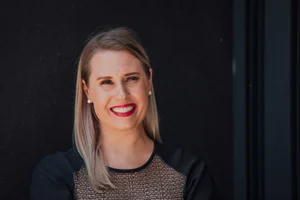
285. Sell from Stage
What if selling didn’t feel pushy… but powerful?
In this episode, I sit down with speaking and sales expert Colin Boyd - creator of Sell From Stage Academy and author of One Presentation Away - to completely reframe the way you think about selling.
From turning a discounted $2.5K keynote into $92K in sales… to building an entire business off one presentation… Colin shares exactly how to speak in a way that creates clarity, connection, and conversions.
If you’ve ever felt weird about “the S word”… this episode will change everything.
TRANSCRIPT
Hello, welcome back to That Voice Podcast, a huge welcome. If you are joining us for the first time, I'm so excited to introduce you to a person who is the best in the business when it comes to selling from stage without being pushy or slimy or sleazy. He's worked with the likes of Amy Porterfield and James Wedmore. If you have online courses or an online business of any type, then you may have heard of those superstars. My guest's name is Colin Boyd. He has a new book out, which I'd highly recommend. Mine has post-it notes all the way through it. It's called One Presentation Away, because the right presentation can make you mega sales over and over and over.
And Colin shares a story about this. He also shares how speaking for low cost or no cost can make you money in the long run. And how to reframe the whole icky feeling that I know a lot of business owners experience when it comes to selling. It's like the dreaded S word, and it shouldn't be like that. Selling is serving. And we talk more about that today. This chat will really help you get out there and sell from stage. It's as the packaging advertisers for this episode. And if you wanna do it with confidence and learn the craft of speaking, then you get that inside my program, Soul Speakers, actually Colin's program Sell From Stage. And my program Soul Speakers is a beautiful pairing. So settle in, Colin is such a vibe, and I know that you will bounce off the end of this episode with a zest to sell from stage. Let's do it.
Sally:
Colin Boyd, welcome to That Voice Podcast.
Colin:
Thanks, Sal! I'm so excited to have this conversation with you.
Sally:
Likewise, you know, I've been part of Self From Stage Academy, part of Elite, really, really enjoy your approach and I know this episode is going to really change the way that people feel about selling from stage. Let's start off with the stigma around selling from stage and how even just hearing those words makes people go, Oh, I don't know. That sounds a bit icky.
Colin:
Yeah. Well I think the stigma comes from that sense of, you know, where people feel like they, they're trying to get people to do something that the audience don't want to do. It's like taboo. Especially when I started out, 'cause I started out as a keynote speaker, mainly in Australia, Asia Pacific area. And I started selling from stage at corporate events. At the time, I had a few other professional speakers come up to me and they were like, Colin, how on earth are you selling from stage? Like, this is something that shouldn't be done. And I would always set it up with the sponsor of the event to get agreement. Like I don't just do it without permission, but it was simply always viewing it as just an invitation for the audience to take the next step. And it was never pushy, never aggressive. It was like, Hey, if you've enjoyed this, then this would be a next step for you. And I would always have people come up to me and just thank me for going, Oh my gosh, like, I'm so excited about this next thing that you've got. And I started to realize the power of that and I realized as well I was leaving a lot of money on the table when I wasn't selling it from stage.
Sally:
Yeah, it's really flipping the script, not feeling like the audience is doing you a favor by buying, but you are doing them a favor by offering what they want. And in your fantastic book, One Presentation Away, the Foreword is written by Amy Porterfield. And I really love how she describes you describing to her that at its course selling is about creating a moment of clarity for the people you are meant to serve.
Colin:
Yeah. Well for me, the the concept of selling, like I said before, is an invitation. And it's an invitation for them to achieve their goals faster than they would've by themselves. And so the clarity is essentially your presentation should create clarity around where they want to go and the pain that they're in. And then when you make an offer, the next step, whether it be to buy a book, whether it be to download something for free, whether it be to book a consult, whether it be to buy a program, that next step represents them achieving the goals that they already want faster. And sometimes people feel bad about asking for money as well. And I, when I say selling from stage, I don't always think you have to make a direct offer. We call it a sharp sell where you ask someone to buy something there and then like it could just be to book a call-in.
Colin:
I know for me, I used to speak a lot at free conferences when I was speaking in Australia when I lived there. And I would speak at four or five conferences in, in industry events. And I would always offer a next step and it would be to book in a call or a consult. And I would do a couple hundred thousand dollars in backend revenue from every single speaking engagement. And I wasn't selling any products at the time. It was just being a book, a call-in.
Colin:
What most speakers did is they would present, they would get really nice feedback, people would write, you know, 10 outta 10. It was so amazing, but rarely would it lead to anything else. And that was when I realized that I wasn't here to just entertain people. Like I wanna truly transform their lives. And so when you offer that next step, that moment of clarity comes where people go, Oh, that's, that's the next step I need to go to, to get to the result that I already want anyway. They're just offering a pathway to it.
Sally:
Yeah. And when did you first discover the power of selling from stage? There's a story in the book where at one event it was almost 100% of people that took you up on your offer. Like, I mean, that's a conversion rate people dream about. Would you say that experience is the one that stands out?
Colin:
Yeah, I mean, in the book I described the experience of where I spoke for the first time as a professional speaker. Like I said, I'd never spoken before. It was a free event, so I wasn't speaking to be paid. And I made an offer. There was about a hundred and 137 people in the room and about 125 of them gave me their details to take the next step. Now that was a free offer, so I was offering them some coaching and some personal, you know, personal time with me. But I had no clients at that time, so it was just like that, that just made sense. And from there I signed about 10 clients. That changed my life 'cause it took me from, you know, making a couple hundred dollars a month to making over $10,000 a month. But I remember for me one time I got booked to speak in an event and they couldn't afford my fee. I think I was charging about 6,000 at the time, and I told them the amount and they said, No, no, we don't have a budget for that. And so I, you know, I went into the, I did the, the sin of discounting my rate because I was kind of desperate. I was like, Okay, well what can you do?
Sally:
We've all been there!
Colin:
Totally. I think I negotiated like $2,500, right? Then they send me an email and say, Colin, we want you to do a prese to come into the office, do a pre speech before you come to the actual conference. I'm like, A what? A pre speech. And I've already given them like half my daily fee. So I am just, I'm fuming. Like, I'm like, I've just signed up to the worst client ever. Right. I already had some big clients at the time. I'd spoken at HP and Coca-Cola and stuff, so I had a bit of rep, you know, like I had some credibility.
Sally:
Yeah, some kind of a big deal. I get paid for my services and now you've made me cut my fee and then you're wanting to get more outta me. What is going on?
Colin:
Yeah. So this is crazy, right Sally? So I come in, it ended up, it was their major conference, so they had about like 2000 attendees. And I came in and I did my speech. So they had some feedback for me and it was, it wasn't about how I spoke, it was some of the content. They were very conservative in what they wanted. And so I adjusted a few things, which was fine. And I remember heading into it, I thought of the idea, I said, I didn't make much money in this fee. I'm like, what if I sold from the stage? And I literally, I called the event organizer up and I said, Hey, I've got a course that couples beautifully with this program that I'm talking about. I think it's gonna help a lot of people in the audience. Call it a collaborative sell, where basically the event organizer comes on and talks about what you do and then you, you basically make an offer there in the room.
Colin:
And he said, That sounds great, we've never done that before. So he was like on board. I did my 30-minute keynote, which I got paid two and a half thousand for, right? And I was annoyed. And then I did my offer at the end and we did $92,000 in sales after the 30-minute keynote. And that literally changed my life. I was like, Oh my gosh, I think I'm in the wrong game. Like I was trying to be paid to speak, but I realized all the money was made in the backend. That one really blew me away, where I realized, Wow, like the possibility of this was just incredible. And that client ended up being a multimillion-dollar client for me over the last couple of years. Last 10 years or so, I've been working with them for over a decade. I'm still working with them, which is just insane. That one for me blew my mind of like, what was possible when you get this formula, right?
Sally:
Yeah. And it's so against what a lot of people, and even I share this with my clients, you know, you need to be valued for your time. You need to be paid, don't speak for free. There's lots of these messages. And it's funny, Colin, just before jumping on this recording today, I've pitched to speak at a conference and I'm pretty sure it's gonna be for free. You know, even a few months ago or before working together, I wouldn't have considered that. I would've felt that that was somehow diminishing my value by doing free speaking. I'm, you know, I've been in business for many years, I've been paid to speak, why am I doing this for free? But as you say, when you can start to be smart about, well, how actually can I make money from this beyond the fee?
Colin:
But it depends on the context as well. If it's because if you are being paid to speak as a regular keynoter, the audience that you're speaking to may not be the right audience fit for your product. But if you do it right, you can target the messaging in the presentation for the right person. So for example, maybe your target audience is the HR director or the learning development manager and the employees, and not necessarily your target audience, but it's like you have to message your keynote so that the HR manager at the end goes, I want to get all of these 150 employees onto your implementation program that you mentioned throughout the, the speech. And then all of a sudden the keynote fee goes from, you know, $10,000 for the keynote to $40,000 implementation program on the backend. And that, that for me was like my secret source. That's what I used to love doing, was turning maybe like a five figure presentation into like a multi 40, $50,000 contract on the backend. That was always my thinking. And it was like, I deliver value, I do, I do what I say and I'm not selling at the end, but I speak in a way where the event organizer comes up to me at the end and goes, can we talk about that thing you mentioned in the speech?
Sally:
Oh, so smart. So a free speaking gig comes in or we've been asked to speak. What's a little bit of a checklist that people can do to see whether this is something worth them doing? I know audience is one, what else are you looking at?
Colin:
I think audience is number one. So like without a doubt the right audience in front of you is, that's the make or break. I've had times where I've done presentations where it's just like been incredible sales and I've done the same presentation to a completely different audience that wasn't the right fit and made a couple hundred dollars and so it went from like $50,000 to like a couple hundred dollars in sales. And so the difference of the audience is everything. But I will say it just depends on what level you're at. Because if you're just starting out in speaking, like get as many reps as you can, get in front of as many people as you can because I'll say that speech that I told you about, the one that I spoke for free at, which was really early on in my coaching career, it was like 17 years ago.
Colin:
That speech was to alumni graduates for Deacon University. It wasn't necessarily my target audience at the time, but there ended up being a director in the room from HP who was sitting at the back of the room. He called, he called me up four days later, he got a hold of my contact details and then booked me for a five and a half thousand person speaking engagement with HP about four months later. You never know who's in the room is the short answer. You just never know who's in the room. And I think when you're early on, get as many things under your belt as you can. But what I love is really just targeting, like I think about it can be as easy as going onto Google and just searching up the conferences of the target audience of the people that you like speaking to. And a lot of the time, I think the most money is made in the breakout rooms, not on the, on the main keynote. I
Sally:
Read that in the book and I've pitched to do a breakout room.
Colin:
Yeah, they're awesome conference. I love that. So you read that in the book and applied it right away. I love that, Sal.
Sally:
Yes!
Colin:
So yeah, the breakout rooms were where all the money's made because you have a lot more freedom, a lot more time, and you can actually make an offer there. It may not be a direct offer to buy something, but it's, but it's to book in a call or, you know, to qualify. Yeah. So the checklist I would say is first of all is audience fit for your services. That's number one. The second thing would be the size of the audience, right? Is how many people are gonna be there. And then the third thing is just looking at what level you are in your business and whether that's that investment is worthwhile because it might cost you money to actually go and speak at the event.
Colin:
So it's just whether you think that's worthwhile. But I know for me, you know, back in the day when I was mainly working with corporations, I would want to have four to five speaking engagements a year, and that would generate most of our revenue just from those four to five speaking engagements that I'll do for free. And then I would be paid to speak on top of that. But when I spoke at a big corporate, like let's say like a HP, I would be infusing all the implementation experiences and the results that I'm getting with other programs in the keynotes so that at the end, the HR manager comes up and goes, Hey, that online course can we roll that out with the five and a half thousand employees? Oh yeah, sure. You know, and like it just becomes like this ball that just keeps rolling. And so it's, I'm always thinking about what's the next step, not just how do I deliver value in this keynote?
Sally:
Yeah, it's so important. Look, looking ahead and it's playing the long game, not just the short win. You mentioned off the back of one presentation you made 92,000 and the name of the book is one Presentation Away. So if someone's listening and thinking, oh my gosh, this seems like it's a, I have to go out there and speak a lot, do you believe that people are just one presentation away?
Colin:
Well I know for me, if I look back now, will one presentation be the only thing you have to do? No <laugh>, right? Like you're gonna have to do more than one presentation. But the secret is for most people, they can speak, they can have one presentation that they deliver over and over again for sometimes three years, four years. So you can get a really good life span from one really good presentation. In fact, I mean, we've got a presentation, an online presentation that we do, that I've been doing for the last probably five years and I haven't changed it much. But every single time it just works like it. We get amazing feedback. I was literally looking at the feedback this morning from people who didn't, who didn't join the program. They're like, this was the most valuable online experience I've ever had.
Colin:
But they're like, I'm considering joining it next time, which is fine, but it's like I just keep delivering the same presentation over and over again. Now, there's kind of two ways to think about it is a presentation can create a breakthrough for you, but it can also be something that you can build an entire business around, depending on whether you are working for yourself or your in corporate. In fact, back in the day when I used to do more coaching corporates, I don't really do this anymore, but I remember I was working with executives and I would, when they would hire me as an executive coach, and then I would say, Hey, let's talk about your speaking career. And they were like, Oh, I don't, I haven't really thought about speaking. And I would get them to apply to conferences in their niche and start presenting case studies from their organizations and start speaking at events. And they don't want to be a professional speaker. They're not even getting paid to do it, but they would get off stage and get three to four job interviews at like 50% above their current salary. You know, because they're positioned on the stage as an expert, they've got case study examples and you just build leverage rapport. And so whether you wanna run your own business or whether you wanna be an executive or, you know, in that space, like speaking is such an incredible pathway to create leverage, influence and connection at a faster level.
Sally:
Yeah. And worth pointing out that the stage can be, you know, the virtual stage and it can even be the phone, like social media as well. And have you noticed any, any trends in this space? Like while there, everybody was doing the one webinar to the course. Is are webinars still working? Are people looking for more in-person events? What sort of patterns are you seeing at the moment?
Colin:
In-Person experiences. Definitely there's a resurgence, especially with just people, you know, coming out of the, the post-traumatic stress of COVID and, and then even AI increasing, like people are desiring authenticity more than ever, and they're desiring connection, a real emotion experience like that. As AI increases, there's a, there's a juxtapose response to that, which is the desire for connection and authenticity. And so yes, in person, but like I said, that's, you know, it takes a lot to put that on. And so I usually don't recommend that for the first, first, you know, time that someone runs it. But in saying that if you can get five to 10 people in a room, you can, you can make a lot of money. If you've got a, you know, a mid, mid to high-ticket experience for people. I mean, in terms of the different formats of like a single webinar, like a 90 minute presentation or a multi-day event or a workshop, like a two-day workshop or a five-day challenge.
Colin:
I mean, there's so many different formats of it. And the short answer is that they all work, they just all work. It just depends on what you're selling. One of my clients, and she's become a really good friend of mine, she runs a, it's like a $15 million business now, and she runs it all off one presentation, one webinar, she runs the same webinar, it's Monday morning, she runs the same webinar, live, there's no recordings. She runs the same webinar every single Monday morning, and then she goes to book a call, because they have a $10,000 offer. She's been doing that for three years now. The same webinar, live.
Sally:
Well, how are they filling that from ads?
Colin:
They probably spend $50-80,000 a week on ads. Yeah. So they're filling it completely from ads, cold traffic. We probably host a webinar or some sort of virtual experience every month, I would say like for people who are new to my world. So we'll get, you know, 3 to 5,000 people registering per month for some sort of experience with me if they're new to me. And then we also do internal presentations for people who are just starting out with me and then if they want to consider going to the next level. So, you know, depending on who your audience is, like my friend, she targets business owners, so 11:00 AM central works just fine for them. But if you are targeting professionals, I would like, if you're in your own time zone, I would target lunchtime or I would target evenings.
Sally:
Yeah. My membership is 7:00 PM Australian time, which is the morning UK. It's a bit hard for the US that time. But I've found, because my membership is split between professionals and business owners.
Colin:
Yeah, well there you go. They all work. I actually think it's less about the structure of the, like, whether it's a one-hour or two-hour or four-day and more about the content of what's in there. That's, that's the real secret.
Sally:
Yes. So was there anything else you'd like to add, Colin? Would you recommend? Of course, people go and buy the book.
Colin:
Oh, the book's amazing!
Sally:
It really is. I know this is not on video, but you can see my book has got a whole lot of post-it notes and different things in there from parts that I wanna go back to.
Colin:
No, I had a lot of fun writing the book. The book is, you know, the culmination of, of me selling and speaking on stages for the last, you know, 17, 18 years I've been doing this for. And, and I tried to put together really simple principles, simple ideas that people can apply, which, like you said, you've literally gone out and just applied it right away, which is really cool. You know, the book is really written for people who want to, they, they feel that sense of calling to speak, who I know that you help and you help serve. Specifically it's not just speaking, it's, it's speaking to sell. So it's like, how do we speak so that we sell, sell something? And my wife's a published author as well, and she, the feedback she gave me was, she was like, just put more more stories than you think in there. So I've tried to make it as entertaining and enjoyable to read and not like overly technical and like, I think there's enough meat in there, but it's still some, you know, funny experiences and stories in there that people would just enjoy.
Sally:
Yeah, it's written quite similar in a way to my book as well. It's like the story is the start and then the technical information's off the back of it. And Colin, do you have anything else to sell for us today?
Colin:
Well, onepresentationawaybook.com is a great place to start. There's lots of free resources there. And yeah, so if you grab the book, go back there and put in your code and we'll send you like a whole bunch of free resources on different trainings and all sorts of stuff. So I reckon that's the best place for people to start.
Sally:
Yeah. Oh, so great. Well, your approach is so clear, so entertaining. And we just found out before the recording that we both went to the University of Wollongong and we have yeah, a connection to a, a part of Wollongong that is a very niche part I'd say. I'd say Windang and Primbee are like, if you're listening and you're from Wollongong, you might not even know those suburbs.
Colin:
It's very niche 'cause I grew up in Cronulla and then I would drive down to Wollongong University and then,
Sally:
From the Shire.
Colin:
From the Shire, from the Shire. So it's good times.
Sally:
Yeah. And Colin's in California now. Yeah.
Colin:
So we moved to the US about eight years ago, and so that's been a, it's been a cool journey. It's been a cool journey.
Sally:
So. Great. Colin, was there anything else you'd like to add?
Colin:
I think the, the main thing that I would encourage people to do is to realize that there's always gonna be like resistance that comes up in you when you think about speaking and sharing your message. But no one ever changed the world without sharing their voice, which is what you said to me on my podcast. And I 100% agree with that, Sally. You know, you think about anyone who made an impact in your world, they all decided to speak at some point. And so whether you want to be a professional speaker or not, it's actually got nothing to do with that. It's actually about going, do you wanna lead? I I see pictures of people in their boardroom speaking, I see pictures of people in their management rooms speaking in front of their colleagues and their employees, like really just stepping up and owning that sense of the stage and owning that, that message. And you shine when you do that, you shine, but there's resistance. There's always resistance, there's always fear. And so just acknowledge the fear and just do it anyway. And on the other side of that is, is is freedom and it's a deep fulfillment that you can't experience without moving past that.
Sally:
Absolutely. Sign up for Colin's program. Sign up for Soul Speakers. Between us, you'll be out there sharing your voice before you know it.
Colin:
Absolutely.
Sally:
Colin Boyd, thank you so much for joining us on That Voice Podcast.
Colin:
Thanks Sal.