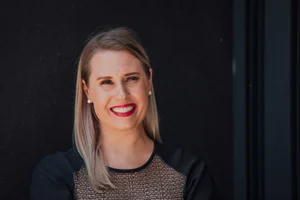
294. Gender identity and voice
In this thought-provoking episode I sit down with Rudi Landmann to explore the deeply personal connection between voice, identity, and self-expression.
In this episode, we cover:
How gender identity and gender presentation influence the way we use our voices.
Rudi's experience of gender dysphoria and the impact of voice changes during puberty.
The role of voice training and vocal surgery for transgender and gender-diverse people.
How to be a supportive ally when discussing voice and gender diversity.
The importance of compassion, curiosity, and listening to lived experience.
This conversation offers a powerful reminder that voice is far more than sound - it's a reflection of who we are and how we wish to be seen in the world.
Transcript
Welcome back to That Voice Podcast. Huge welcome. If you are here for the first time, we have a fascinating conversation today with a beautiful human who was part of my Voice Print Confession phone campaign, which you may have seen on socials. Their name is Rudi Landmann, and our topic is gender identity and voice. Your voice is intrinsically linked to who you are and how you present yourself to the world. So what happens when the voice you produce is at odds with that? That question sets the scene for my conversation with Rudi. Now, small editing note, my usual platform I use to record these interviews is called SquadCast, and it's retiring, and so I'm experimenting with Zoom. My audio in this episode is pretty rubbish, so please bear with me while I work out my new process around this. Rudi sounds lovely and clear, which is the main thing for today.
Sally:
Rudi Landmann. It is such a joy to welcome you to That Voice Podcast.
Rudi:
Thanks, Sally. I've been a big fan for a long time, as you know, so it's lovely to be here.
Sally:
Oh, stop it. Thank you! So Rudi, how would you describe yourself?
Rudi:
I'm a lot of different things, and I fulfill a lot of different, my fingers in a lot of different pies. But for what we're gonna be chatting about today, I suppose what's most relevant is that I'm a transgender person. I was born male, raised a boy, became a man, and was never really comfortable with that. For the last 10 years or so, I would, I'd be describing myself as non-binary, someone outside of our traditional system of male and female genders. I usually present more feminine than masculine. I'm a Camilla tragic and I was really excited to be involved with your project last year around the launch of the launch of your book. And some of the questions that you asked us got me thinking about stuff that I hadn't thought about for a while in terms of voice and just how for transgender people and, and gender-diverse people, our voices, our voices be a source of, a source of pain, a source of not feeling ourselves. That's a topic that I hadn't heard come up on the podcast so far, and something I thought I'd love to chat about with you.
Sally:
Oh, and I'm so glad you did. So, tell us about your experience with your voice. What were some of those challenges that you had?
Rudi:
In the trans and gender-diverse community, there's a metaphor that we use called an egg cracking, and the idea is that often before people really understand and embrace a gender-diverse identity, often you then can look back at your life over the years and see these cracks in the egg, as we say that there are things that kind of make sense in, in retrospect, before you kind of emerge as your, as your true self. And one of the first cracks in the egg for me was as a teenager, my voice breaking. I was always a performer from a very young age. I was, I studied speech and drama, and later became a speech and drama teacher. I was a singer. So winning prizes in, you know, local country Eisteddfod and things.
Sally:
Yeah, we've got a similar upbringing in that way.
Rudi:
We've gotta say, we've got a very similar backstory, you and me. And when my voice started to change at about age 12 or 13, it was devastating for me. And that never went away. And I think, you know, the changes that all people go through in, in puberty, these changes are often not welcome...
Sally:
When it comes to voice. Men experience much more of a significant change in puberty than women.
Rudi:
One of the other things that stood out to me at the time, and ever since really, was that for a male-bodied person, someone who'd never even questioned their identity as a boy or a man, having, you know, a stereotypically, you know, deep resonant masculine voice is considered a good thing. And I wasn't experiencing it as a good thing. I was experiencing it as deeply tragic and a real sense of loss. And the word that I know now that of course I didn't know 40 years ago was "dysphoria". That there is a real sense of things not being, not being right and a sense of things being deeply at odds with your internal model of yourself. I lost my beautiful soprano voice. And with that, I also lost the, I lost the joy of singing. I never embraced the voice that that emerged since then.
Sally:
Well, Rudi, and what about speaking? Did it also change the way that you, you spoke? Did you find yourself speaking more, less, self-conscious about the way it sounded when you spoke?
Rudi:
Much more self-conscious? I don't think it shut me up. I certainly have a lifelong, or maybe lifelong, since my voice changed, I've never liked my voice. I've had quite a, even though I've used my voice professionally, and I've, I've taught speech and drama, but I've never, I've never liked my voice. In fact, it feels at odds with me. And I know that technically I don't use my voice well. Technically because I don't like to embrace those lower registers. You know, you can, you can hear that I'm using mostly, mostly head resonance here and not actually speaking from the diaphragm, because that actually also then lowers my voice considerably. And I don't like it. I just don't like the sound of it.
Sally:
So interesting.
Rudi:
I feel very self-conscious about how it comes across.
Sally:
In the Voice Print Confession phone activity. One of the questions was, has anyone said something mean about your voice? And your answer was, "Yes, me.".
Rudi:
Yeah, exactly. And that was, that was such an insightful question and it, it really set me thinking, you know, it's one of those things that I kind of dealt with and kind of pushed to the back of my mind and never really thought of again, consciously until, yeah, until you kind of stirred up the hornet's nest.
Sally:
Happily. That was one of the main reasons I did that project. It's interesting because many people who I work with, they are looking to bring their voice down into their body to be able to use those lower registers. Voice is so deeply tied to our identity. So it's interesting that you can physically make those notes, but you don't choose to. We do get to choose the voice we use.
Rudi:
Absolutely.
Sally:
Have you spoken to other people in the trans and gender-diverse community about their voice? Have they shared similar experiences or difference? Some people you can even get surgery to change the sound of your voice permanently.
Rudi:
Yeah, so absolutely. This is not an uncommon phenomenon. And I want to point out that of course, you know, the trans and gender-diverse community embraces both people who are assigned male at birth and transitioning to a female or feminine way of life. And, but also the reverse people who are assigned female at birth, who, who masculinize. And those journeys are very different. And as far as voice goes, it's another area where it is much easier for people assigned female at birth who transition to, to male or masculine. Because if they go on hormone replacement therapy, the testosterone will lower a female voice, male voice. It will actually produce the same changes in the larynx and the vocal chords. That would happen normally during a male puberty. But the reverse is not true. Once puberty has affected a voice box, there is no going back. The only ways to go back as you already pointed out there is surgery available to shave the vocal folds.
Sally:
Oh gosh,
Rudi:
Yeah. It's usually done by laser these days to actually lighten the, the fold so that they don't vibrate at such a low pitch. And there's vocal training as well, teaches people to make more use of that head resonance to offset not wanting to engage the, the lower resonators.
Sally:
And Rudi, what do you think this comes down to? Is it about confidence? Is it about alignment with who you feel you are and who you present to the world as? Is it about comfort?
Rudi:
We talk about gender identity, which is our internal sense of, of who we are: man, woman, something else. And gender presentation, how we present to the world. And again, there are multiple ways that people do that. So what most people are looking for in life is, and I'm talking about all people here, not just trans people, congruence between our internal sense of self and how we present to the world. For example, people are probably aware of some of the treatments and surgeries that trans people sometimes use to alter their outward physical appearance and, and align more closely with their internal model of self. So cisgender people, people who identify with the gender they were assigned at birth do this, too. So, you know, a lot of cosmetic procedures are really aimed at women wanting to adopt some ideal of femininity that they are looking for, or men wanting to adopt some more masculine presentation.
Rudi:
So voice is similar. Voice is, for me anyway, and, and to other trans and gender-diverse people I've known. It's a sense of alignment or misalignment between internal sense of self and how we present in the world. And I guess we can also see this when you sometimes see transphobic or hateful caricatures of trans people. I mean, they don't tend to, they don't tend to target trans men. These will target trans women and trans femme people. They will typically characterize somebody as having a really deep masculine voice, but presenting as feminine. It also feels like that to embrace that. You know, I've got a very, I have a very powerful baritone. If I were to embrace that and speak in that register and sing in that register, it feels like I would be appearing or presenting as, you know, the most hateful caricatures of trans people that, that are out there on in the world.
Sally:
Rudi, thank you so much. That's so interesting. Gender identity and gender presentation. Many women who I work with, this is what we're working through because society wants you to present as feminine with a higher voice. And there's lots of stories and conditioning beneath that. And so when I'm working with my women, you know, speech and drama, drew, you don't know this, to really get women to start using that lower register, there is often people that say, oh no, I don't wanna sound too much like a man, or I don't wanna sound too aggressive, you know, and I'm like, oh, these are all interesting stories that we make about our voice, which is in our body.
Rudi:
I read a study a few years ago, and I'm, you probably know this one, that how the voices of female broadcast journalists had changed over several the last several decades and lowered in recent decades, female broadcast journalists were, were speaking in a much lower register. And the, the conclusion that the, the studies authors came to was that, that this was an association with sounding authoritative, sounding knowledgeable, that the lower, more masculine in inverted voice was somehow more trustworthy, more reliable, more knowledgeable.
Sally:
Yeah. I teach voice from the inside out and it's really, where does the voice sit in your body that makes you feel most empowered? For many people it is down in that solar plexus area, that lower area, but what I'm hearing is that's not always the case. So for you, you feel much more comfortable and empowered using that higher register.
Rudi:
That's absolutely true. And I know, again, from a professional point of view, I could critique my voice in both registers and say that, yeah, that that lower register is actually a really, a really powerful, probably even pleasantly toned baritone.
Sally:
I'm sure it would be! Come on, you're singing and speech and drama trained! Would definitely be.
Rudi:
I don't like using it. And I know that there are, there are trade offs because I know that those higher registers, I don't, I don't project as well from, from here. I don't, my voice doesn't carry as well from up here.
Sally:
And Rudi, knowing you outside of this, you're all heart, you are all warmth. And you can absolutely feel that through the way you speak, which you can't always hear when people are putting on a voice or speaking in a voice that they think they should.
Rudi:
Yeah. Thank you, Sally. I dunno if you remember this years and years ago, you've thrown out some, some question on, on one of your socials around, 'What you think of your voice?'. And I replied to it, and I felt that also kind of touched a, it touched a nerve for me. And so I replied something like, for me, my, my voice is a horrible noise. You replied very supportively and said something like, 'You've never heard it that way, or you've never, you know, that's not your, that's not your perception'. It is an ongoing struggle. It is centered purely around the gender dysphoria. So I have contemplated getting more training in training my higher registers. I've even contemplated surgery as well. That's very risky, because as you'll appreciate there is, there's actually no way of predicting exactly how that voice is gonna be.
Sally:
The outcome. Yeah.
Rudi:
They know that by physically reducing the mass of the vocal folds, they will naturally vibrate at a higher frequency. But there's absolutely no way of telling what it's gonna do to the quality of the voice or the timbre. It's a risk I'm not willing to take.
Sally:
Yeah, I understand that. How can people be allies for the trans and gender-diverse community when it comes to their voice? Is it, is it better to make no comments at all about the voice? Or what would you suggest?
Rudi:
If you find somebody who has a voice that is, that voice doesn't match that physique or that presentation, probably the kindest thing generally is not to say anything. If you do find somebody has a genuinely beautiful voice, of course, comment on it but don't, I think the impulse to be insincerely, like, Oh, you've got such a beautiful voice when you don't really mean it or it seems discordant to you. I think just leave it alone. The biggest thing probably that people can do to be allies is call out transphobic jokes when you see them. Just the same way that I hope that most people these days would call out, you know, a sexist or racist,
Sally:
Racist joke.
New Speaker:
And say to your friend, Hey, I just don't think that's funny, or I don't think that's very kind. Or let's not do that. Unfortunately right now, I feel that the trans community, we are the focus of a lot of bigotry. So statistically trans and gender-diverse people are, depending on which numbers you use, around about half percent of the population. We are pretty rare. There's not very many of us. And then when you think about the amount of headline coverage that we command, the amount of laws that are made around regulating our lives, we do seem to attract a lot of attention at the moment. And mostly, mostly unwelcome. Mostly we just wanna be us.
Sally:
Like so often the case, the people that need to hear this message don't find themselves opening their ears to it.
Rudi:
I know the kind of person you are, Sally, and I know the kind of community that I'm sure surrounds you. If I can be political for just a moment, here in Queensland we elected a conservative government. The very second order of business for them was to halt all puberty blockers for trans and gender-diverse kids. So puberty blocker is a treatment that just delays puberty. It does not have any other function. These treatments were first developed for cisgender kids who were experiencing unusually early puberty and was later adopted for treating trans kids. Really, it just buys time. And so before irrevocable changes happen. So in an example like mine, I went through puberty in the eighties, none of this was available. And in my particular case, I probably wasn't even aware enough to, to know, to have wanted it. But what it could mean is that for a trans girl, or trans, or trans femme person in a male body, puberty blockers would halt that change to their voice for a few years until they have more time to figure out what they really want.
Rudi:
If they want to continue to develop as a boy and a man, then they can stop the treatment and puberty will will resume as it as it would have. And if they don't want that, then there are further treatments available later on. But it just buys time. Our conservative government blocks that as their very second order of business. So again, for half a percent of the population, so this is a signal, right? They're not really concerned about the needs of half a percent of the population. It's about sending a message to their support base. So, in commentary around that, again, if you don't have a dog in that race, so you are not trans or nobody in your family is trans or you don't have close connections to the trans community, maybe sit this one out. Like maybe avoid getting into that debate.
Sally:
Yes, lots of people are very confident in opinions about subject matters in which they have zero knowledge and zero lived experience in.
Rudi:
Correct.
Sally:
So Rudi, was there anything else you'd like to add?
Rudi:
No, I just wanted to thank you so much, Sally, for getting me thinking about these things again, because, you know, they've sat buried in the back of my mind for decades, and I think the journey to loving my voice might be, might be a too long a journey for me. I might not complete that in this lifetime, but maybe calling a truce, that might be, that might be doable.
Sally:
Oh, Rudi, thank you. I received that. Thank you so much for joining us on That Voice Podcast. Where can people find you?
Rudi:
I have a website, rudilandmann.com and I'm also a prolific oversharer on social media. So just by searching for me on your favorite social platform, you'll definitely find me. I welcome anyone who'd like to connect. If you have any questions about anything that we talked about this morning, yeah, feel free to ask. I've got a policy of indulging what I call compassionate curiosity. There are no questions off-limit, anything that comes up, feel free to ask. If I'm not comfortable answering it, I'll say so, but chances are I welcome any question. Look, the world gets better in two ways: through education and through connection. And so it's platforms like this one of yours that, that enable that.
Sally:
What a beautiful way to finish. Rudi Landmann, thank you so much for joining us on That Voice Podcast.
Rudi:
Thank you, Sally. It's been delightful.