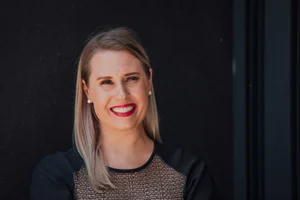
🧠 Simon Lancaster has crafted speeches for top CEOs and senior politicians, delivered three TEDx Talks, lectures at Cambridge, and has written several bestselling books.
💥 In this episode, Simon doesn’t hold back.
We dive into:
✍️ The speechwriting formulas anyone can master (yes, even you!)
🤖 How Simon uses AI to write a full speech in a day
🎤 Why delivery still reigns supreme — and how he practices what he preaches
🤝 The real value of working with a professional speechwriter (and why it’s not cheating)
💬 His favourite rhetorical techniques that make speeches sing
Whether you’re a business owner, keynote speaker, or someone who wants to make your words matter — this episode is full of golden nuggets.
🎧 Settle in. This is one you’ll want to save and come back to.
Connect with Simon on TikTok and Insta @thespeechwriter1
Transcript
Hello, welcome back to That Voice Podcast, settle in. Today I have one of the world's best speech writers on the show. He's written speeches for well-known politicians and CEOs, published several bestselling books. He lectures at Cambridge and get this has delivered three TEDx Talks. And as a fellow speech nerd, I have been a fan of this man for a very long time. I'm talking about Simon Lancaster. He doesn't hold back. In this conversation, Simon shares his top speech writing techniques that anyone can learn. They're pretty easy. He shares how he uses AI to write a speech in a day, and how he practices what he preaches. As an international keynote speaker, we also talk about the value of working with a good speech writer.
It's of course something Simon does. He's based in London and it's one of my favorite things to do with clients as well. Co-Create amazing speeches. I know for a lot of people, they do not even know where to start with writing a speech. Maybe this is you and this is where the experts come in and my clients, just like Simon's, they go from being apprehensive about even doing the speech to counting down the hours when they can deliver it. That is the power of bringing your message to life. So if you have a speech coming up or a keynote you'd like to write, please reach out. New clients can book a special 60 minute one-on-one. Check the link in the show notes. And of course, if you are listening and you have not pre-ordered my book, Voice Print, what are you doing? Whatcha doing? Send me your pre-order receipt and I will send you a voice note of me reading the first chapter and you will get an invite to the big launch party in Brisbane on December 7th. Tickets are selling. You need to pre-order the book to make sure that you don't miss out. I cannot wait. So hit pause, order my book, send me the receipt, get a pen and paper, and get ready to absorb the wisdom of Simon Lancaster.
Sally:
Simon Lancaster, it is such a joy to have you on that voice podcast. Welcome.
Simon:
Thank you very much. It's great to be seeing you kind of in person. I'm very used to seeing you on my, my Instagram scroll on TikTok and all of that. But yeah, we're kind of in real life now, aren't we? Almost.
Sally:
Yes, almost. That's the joy of virtual. So you've written speeches for some pretty famous people around the world. How did you get into Speechwriting?
Simon:
Well, kind of by accident. I never actually wanted to be a speechwriter. My dream when I was at school was to be a songwriter. Ever since I can remember. I love The Beatles. Like, I mean, I remember as a five, 6-year-old listening to Abbey Road and being fascinated by like the way they constructed characters, actually people like mean Mr. Mustard and Pauline Pam. And I always wanted to be a songwriter. My first job on leaving school was playing piano in a restaurant just off Leicester Square. And I was convinced my songs were up there with Lennon McCartney, Jagger, Richard. It was only a matter of time before I would be discovered. And I would send my tapes out to people and then the feedback would come back and it was kind of like, eh, you might wanna consider another path. And so I think finally, by the time I was about 25 years old, I accepted I was not even gonna be a dancer and take that, you know, and I needed to find another career.
Simon:
And at that time, labor had just won a huge election victory in the uk and I was working in the civil service. I became a private secretary, first to one, a junior government minister, a fantastic guy called Alan Johnson, who was an ex postman who taught me so much about great communication and how to deeply connect with people. And because I was his private secretary to start off with, I would help him with his speeches, just a bit of editing, then coming up with some soundbites and then suggesting stories and quotes that he might wanna put in there. And before I knew it, I was a full-time speech writer. And as soon as I got that gig, which was for an Australian woman actually called Patricia Hewitt, who was Secretary of State Trading Industry and Minister of Women in Equality here in the uk, I worked for her for about four years to start off with. And I just thought, wow, I've got the best bloody job in the world. And okay, I'm not Lennon and McCartney, but this, this will do. Just sitting around at your desk, fooling around with words all day. I mean, it's brilliant. It's a privilege and I love it.
Sally:
Oh, Simon, I'll have to hear a demo.
Simon:
No, no chance. I mean, they are, I, you know, like Taylor Swift has her vault. I mean, my vault is like, you know, treble security, not even my nearest and dearest or
Sally:
Well, I must admit, I wanted to be a songwriter at one stage as well. I majored in musical composition actually at school. I wrote a whole album worth of songs. But I think that once I rhymed distance c with geographically, that kind of ended my songwriting career as well.
Simon:
That sounds quite fun actually.
Sally:
Oh, well, you know, the things that you do when you're about, you know, yeah. 14, 15. Amazing. So do you remember the moment where it went from helping somebody on the side to you crafting a speech and thinking, Whoa, like this is good. I've got a talent for this.
Simon:
I wouldn't say a talent, but I mean, it's technique. It's understanding the rhetorical techniques. And that was, that was the breakthrough for me. So I remember one of the first big speeches that I wrote was, which was for this wonderful woman, Patricia Hewitt, who's still very active. She's just been put in the House of Lords, actually, I was at the Department of Trade and Industry, and George W. Bush had just been elected president of the United States as Republican presidents of the United States tend to do. He had just introduced some punishing ts on steel. So this is obviously an issue, which is still frigging huge today. 'cause Trump has just done exactly the same, but everyone makes out, oh my God, Trump's destroying the world order by doing this. Well, in actual fact, George W. Bush did exactly the same thing when he became president. And so the, the UK government and the US government ended up having a little bit of a ruck about these steel tariffs.
Simon:
And a lot of that rug takes place through speeches. The debate really takes place in the press through soundbites. And so I was writing a lot of lines which were being used in that, that and it was using all the old tricks. And so it was stuff like, I think we talked about a spiral, you know, will, the trade war will spiral. So you've got a metaphor there. We had a line like, you can't preach liberalization abroad and practice protectionism at home, which of course is a great little rhetorical contrast antithesis. And we had all sorts of things like, you know, rule of three and stuff like that. And that, that was a big, big issue. I mean, still Tarris was a big, big issue. And we ended up winning the argument with the us. I mean, they did bring back, I can't remember whether they removed the tarris immediately.
Simon:
They certainly made a huge reduction in them. I dunno why I've got 30% down to 10% in my mind, but that might be a wonky stats. But it certainly, we won, we won the, the debate with them. And that opened my eyes really to the power of rhetoric. But the power of these really simple techniques, you know, that a lot of the people that work on trade policy have too many brains for their own good, you know, and they can't say anything clearly. And, you know, they'd send these submissions, these reports, these big analysis papers that were just incomprehensible to anyone and so complex with the legal framework that WTO and Article 1 3 7 and this, that, and the other. And it was just like, you know, boil it down to a moral argument about hypocrisy, you know, and then people will get it. You can't say one thing and do another people understand that kind of stuff. So really, it's super reductionism is what re a lot of rhetoric is about really.
Sally:
Mm. And I like that you said it's not so much talent, it's technique. And you've mentioned metaphor, juxtaposition, rule of threes. There's so many different rhetorical devices that we can use. Take us through some of your favorites. And if someone's listening and going, oh, I've never heard of these things. Like what are the, what are your like top three?
Simon:
Well, the, the rule of three is, is just simple, you know, government of the people, by the people, for the people we came, we saw, we conquered education, education, education. The, this is an ancient Roman rhetorical device, but studies have shown people are more likely to remember what you say. If it comes in threes, they're more likely to believe what you say. If it comes in threes, they're more likely to act on it. So a lot of the coronavirus messaging was deliberately constructed in threes. Test, test, test, stay at home, save lives, protect the NHS.
Sally:
Yeah. And you just used a rule of three to explain the rule of threes there. Well, I used to be a journalist. So it was always about good for your health, good for your hip pocket, and good for the environment.
Simon:
Right, exactly. And you know, my, yeah, my three is is always like, you know, politics, business, society, you know, and it's just, it's everything slots beautifully into those, those three little things. So speaking in threes, contrasts is the other one to be or not to be. We can't say one thing. Do another ask. Not what your country can do for you, ask what you can do for your country. But the big one, the biggest one of all, you know, for those who really wanna understand rhetoric and persuasion and changing people's perception on things is metaphor. Metaphor is the skyscraper of rhetoric. You know, it's towers above all of the others because it's, by using metaphor, we speak about something as something which it isn't. And we do it all the time. Once every 16 words. If you talk about someone and you say they're a total star, that's a metaphor. And you're creating a, an image, they're bright, they shine, it's lovely. You look up to them, you know, if you talk about someone as a complete, you know, it's a different metaphor. So metaphor for me is, is actually way the most powerful of all of the rhetorical devices. If I'm writing a big speech where we're looking to change people's attitudes, change the way people think, fail and act. My starting point is what's the metaphor? What's the metaphor that we are using at the moment? What's the metaphor we should be using?
Sally:
Yeah, absolutely. There's a whole episode of this podcast actually just dedicated to metaphors. I was given a gift actually a couple of weeks ago. One of my clients, she is a race engineer for supercar supercars, you know, and her International Women's Day speech was all about accelerating action because the theme was accelerate action. And her job was the race engineer. So I'm like, this metaphor is just an absolute gift acceleration. And we did the whole speech around motor racing.
Simon:
Beautiful, really, really good. So that's, that's what I love doing, where you take a metaphor and there's an underlying story that relates to it. So if, if your friend's there is working in that field, then that's a go-to metaphor. 'cause She's got stories around that. And there's a great story that I love in the context of driving change in women's re reform, you know, women's rights. And that's the story of Bertha Benz. I dunno whether you've heard of Bertha, but she was the wife of the Benz of Mercedes-Benz. And there's an amazing story about her in Germany where she came from a, a very, very rich family. And then she married the Ben Sky. And at that time, 19th century, you know, women didn't have many rights. If you then married all of your money became your husband's. Her husband was engineer. And he ended up designing like one of the very first cars.
Simon:
And she took it out for a drive. She had to go and see her mom. She took the kids and she was like, oh, he won't mind. I'm just gonna drive 40 kilometers. And as she was driving, so the story goes, she discovered all of these faults in his designs. So she found the brakes were way too jerky and jolty. And so she just ripped off some of her tights and then tied that around the brake. And lo and behold, she had invented the first brake pads. And, and then as she was driving again, so the story goes, she discovered the engine was cranking up a bit, and she just stops at a pharmacist and she got some oil and poured it in there. So again, it was kind of like discovering that car engines need lubrication. So the story goes, and obviously she's completely uncredited in the whole thing.
Simon:
Now, I think Mercedes-Benz, they do tell this story and probably better than I just did. And when you've got a story and the story leads you to a metaphor, then boom, that's when you've really got people's imagination. And then you, you use that story, it gives you the metaphor, and then you make the case for what you need to do right now. So we, so we've gotta go further. We've gotta go faster, we've gotta put our foot down. We need a change of gear, you know, we need to put turbo chargers on, you know, this is what Bertha would've done.
Sally:
What a fantastic story.
Simon:
People can Google it!
Sally:
But you know, a little bit of artistic license with these things. Sometimes we'll never know what actually happened.
Simon:
We've got AI, so we can check this stuff. I think there's a story about birth events. Can you tell me if this is true? And no doubt Chat GPT will instantly give you an answer.
Sally:
Absolutely. So speaking of AI, we were chatting before we hit record, and you were saying it's now taking you a lot less time to write speeches because of ai. Take us through the process. So do you start with, you know, the key messages and then go, okay, well what's the metaphor that can match this? What's the story it can go into? How can we throw the devices in after that? What's your process?
Simon:
Yeah, happy to talk you through it. I mean, for a start, AI has been a complete game changer for me. Some people at the moment, there's a bit of a debate, you know, what is ai? Is it the Terminator gonna terminate all our jobs, terminate industries, or is it our best friend forever? Me, I'm firmly in the latter camp. It's my best friend forever. I remember very well the first time I heard about Chat GPT, it was within days of the launch of 3.5 to December 22. And I remember just in, I was writing a speech at the time, and I just started asking it questions like, you know, suggest to me 10 metaphors for authenticity. Give me 10 quotes on authenticity. You know, 10 stories that demonstrate the importance of authenticity. And straight away I was like, this is insane. My, my, my brain was completely blown and it's transformed my business.
Simon:
So in the past, I used to say to a client, if I'm writing a 20 minute speech, it will take about 20 hours of my time. I've gradually cut that down over the years. But now post Chat GPT, my promise to all my clients is I'm gonna get you a draft in a day and I can do it. You know? And like literally the last three clients that I've worked for, at the end of the day, they've not just liked the speech they have, loved it, absolutely loved it. And so my process, my process is I'll go in, I'll have breakfast with them to start off with. Over breakfast, we are talking about possible themes for the speech. So what's the big idea? What's the title of the speech? And that might be a metaphor, it could be a moral appeal or it could be just like a pithy phrase that sums up everything that we're talking about.
Simon:
Like ai, you know, Terminator or Best Friend forever. That's a good title for a speech. You know, something like that. Once we've got that agreed, then we'll talk, and this is all at breakfast. We'll talk about the content, what kind of stories could we have in there? What are the killer stats, you know, and we'll work out a structure between us. Now there are some off, off the shelf structures that, that I use, but generally, we'll, we'll map it all out and it'll be pretty rough, but we'll be able to articulate it quite clear by the end of breakfast. Then between breakfast and lunch, I'm writing it out. And, you know, that is first draft must be me sweating over the keyboard. You ask Chat GPT to do a first draft of anything. It's rubbish. You know, it might use all of the rhetorical devices, but it's got no substance whatsoever in my experience.
Simon:
You write that first draft and then you can give it to Chat GPT and say, tidy this up. Make sure it's all proper grammar in all of this. And then it's takes you from draft one to draft four really quite rapidly, so that by the time I meet my client for lunch, for a little sandwich, they'll read through the speech and the draft will be pretty good. They could deliver it at that point, but whether or not they want to deliver it is another issue. They might like say, oh, I think this bit could be a bit stronger. I might bring in this story as well. So they give me some more guidance. They might say, Give me some general, you know, textual stuff like make it a bit more upbeat. It's a little bit too negative at the moment. Just give it, make it sing a bit more to the end.
Simon:
You know, let's have all, let's have a bit more anger just before we bring them back at, at the end. And then I'll work on that so that by the end of the day we are are doing a full read through. And that's when they're like, oh, I can't wait. I love it. And very, very quick. So I use Chat GPT really as a researcher. You know, it will research my client for me, research the issue, research the audience as a collaborator, collaborating on me. Like, you know, gimme analogies, give me possible metaphor, give me possible themes. And also as an editor doing the final checks. 'cause You know what it's like when you are, when you are doing your 20th read of a draft, your eyes just go blurry and foggy. You can't see that it's got two commas, when it should have one or none. And Chat GPT obviously can just do that. And so it's, it is very good as an editor as well.
Sally:
Hmm. Yeah. Amazing. I use it for similar things. So you've got the speech, the client loves it, and now we get to the point of delivery. So is it what you say or is it how you say it? Or is it a 50-50 of both?
Simon:
Well, I mean, you need both of them. You, you absolutely need both of them. But the words determine the delivery. If someone's delivering words that they don't like, that they don't believe, then their body language will communicate that to the audience in all kinds of ways. They will actively divorce themselves from the text. On the contrary, when people are saying stuff that they love, stuff that they believe from the pit of their being, then they will speak with that conviction, which is why I'm a big advocate about the power of moral framing. Whatever people are talking about, you need to find, well, what's the moral angle on this? Like I was saying about the trades dispute, actually, you know, if you talk about hypocrisy, that's something everyone's gonna believe very, very strongly. You don't need to have a special sense of morality to stand up and say, well, you can't say one thing and do another.
Simon:
You know, we all believe that very strongly because that's something we've been taught that's been bashed into us from the time we're toddlers. So go hard on the moral aspects to this. You can't treat people unfairly, you know, and people will be more interested in that than they will be in article 1, 3, 7. Even people that work at WTO can't speak about Article 1, 3 7 with any passion, without any conviction, you know? So it's about how you frame it. And then you start from something your speaker is gonna believe really strongly, and the audience will, and then their body language will take care of itself, and that, and the audience will come along with them.
Sally:
The message has to be really aligned with, with you and what you believe in. I used to be a journalist, and then I was a company spokesperson. So I do a lot of media training, and it's very, very difficult to work with spokespeople who are not on board with what the company line is. If they're out there saying something they don't believe in then it's, it's really challenging. I also work with reporters and people ask me a lot about the news voice, and as you say, with speeches, a lot of the news voice is driven by the news script. It's the way that it's written that dictates the way that it's delivered.
Simon:
And you, you know, like in media training, there's a, there's a thing that is, is taught in the UK that I frigging hate, and I think every member of the British public is, is familiar with this and hates it when politicians do it. And it's the pivot where you say, like, you know, you hear the question and someone will say to you, you know, well, you know, Mr. Stama, why are you spending money on, on weapons? Instead of, you know, while cutting benefits for the disabled in the uk. And he'll say, well, that's an important question, but let me say what the real issue is here. Completely ignore the question. Whereas a model that I prefer much more is empathy, values, action for answering media questions where you're like, well, I know a lot of people are angry about this. I know a lot of people are disappointed about this. I know a lot of people wish that we'd taken a different stance, and you just show real empathy, then you make your values statement. But let me tell you, being leader does require making difficult choices, and you need to be decisive. And I have looked at the books and I've looked at the threats that we're facing to our security as a nation. And for me, the big priority now is dealing with Russia. Whether that's, I mean, that's obviously what he believes. It's not what I believe..
Sally:
Yeah, that's I really like that, Simon. That's a much it's both, both ways are the bridging technique. So I've heard it referred to as the pivot, we call it the bridging technique here, where it's like you're getting a question you don't wanna directly answer. So you are moving, I sort of describe it like a pool. You are, you're bringing them back into your lane, but as politicians show us every day, there are ways to do it that work a lot better than just looking like you're shirking the question.
Simon:
Yeah. And I think that kind of, that, that kind of thing where you're, you're just, you're not answering the question. It's the thing that really frustrates so, so many people, and that's why trust in politicians, it's so low because it, we all, and particularly with people like Starer, everyone in the UK hates him. You know? I mean, literally, I've not met anyone with a good, even people in the Labor party, they just think he's awful. And there is, 'cause you look like a rude human being. If you ignore people's questions, you know, and especially if they say to them, you're not answering the question, will you answer the question? You hear 10 million people shouting at the television, answer the effing question, you know? And if he did, people would respect him, even if his, his answer was not, you know, what they wanted to hear.
Sally:
Yeah. Especially when he's the leader of the party. Like, you can sometimes understand when it's someone who kind of can't say anything because there's more at stake, or it's not their area or something like that. But I really believe that the leaders really need to be addressing every single question. Oh, Simon, we could talk, we could do a whole other episode on political communication for sure. Do you write speeches for yourself as well?
Simon:
I do, yeah. I've literally, so the last couple of days I've been writing a, a big speech that I'm delivering. So as well as writing speeches for other people, I deliver big keynote speeches myself. So last week I was in Crete, which was lovely, beautiful, beautiful island. And the weather there was just gorgeous. I was delivering a speech there to the foundation of environmental education, wonderful. Global charity On Thursday or Friday this week I'm in Bulgaria speaking to a thousand people at presentations conference. So the Present Succeed conference, which I think must be one of the biggest public speaking conferences in Europe, actually. Yeah. So my theme for that is about AI and I, I look at the launch of chat pt, which I don't think was particularly good because they, they kind of dropped it quietly in the middle of the night.
Simon:
And you know, as a result, so many people thought you had all of these scare stories, like the United Nations and the European Union were straight out like saying, we need to stop this thing, we need to ban it, we need to regulate it. And they were scare, you know, front page headlines here in the UK saying AI to lead to the end of humanity. So the kind of playful question that I've posed in that speech, my theme for the speech is how would Steve Jobs have launched Chat GPT? So looking back, great Apple launches, the Mac, the iPhone, the iPads, which Steve Jobs did so brilliantly, I, and I know all of those launch speeches almost by heart, so I'm like, well, how would he have done Chat GPT? And I go through all the things like what would his metaphor have been?
Simon:
What would his analogies have been? What would his moral appeal have been? And then I'm gonna finish the speech by actually doing a, a bit of a bad Steve Jobs impersonation. We're gonna make it look like the Apple Fietta in there with the big Apple logo behind me, and I'm gonna do a mock launch of Chat GPT. So it's gonna be huge fun actually. So, it's a big speech and it's a new speech for me. You know, often I'm asked to speak on the language of leadership or storytelling for success, or, and this is a new thing that they've specifically asked me to do. So hence I've had to sit down and, and write a whole speech from scratch, which is quite time consuming, but I love, obviously it's what I do, you know?
Sally:
Yeah. It sounds fantastic and surely something you can use again.
Simon:
I hope so. I, you know, I mean, in any creative work, all of the effort goes into that first product, doesn't it? And then you hope you can just repeat it over and over again. That's kind of the business model for any creative industry, isn't it?
Sally:
Yeah, that's so great. I spoke at Present to Succeed during COVID when it was a virtual conference.
Simon:
Oh, did you? Did you?
Sally:
Yeah, it's it's so great that it's now a massive in-person event. And I am coming to London actually in October, but if I was there at another time, I'd love to come along.
Simon:
I think that's great. I think that's just the kind of thing that we need. It's building up the industry that we work in, you know, the presentations industry and showing how we can help people and, and what a skill this is and how there are these simple techniques that you can use.
Sally:
Yeah. And that's a great way to finish up so people are hearing, okay, I can use these devices, I can use ai. Why is it still valuable to come to a speech writer? Are we out of jobs?
Simon:
Crikey. No, no. I mean, you know, a lot of people have that fear, don't they, of the blank page. And I think that what we do is, is a combination of a whole variety of functions, actually. And it's being like a coach, being like a best friend to someone, being a trusted friend, sometimes being a little bit of a counselor, but really bringing to the room all of the expertise and experience that I've picked up over the last 25 or 30 years, where frankly I've thought about nothing else than speeches, you know, that has, I've lived and breathed, given speeches, listened to speeches, and so sharing some of that wisdom, because a lot of the people that I work for, their, their passion lies elsewhere. You know, one of the people that I was, I wrote a speech for just a couple of weeks ago, God love him.
Simon:
He's just in his twenties, but he's, he's hit very lucky in his field, which is movies, you know making movies and telling stories. And this is, that's his thing, but he doesn't know the world of speeches, and now he's giving speeches about what he's done. So for me, I'm like, you know, a a good buddy that he can have in, and I'll sit with him like a good friend and help him create a good product, you know, and I think this is, we started with the Beatles, and you know, I think you, you look at The Beatles, and I dunno whether you've seen the Get Back documentary on Disney, where it shows them, like sitting in the studio writing songs, and these were people that were to much better when they were together than any of them were on their own. And it's that power of being with someone who, who, who loves what you're doing, and really wants to help you succeed and knows how to play the bass while you play piano or play the drums, and, you know, together you create something much, much, much better, which hopefully will last for years to come.
Sally:
Yeah. So well said. Because speeches, as we've seen through history, a great speech has a very long legacy.
Simon:
Indeed. When it, when it, when it's done well, but most of them that, that they don't, 99% for every speech that is good and sticks in people's minds, 99% people walk out the room and they haven't even got a clue what they're, they've just listened to. So it's coming up with one image, that one idea, you know that is gonna stick in people's minds. And if you could do that for people, then you've, you've provided value.
Sally:
You're set. Amazing. How can people find you?
Simon:
Just search for me, Google, me, Simon, Lancaster, everywhere you'd expect. I'm on TikTok, @thespeechwriter1, and Instagram and LinkedIn, Simon Lancaster, Speechwriter. And do, I'd love any of your listeners to, to reach out to me, if anyone wants to come on one of my training courses, I do. Fantastic three-day training courses in the UK and we've had a quite a few people come over from Australia over the last few years actually for those courses. And do, it would be lovely to, lovely to meet and work with you.
Sally:
Amazing. When's the next one?
Simon:
Our next one is, I think March the 18th to March the 20th in London, in Westminster, in the most gorgeous presidential suite, literally overlooking the Houses of Parliament and Westminster Abbey and Big Ben and all of that. So yeah, come and have a few dates in London, have some, have some fun, and yeah, we'll, we'll give you a great time.
Sally:
Oh, sounds amazing. Simon Lancaster, thank you so much for coming on That Voice Podcast.
Simon:
Thank you, Sally. I've really enjoyed it. Great to see you.