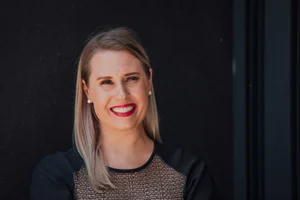
296. Can AI make you a better storyteller?
Is AI the storytelling enemy?
Can AI help you tell better stories without taking away your authentic voice?
In this episode, I chat with storytelling expert and author Gabrielle Dolan about why storytelling is one of the most powerful leadership skills - and how to use AI as a coach, not a replacement.
We discuss:
Why stories build trust faster than facts alone.
The biggest storytelling mistake leaders make.
How AI can help you find and refine your stories.
Practical tips to keep your authentic voice in an AI-driven world.
If you want to communicate with more impact while staying unmistakably you, this conversation is packed with practical insights.
Transcript
Hello. Welcome back to That Voice Podcast. Dun dun, dun. Is AI the storytelling enemy? Has it come to strip us of creativity and rip out authenticity? And are you telling stories as a leader in the first place? Gabrielle Dolan is with me today. She's a storytelling expert, the author of eight books, including Story Intelligence, the Craft of Authentic Storytelling Made Smarter with ai. That tagline kind of gives away where we're going with this conversation. Gabrielle shares why storytelling is an essential leadership skill, how to use AI, not let it use us. And there's a nice little anecdote about when PowerPoint first came in, promising to revolutionize our presentations.
Anyone old enough to remember that I got overly excited by those animations and transitions early in my career? And speaking of career as a former TV and radio news journalist, the job was storytelling. And it's a great little hack I still use in business today where I imagine I'm reporting on my life. What would be the headline of the day? What would be the lead story? What fun story would I tease for the end of the bulletin? So there's a little idea to open up your storytelling creativity as we dive into this conversation with Gabrielle Dolan.
Sally:
Gabrielle Dolan, welcome to That Voice Podcast. Great to have you here.
Gabrielle:
Thanks, Sally. I'm excited to be here with you.
Sally:
So give us a bit of a background. When did you discover the power of storytelling?
Gabrielle:
Yeah, so I used to work at National Australia Bank, right? So corporate Australia, and it was over 20 years ago, I'm gonna say it's about 23 years ago. I was a senior leader at NAB, but my last couple of years were in change management. So, you know, rolling out organizational change across, you know, whether it was digital transformational cultural change, or rolling out values. And what I started to notice is that when I shared a story to do that it seemed to get the message across better. It wasn't this like, you know, magical silver bullet, but people seemed to get the message better. What I really noticed is the really great leaders, like you'd see these senior executives who were like, you'd think they're so good, I wanna work for them. And what were they doing? They were sharing stories and you'd see brilliant presenters on stage.
Gabrielle:
And what were they doing? They were sharing stories. So 21 years ago, there was a bit of a redundancy package on the table at nab. I decided to leave. And I truly believe that storytelling is a leadership skill. I had experience in the past in previous jobs around designing and delivering leadership programs. So I know I knew I could design and deliver a leadership program, and I just decided I think people need to learn how to tell stories better. That storytelling is an absolute skill, and just like any other leadership skill it can be taught and learnt. So I left NAB 21 years ago and decided that I'd be the person to teach people storytelling. So it was a bit of a, it was a bit of a slow start as you could imagine. No one was talking about storytelling, but our children were two and five at the time, and I seriously thought, I'll just give it a go for a couple of years if it doesn't work out, you know, I'm at least I'm home with the kids and I can just go back to corporate, get another job. That was sort of my thinking.
Sally:
I'll ask you something that people ask me all the time in workshops when it comes to storytelling. But I don't wanna waste time with a fluffy story. I just wanna get to the point.
Gabrielle:
Yeah, I get that a lot. I was like, I don't have time to tell a story. First of all, a really good story will probably go for about 60 seconds, and if your story's going for longer than two minutes, it's too long and you're not disciplined to get it that short. The other thing is I say it is the one thing, the single one thing that will get your message across, it is the point, it is the only thing people are gonna remember. So if you do it well that you, you share this very short story to make your point. It is the most effective thing in your entire presentation or speech. You could get on stage and just tell the story and everything else just go blah, blah, blah, blah, blah. But people will remember the story.
Sally:
Yeah. I often say rapport opens the door.
Gabrielle:
With the story. What it does, it gives you credibility on the content you're about to talk about, but it builds a connection and the science shows us that it actually can fast track a relationship and it can fast track trust with your audience. Now, whether your audience is your team or the board or stakeholders or an audience on stage, it actually fast tracks that trust and connection between the audience and the speaker and the storyteller.
Sally:
Yeah. So, Gabrielle, you've written, did you say eight books?
Gabrielle:
Yeah, this is my eighth book.
Sally:
That's incredible. Congratulations. What's the title of the eighth book?
Gabrielle:
Oh, the title of the eighth book is Story Intelligence: The Craft of Authentic Storytelling Made Smarter with AI. So my previous book on storytelling was, in fact, my previous book was about four or five years ago, and I truly believed it was the last book I'd write on storytelling. But it was a couple of years ago that I had, I'd be running storytelling workshops and I'd have participants say to me, Yeah, but AI is gonna replace storytelling. And it was like, the question horrified me, like, No AI won't replace storytelling. And then I would have more and more people say, can you use AI to help with your stories? And initially my reaction was like, No, that's cheating. That's not real. It won't be authentic. But, you know, I think my publisher sort of said, Well, if you're the expert on storytelling, maybe you should explore this.
Gabrielle:
And I did start to explore it, and I was distressingly surprised how good it was AI as in AI, but there was something missing. And there's always something missing with AI around authenticity. So the premise of the book, it's still, it is absolutely still a storytelling book. And I truly believe that in a world of distrust and in a world of AI-generated content, that our stories, our authentic stories are needed now more than ever. I truly, truly believe that. But AI is not the enemy and done wisely, you can use AI to help you find and refine your story.
Sally:
How can we, what's a tip for somebody listening who wants to improve their storytelling or wants to get started with storytelling? What are the AI tools you recommend? Is it putting stuff in Chat GPT
Gabrielle:
I'm almost saying use AI as your storytelling coach. So sort of making myself redundant, if you want. Say, Sally, you were giving you know, a talk to your team or the board or whatever, and you wanted to talk about the importance of innovation. Let's just pick something, right? Innovation. I would, first of all, I'd take you through the process of making sure, well, what does innovation mean to you? So you are really clear on that. But once you're clear on that and you wanted to share a story, if you said to me, Hey, I wanna share a story, but I've just got no stories, I can't think of a story, the first thing I would do is ask you a whole heap of questions. And I would ask you things like, can you think of a time when you tried something different and it worked?
Gabrielle:
Or, Can you think of a time when you didn't have the courage to try something different? Or, or has there been, you know, moments in your life where you've just done something different, just some small little thing that's, you know, really improved the process or whatever? And I would ask you all these questions and you would absolutely think of an example. So use AI for that. So a simple prompt, the very important next step is AI will come back and say, Give me some, you know, bullet points and I will create a story. That's when you've gotta be really careful to not let AI take control. So look at that story AI might come with, I was really excited about this, but you might go, I wasn't excited at all. I was terrified. Okay, so you're gonna change that, but you've gotta make sure that you maintain your voice the whole time when you are using AI to refine anything you do.
Sally:
That's the big question. How do you reconcile authenticity with AI? How can people get disciplined about using the AI as a tool for storytelling and not allowing it to take their voice?
Gabrielle:
Yeah. Have you ever read Elizabeth Gilbert's Big Magic?
Sally:
I sure have.
Gabrielle:
It's yeah. So, you know, in that, I love that book and she writes a letter to fear because it's all about creativity and fear.
Sally:
So yes, it can be in the car, but don't let it take the wheel.
Gabrielle:
Exactly, exactly. So I was inspired by that. So I wrote a letter to AI, it says:
Dearest AI,
Creativity, and I are about to go on a road trip together and I invite you to join us. I will be doing my job on this road trip, which is to work hard and stay focused. And creativity will be doing each job, which is to remain stimulating and inspiring. There's plenty of room in this vehicle for all of us, so make yourself at home, but understand this creativity and I are the only one who will be making any decisions along the way. I recognize and respect the supporting and valuable role you can play. So I will at times ask you for advice and suggestions, but understand that I will always make the final decision and I will always be in control. Don't take this personally as I know you won't because you're not a person, but I know sometimes while you are eager, you hallucinate, so sometimes you are wrong. You also come with some built-in biases. So we are not always aligned. So you're allowed to have a seat and you're allowed to have a voice when asked. But my dear friend, AI, you are absolutely forbidden to drive. I will always be in control.
Gabrielle:
I think if people approach AI with that and make their sort of own commitment around using ai, then they'll keep their voice. And a really practical thing is if AI have, if you've used AI to generate anything, speak it out loud. And if it doesn't sound like you don't use it, because if, if you don't do that, you are running the very real risk of just blending into all the AI-generated content. As a leader. This is critical because the moment people think it's AI generated, they either stop reading, stop listening, and you start to lose trust.
Sally:
Yeah. It's an interesting thing. So somebody reads an email say, and they go, I can spot that that's been AI-generated.
Gabrielle:
Yeah.
Sally:
Why do I trust that person less? Because I too might be using tools as well. Am I judging them? 'cause I think, oh, they're a bit lazy because they're using ai or is it some kind of uncanny valley sort of thing where we have this craving to be interacting with other humans without the machines getting involved?
Gabrielle:
Yeah, that's a really good question. And I think, and I also think too., So some leaders would be going, Oh no, I don't use AI to generate it. I just use it to help refine. It's sort of the same thing. It's the same thing. We are in a world of distrust. So I don't know if you follow the Edelman Report, they reproduce a global report every year for the last 20 years they've been doing it. And we are at the lowest level of trust. And for the first time, a low level in of trust from employers to employers, right? So there's already this low-level of trust and we are quite cynical because of that. And so if your, if your employee is reading a letter or reading an email and it's just like going, this sounds a bit AI-ish, I think think it does affect the credibility. It's almost like, What could you not write it yourself? Like, I dunno what it is.
Sally:
But it's, is it kind of like, I don't matter, you don't write me enough to actually have a conversation to pick up the phone?
Gabrielle:
Exactly. I think it's a bit of that. I think it's like, Oh my God, it's just, I'm, I'm sick of reading AI stuff. Like can't you just use your own words? I think again, as leaders, we are going, but it's quite efficient and it sounds good, but it doesn't sound like you, and it's, you are the voice expert. It was sort of like, it doesn't sound like you, it's not you.
Sally:
No. And that's the catch. It sounds better than me. I caught myself the other day, so I've been doing a little bit of getting AI to help refine when it's been a bit of a tricky email or something like that. The other day I wrote an email, and I had this thought, Should I run this through AI just to check? And I had to stop myself from doing that. I've made this rule now that I don't wanna run any emails through Chat GPT unless it's a specifically challenging scenario because I think a lot of people are using it as a refining of their own words, yet people are receiving it as not a lot of effort's gone into it.
Gabrielle:
Yes.
New Speaker:
Even when in some cases, more effort goes into it when you're writing it and refining it and then writing it.
Gabrielle:
Yeah. And then gotta read, and you're right. And then you gotta reread it because I do. Even though I've written eight books, I'm terrible at spelling and grammar. Like that's what I have editors for. And so sometimes I run it through, AI is just a bit of a like spell grammar check, but I have to be really specific to say, just spell-check this. Because it will just, it just changes things. And I was like, I didn't ask you to change things. I had to like write a couple of paragraphs about what do you do? So I just wrote it, you know, go, I teach people how to communicate more effectively through stories and I like did other stuff, just put it through Chat GPT, bit of a check. It came back and said, I teach people to communicate more effectively through stories that bridges the gap between impact and trust. And it was like, What the hell? Like I just like, I don't even know what that means, but the danger is some people go, Ooh, that sounds really cool. It sounds like AI. That's what it sounds like.
Sally:
Yeah, it sounds challenging because I've enjoyed poetry my whole life and I like word play and I like using the juxtaposition more verbose the language.
New Speaker:
Yeah.
Sally:
But now verbose language that I would like to use, I'm like, Oh, they're just smacks of AI. So I've gotta just bring out the Wollongong bogan in me and just be like, what would they say?
Gabrielle:
What would they say down there?
Sally:
What would they say down the surf club?
Gabrielle:
I don't know if you are old enough to remember when PowerPoint first entered the workforce and it was like, so there's 36 years ago, you probably weren't. I was. And you know, it replaced the overhead projector and PowerPoint came along and this new technology, we were so excited 'cause we thought this is gonna make all our presentations amazing now. It's gonna be so much better. Our presentations are now gonna be amazing. And of course what it resulted in is death by PowerPoint. And I sort of think if we give too much control to the technology with ai, we'll go down a similar path with that. What we've done with PowerPoint where people go, oh my God, another PowerPoint presentation. They're doing the same with AI already.
Sally:
Yeah, well, which is why in the area I work in, and you do as well standing in front of someone using the technology of the organic human voice telling a story about something that happened to you. I mean, this is why this is the fast track to trust. Because people can see and feel. It's this experience knowing that it comes from you and that's what real authenticity and connection is all about.
Gabrielle:
Absolutely. When I run my storytelling workshops, like clearly I teach people how to tell stories more effectively. And then at the end you know, I get them to share their story in tables, right? So they're at a table, six or eight people, these are senior leaders that may have worked with each other before, may not. I ask them afterwards, I'll go, tell me one thing you liked about that. And without doubt, the first thing they say is, I feel like I know everyone better and I feel like I've got a stronger relationship with the people at this table because everyone has shared a personal story. You know, I come from storytelling from a really practical perspective, as in this will help you communicate more effectively. But when you share a personal story as in a non-work related story, not like a, you know, deepest, dark as fears type story, it actually strengthens the relationship. It builds trust and strengthens the relationship. And as leaders, as business owners, as you know, people trying to com communicate or influence, that's the added benefit of a story. But clearly it's gotta be authentic.
Sally:
What a great way to bring this to an end. Is there anything else you'd like to add?
Gabrielle:
I would just say, you know, storytelling's a skill. It's an absolute skill. We all do it as humans. Like, so we naturally all do it, but doing it effectively in business is an absolute skill. So I would say learn how to do it like you would with any other skill, and then give it a go. Because an okay story is better than no story.
Sally:
Love that. And how can people learn more about you to connect with you, come to one of your workshops
Gabrielle:
If you wanna get better at storytelling, my last 20 years is in the book. So, you know, it's Story Intelligence: The Craft of Authentic Storytelling, Made Smarter with AI. I'm very active on LinkedIn, so if you're on LinkedIn, follow me. And and if you like podcasts, which you do 'cause you're listening to this podcast. Then I also run my own podcast called Keeping It Real with Jac and Ral. And I'm Ral, we release an episode every Monday about career stuff, business advice, all that type of stuff.
Sally:
Yeah. And you share a lot of stories about your life and yourselves, which is what makes it very engaging. Proving your point.
Gabrielle:
Yeah. Proving my point. It was yeah, it's like, and you know, if you, if you listen to any podcasters or influencers, what they're actually doing as well is sharing stories because they're building a connection with your, with their audience.
Sally:
Amazing. Gabrielle and I were just speaking before this recording about how at one point our book, so my book, Voice Print and Gabrielle's book Story Intelligence, were up there in the hot new releases together on the Amazon list. So while you're there, make sure you get Voice Print as well as Story intelligence.
Gabrielle:
Absolutely. I I reckon that'd be a great combo. That'd be a great combo Story Intelligence and Voice Print, because it all is, it is about, you know, owning your voice.
Sally:
Yeah. It's the what to say and then the how to say it.
Gabrielle:
Perfect, perfect!
Sally:
Thank you so much for joining us on That Voice Podcast.
Gabrielle:
Thanks, Sally.